






















The importance of healthy digestion in dogs
 by Nicolas Bartholomeeusen on Jul 02 2026· 5 min read
Key takeaways
- Regular, consistently formed stools and a steady appetite are the clearest signs your dog's digestion is working well.
- Food allergies and intolerances are common triggers for vomiting, diarrhoea, flatulence and bloating, so matching diet to your dog's sensitivities matters.
- Feeding smaller meals throughout the day, keeping water fresh, and avoiding table scraps all support steady, healthy digestion.
- Probiotics have strong evidence behind restoring gut flora after illness or antibiotic treatment, and persistent symptoms like weight loss or blood in the stools warrant a vet visit.
Of course, we all want to keep our dogs as healthy as possible. But did you know that a key part of their overall health lies in their digestion? Just like in humans, a dog's well-being depends heavily on a healthy gut to absorb nutrients, eliminate waste and maintain a strong immune system. In this article, we explain why good digestion matters for dogs and how you can help your four-legged friend achieve it.
Signs of healthy digestion in dogs
One of the most reliable signs of healthy digestion is regular, normal stools. Firm but not too hard, produced consistently day to day. If your dog hasn't had a bowel movement in several days, constipation may be the culprit.
A good appetite is another positive sign. When your dog eats eagerly and shows no discomfort afterwards, that's usually a good indication the gut is doing its job.
Frequent flatulence, vomiting or visible stomach pain, on the other hand, can all signal that something is off.
Common digestive problems in dogs
Dogs can suffer from quite a range of digestive issues. Food allergies and intolerances are among the most common, with certain grains or proteins triggering reactions in sensitive animals. When a dog reacts to something in their food, symptoms often include vomiting, diarrhoea, flatulence, constipation or bloating [1].
Beyond food reactions, dogs can also develop gastrointestinal conditions such as gastritis, stomach ulcers, irritable bowel syndrome or colitis. These tend to show up as abdominal pain, loose stools or a reduced appetite.
When to call the vet
If your dog has persistent loose stools, is vomiting repeatedly, seems to be in pain or is losing weight unexpectedly, don't wait it out. A vet can determine whether supplements, a hypoallergenic diet or medication is the right path forward.
The role of nutrition in promoting healthy digestion
Nutrition is probably the single biggest lever when it comes to gut health. Choose food that matches your dog's life stage, breed and any health conditions, and make sure it provides a balanced mix of proteins, fats, carbohydrates, fibre and micronutrients.
For dogs prone to food reactions, a hypoallergenic diet can help by swapping out common trigger proteins for less familiar sources. Insect-based food, for example, is well-suited to dogs with sensitivities, since insect protein is still relatively novel in pet nutrition and tends not to cause pre-existing reactions.
You can also support digestion with targeted supplements. Probiotics are the most commonly used, with strong evidence behind their effect on gut flora in dogs [2].
How to keep your dog's digestion on track
A few practical habits make a real difference. Smaller meals spread across the day (rather than one large portion) let the digestive system work steadily without overloading it. Fresh water is just as important: dehydration can cause constipation, and a stale bowl can become a source of bacteria. Change the water at least twice a day, more often in warm weather.
Table scraps are worth avoiding too. Our food can irritate a dog's gut, and some perfectly ordinary human foods (chocolate, garlic and onions, for instance) are toxic to dogs. If you want to treat them, stick to dog-specific snacks.
Natural remedies for improving digestion in dogs
Probiotics are probably the best-supported natural option. They introduce beneficial bacteria that help restore healthy gut flora after illness, antibiotic treatment or a bout of diarrhoea [2]. If your dog has been unwell or had loose stools, a short course of probiotics can be a sensible first step.
Some herbs, including ginger and chamomile, are sometimes used to soothe digestive discomfort in dogs. Evidence is limited, so always check with your vet before adding anything new to your dog's routine.
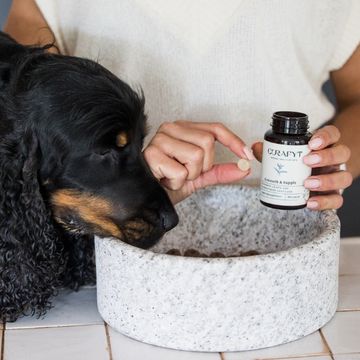
IMBY Probiotics for Dogs
A daily probiotic supplement to support healthy gut flora. Especially useful after illness, antibiotic treatment or a digestive upset.
The importance of regular exercise for healthy digestion
Exercise isn't just good for your dog's weight. It also keeps the gut moving. Regular walks help stimulate intestinal movement and encourage consistent bowel habits. Overweight dogs are more likely to experience digestive issues, which is one more reason to keep a close eye on their activity and body condition.
When to consult a vet about digestive problems
Some digestive upsets clear up on their own within a day or two. But certain signs mean you shouldn't wait: prolonged diarrhoea or loose stools, repeated vomiting, abdominal pain, sudden weight loss, constipation that won't resolve, a swollen belly or blood in the stools. Your vet can run the appropriate tests and advise on the right course of action, whether that's a hypoallergenic food trial, supplementation or medical treatment.
Support your dog's gut from the inside
IMBY supplements are formulated to complement a balanced diet, including probiotics designed for daily use.
Shop dog supplementsReferences
[1] Verlinden, A., Hesta, M., Millet, S., & Janssens, G. P. J. (2006). Food hypersensitivity reactions in dogs and cats: a review of 251 cases. Veterinary Dermatology, 17(4), 289–295. https://doi.org/10.1111/j.1365-3164.2006.00491.x
[2] Grześkowiak, Ł., Endo, A., Beasley, S., & Salminen, S. (2015). Microbiota and probiotics in canine and feline welfare. Anaerobe, 34, 14–23. https://doi.org/10.1016/j.anaerobe.2015.04.002
Share