




















Home
›
Expert Dog Health & Wellbeing
›
Why Is My Dog Slow to Get Up? Arthritis, Age and Cold Weather Explained

Why Is My Dog Slow to Get Up? Arthritis, Age and Cold Weather Explained
 by Dr. Elias Leocadio on Nov 12 2026· 8 min read
Key takeaways
- A slow get-up deserves a vet check at any age. Only an exam, with X-rays if needed, can confirm arthritis.
- Arthritis changes show up on X-ray in young dogs too: almost 4 in 10 dogs under four in one 2024 study.
- Cold may make joints feel worse, but that has not been proven in dogs.
- Joint nutrition works slowly, does best as a combination of ingredients, and sits alongside a healthy weight and the right exercise.
Almost 4 in 10 dogs aged 8 months to 4 years already showed arthritis changes on X-ray in a 2024 study, so a slow get-up this November deserves a closer look (Enomoto et al., 2024, Scientific Reports).
There was a time your dog launched off the sofa like a spring-loaded toaster. Now there's a pause, a stretch, and a small negotiation with the floor before he gets going.
Most of us shrug and blame the birthdays. By the end of this, you'll know what that slow get-up can mean, what the research says about cold weather, whether young dogs are really at risk, and when joint supplements make sense.
Sound familiar?
- He pauses before getting up from his bed, or at the bottom of the stairs
- You hear a click or a crack when he moves
- He's less keen on the long walk, or lies down sooner than he used to
- Cold, damp mornings always seem to be the worst
- He's only two or three, and you wonder if you're overthinking it
If any of that rings a bell, keep reading. Noticing is exactly what a good owner does.
Is the slow get-up just birthdays?
Your dog can't tell you his hips ache, so he tells you in installments: a pause here, a skipped jump there.
Owners typically notice stiffness that comes and goes through the day, less appetite for exercise, and changes in behaviour. A vet may find an uneven gait, lameness, pain when a joint is handled and a reduced range of movement, and X-rays can show bone spurs and hardened bone (Ragetly et al., 2025).
How common is it? Estimates run from 2.5% of dogs seen in routine practice to more than 80% of older and overweight dogs (Ragetly et al., 2025). A gap that wide tells you how easily it hides until somebody looks.
That's why a slow get-up deserves a vet check, whatever age is on the birth certificate. Only an exam, with X-rays if needed, can tell arthritis from ordinary stiffness.
Signs worth mentioning to your vet
- Stiffness that comes and goes through the day
- Reluctance to exercise or play
- Limping, an uneven gait, or soreness after exercise
- Behaviour changes: clingier than usual, or turning down cuddles
Is the weather to blame for the creaking?
Ask a dozen owners and most will swear their dog is stiffer on cold, damp mornings.
The science is a patchwork. In people, one review links lower temperatures to more osteoarthritis pain (Wang et al., 2023), while another finds no link with pain flares (Ferreira et al., 2024). In mice, cold exposure sped up cartilage damage (Zhang et al., 2025). In dogs, a Swiss study found colder ambient temperatures influenced the onset of acute disc extrusion, a spinal condition separate from arthritis (Barandun et al., 2020).
So the honest answer is: possibly, but unproven in dogs. One proposed explanation is that cold narrows blood vessels, which may reduce circulation around the joint and slow tissue repair so existing discomfort shows more, but that is a hypothesis nobody has confirmed in dogs.
When 62 dogs with arthritis wore activity collars and their owners filled in pain questionnaires, temperature and daylight explained under 1% of the day-to-day variation in activity (Katz et al., 2017). Activity is only a rough stand-in for pain, though, and dogs show discomfort in subtle ways: limping, skipping play, being clingier, turning down cuddles. A quiet collar doesn't rule out a sore dog.
Two years old and already creaky?
Arthritis has an old-dog reputation. The X-rays tell a different story.
In a 2024 single-practice study, 39.8% of dogs aged 8 months to 4 years (49 of 123) had X-ray signs of osteoarthritis in at least one joint, and about 23.6% also had joint pain (Enomoto et al., 2024), a strong signal rather than a national rate. Body weight is a risk factor even in young dogs, and in large-breed puppies too much calcium during rapid growth disrupts normal bone formation, so the calcium-to-phosphorus balance and energy intake need careful control (Guo et al., 2025).
Watch for lameness, stiffness, soreness after exercise or reluctance to play, and mention any of them to your vet rather than waiting for him to grow out of it.
Joint supplements: when to start, and what's worth paying for
The supplement aisle is loud. Here's the quiet version.
Joint nutrition works best as a long-term habit, starting with the right growth diet in puppyhood, rather than a last resort once the slow get-up arrives. It works gradually, so judge it over weeks, not days, and keep it alongside your vet's plan, never in place of it.
The evidence isn't equal across ingredients. Roughly from strongest to weakest:
- Omega-3 fatty acids (EPA and DHA, from fish, krill or algae oil): the best-supported option. They have reduced joint inflammation and pain and improved mobility in dogs (Ragetly et al., 2025; Guo et al., 2025).
- Green-lipped mussel: its omega-3s drive its effect, and it has increased mobility in studies (Guo et al., 2025).
- Boswellia and curcumin (turmeric): plant compounds that lower inflammatory messengers. A 42-day boswellia course improved the condition of dogs with arthritis (Nicotra et al., 2025).
- Collagen, including undenatured type II (UC-II): mixed. It reduced pain and lameness in one trial, though the effect faded once it stopped, and a second trial found no extra benefit (Bhathal et al., 2017).
- Glucosamine and chondroitin on their own: the weakest support (Barbeau-Grégoire et al., 2022), which is why they work best as one part of a combination.
Two label habits help. Look for the amount of each active ingredient declared on the pack, and be wary of any product that promises to prevent, treat or cure a disease, because European pet food rules don't allow those claims (FEDIAF, 2019). Whatever you choose, it works best alongside weight control and adapted exercise.
Joint support from the inside
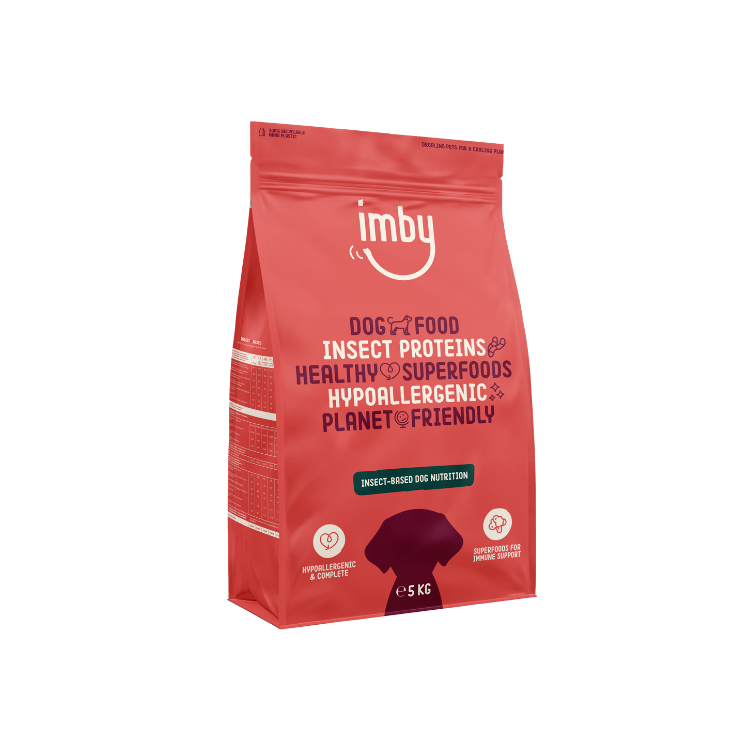
If you'd like to add daily joint support alongside your vet's plan, Curafyt's IMBY Hip & Joint is a vet-formulated daily supplement to help support healthy joints and mobility.
Curafyt's IMBY Hip & Joint
A vet-formulated daily supplement to help support healthy joints and mobility.
It doesn't replace a vet visit. If your dog is already slowing down, start there.
Your November joint check
- Watch him get up from lying down three mornings in a row, and note any pause, stiffness or uneven steps.
- If the signs hang around, book a vet check. Only an exam, with X-rays if needed, can confirm arthritis.
- Check his weight and body shape. Extra weight is one of the main risk factors, even in young dogs.
- Keep him moving through winter with shorter, steadier walks instead of skipped ones.
- If you add joint nutrition, give it weeks, not days, and keep it alongside weight control and exercise.
A slow get-up is information, and now you know what to do with it.
References
Barandun, M.A., Bult, S., Demierre, S., Vidondo, B., & Forterre, F. (2020). Colder ambient temperatures influence acute onset canine intervertebral disc extrusion. Frontiers in Veterinary Science, 7, 175.
Barbeau-Grégoire, M., Otis, C., Cournoyer, A., Moreau, M., Lussier, B., & Troncy, E. (2022). A 2022 systematic review and meta-analysis of enriched therapeutic diets and nutraceuticals in canine and feline osteoarthritis. International Journal of Molecular Sciences, 23(18), 10384.
Bhathal, A., Spryszak, M., Louizos, C., & Frankel, G. (2017). Glucosamine and chondroitin use in canines for osteoarthritis: A review. Open Veterinary Journal, 7(1), 36-49.
Enomoto, M., et al. (2024). Prevalence of radiographic appendicular osteoarthritis and associated clinical signs in young dogs. Scientific Reports, 14, 2827.
FEDIAF. (2019). Code of Good Labelling Practice for Pet Food.
Ferreira, M.L., Hunter, D.J., Fu, A., Raihana, S., Urquhart, D., & Ferreira, P.H. (2024). Come rain or shine: Is weather a risk factor for musculoskeletal pain? A systematic review with meta-analysis of case-crossover studies. Seminars in Arthritis and Rheumatism, 65, 152392.
Guo, X., Yuan, X., Farooq, N., Yang, Y., Zhu, Z., & Li, L. (2025). Nutritional strategies for managing joint health in companion animals. Animal Advances, 2, e022.
Katz, E.M., Scott, R.M., Thomson, C.B., Mesa, E., Evans, R., & Conzemius, M.G. (2017). Evaluation of the environmental bias on accelerometer-measured total daily activity counts and owner survey responses in dogs with osteoarthritis. Veterinary and Comparative Orthopaedics and Traumatology, 30(6), 385-390.
Nicotra, M., Iannitti, T., & Di Cerbo, A. (2025). Nutraceuticals, social interaction, and psychophysiological influence on pet health and well-being: Focus on dogs and cats. Veterinary Sciences, 12(10), 964.
Ragetly, G.R., Martins, Â., Ober, C.A., Boiocchi, S., & Nicolas, C.S. (2025). Efficacy of a joint supplement containing eggshell membrane among other ingredients to improve the mobility of dogs with osteoarthritis: A multicenter double-blind randomized placebo-controlled study. Frontiers in Veterinary Science, 12, 1561793.
Wang, L., Xu, Q., Chen, Y., Zhu, Z., & Cao, Y. (2023). Associations between weather conditions and osteoarthritis pain: A systematic review and meta-analysis. Annals of Medicine, 55(1), 2196439.
Zhang, Y., Fu, M., Zhou, C., et al. (2025). Cold exposure promotes the progression of osteoarthritis through downregulating APOE in cartilage. EMBO Molecular Medicine, 17(8), 2137-2162.
Share