
































Braque de l'Ariège: history, character and care
 by Nicolas Bartholomeeusen on Jun 14 2026· 7 min read
Key takeaways
- The Braque de l'Ariège is a rare French pointing breed from the Ariège region that nearly went extinct in the 1980s before a dedicated restoration programme brought it back.
- Expect an energetic, intelligent and loyal dog that needs at least 1 to 2 hours of exercise daily, plus mental stimulation like puzzle toys and early socialisation.
- Coat care is minimal, a weekly brush is enough, but floppy ears need regular checks since they raise the risk of infection.
- Watch for hip and elbow dysplasia, gastric torsion and ear infections, and budget €600 to €1,500 for a puppy, plus €600 to €1,200 a year for food, €200 to €500 for vet care, and €300 to €700 for insurance, vaccinations and training.
The Braque de l'Ariège, also known as the Ariège Pointer, is a rare breed of hunting dog originating from the Ariège region of France. This dog is known for its sturdy build, exceptional hunting skills and its friendly, loyal nature. As one of the descendants of the ancient French braques, the Braque de l'Ariège was specifically bred for hunting across varied terrain. Today, this breed is increasingly valued as a companion animal, thanks to its intelligence and trainability. Read on to discover more about the history, physical characteristics, requirements and unique personality of this fascinating breed.
Size: 60–67 cm
Weight: 25–30 kg
Temperament: Energetic, intelligent, gentle
Coat: Short, dense, white with orange or brown markings
Origin: France
FCI Group: Group 7 – Pointing Dogs
Life expectancy: 12–14 years
What are the origins of the Braque de l'Ariège?
The Braque de l'Ariège descends from classic continental pointing dogs and originates from south-western France, specifically the Ariège region. The breed was developed by crossing old French Braques with local hunting dogs, including white and orange varieties. This resulted in an energetic and efficient hunting dog that works effortlessly across varied terrain. The first breed standard was established in the 19th century. However, the introduction of foreign bloodlines, such as that of the English Pointer, threatened the breed's purity. The breed nearly became extinct in the 1980s, but thanks to a dedicated restoration programme, it is now thriving once again.What is the character and temperament of the Braque de l'Ariège?
The Braque de l'Ariège has an intelligent, sociable and energetic character, with strong loyalty to its owner and family. It is an excellent family dog and hunting dog, but requires sufficient mental and physical stimulation.What are its main character traits?
- Energetic: This dog has a high need for exercise and physical activity.
- Loyal: The Braque de l'Ariège forms strong bonds with its family and shows great affection.
- Sociable: Generally good with children and other dogs, provided it is well socialised.
- Intelligent: It learns quickly, but requires a consistent and positive training approach.
- Independent: Its hunting heritage makes it independent, which can be both an advantage and a challenge during training.
Behaviour towards strangers and other animals
Although the Braque de l'Ariège is friendly, it can appear reserved towards strangers. Its hunting instinct can be problematic with small pets, such as cats or rabbits, unless it is trained to live alongside them.What are the physical characteristics of the Braque de l'Ariège?
The Braque de l'Ariège has an athletic and elegant build, characteristic of an active hunting dog. It exudes strength and stamina.Height and weight
- Height: 56–65 cm for bitches, 60–67 cm for dogs.
- Weight: Between 25 and 30 kg.
Head and body
- Head: Narrow and long, with a slight stop and a prominent occipital protuberance.
- Body: Strong and harmoniously built, with a well-developed chest and straight backline.
- Ears: Long and slightly folded, in keeping with its elegant appearance.
Coat and colour
- Coat: Short, glossy and fine, requiring minimal grooming.
- Colour: White with orange, light brown or liver-coloured markings, often around the head and ears.
How do you care for a Braque de l'Ariège's coat?
Care for the Braque de l'Ariège is simple thanks to its short, tangle-free coat. However, there are a few important hygiene points to note.What are the basic requirements for coat care?
- Brushing: A weekly brush with a soft brush is sufficient to remove dead hairs and keep the coat in top condition.
- Bathing: Bathing is not often necessary and should only be done if the dog is particularly dirty.
- Nail care: Regular trimming is crucial to prevent discomfort.
How do you look after their ears and teeth?
- Ears: Check the ears weekly for dirt and infections, as floppy ears increase the risk of ear infections.[4]
- Teeth: Brush regularly with a special dog toothpaste to prevent plaque and dental problems.
What are the best living conditions for a Braque de l'Ariège?
The Braque de l'Ariège is best suited to active families and large open spaces.Can it live in a flat?
Although this dog can adapt to life in an urban environment, it needs space to move around. A house with a large fenced garden or a rural setting is ideal.Its special requirements:
- Space to run: It needs regular access to large, safe areas where it can play and run freely.
- Companionship: He forms strong bonds with his family and does not cope well with being left alone for long periods.
- Plenty of exercise: He needs at least 1 to 2 hours of intense physical activity every day.
What are common health problems in the Braque de l'Ariège?
The Braque de l'Ariège is generally a healthy breed, but he can be prone to certain conditions.What are the main health risks?
- Hip dysplasia: Abnormal development of the hip joints, which can lead to pain and mobility issues.[1]
- Elbow dysplasia: Problems with the elbow joint, often seen in active breeds.[2]
- Gastric torsion: A life-threatening condition in which the stomach twists and fills with gas.[3]
- Ear infections: Due to their drooping ears, these must be checked regularly.[4]
What is the life expectancy of the Braque de l'Ariège?
The life expectancy of the Braque de l'Ariège is between 12 and 14 years, depending on factors such as nutrition, exercise, genetics and medical care. Regular veterinary check-ups and a healthy lifestyle can contribute to a longer life.What are the costs and the budget required for a Braque de l'Ariège?
Puppy price : A purebred Braque de l'Ariège puppy usually costs between €600 and €1,500, depending on the breeder, pedigree and location.Additional annual costs:
- Nutrition: €600–€1,200.
- Veterinary care: €200–€500.
- Insurance, vaccinations and training: €300–€700.
How much exercise and training does a Braque de l'Ariège need?
The Braque de l'Ariège needs intensive daily exercise and mental stimulation to stay happy and healthy.How much exercise is needed?
- At least 1–2 hours a day, including walks, playtime and hunting activities.
- Activities such as retrieving, obedience classes or dog sports are highly recommended.
How do you train a Braque de l'Ariège?
- Use positive reinforcement.
- Provide regular mental stimulation, such as puzzle toys.
- Start socialisation early to encourage confident behaviour.[5]
Good to know
The critical socialisation window for puppies runs from roughly 3 to 12 weeks of age. Pups who miss out on varied experiences during this stretch are more likely to grow into shy or fearful adults, while structured early exposure to new sounds, objects and situations builds a calmer, bolder dog for life.[5]
What are some suitable names for a Braque de l'Ariège?
Here are some original name ideas for this breed:- Ariël – Referring to Ariège.
- Chase – Suiting its hunting background.
- Fleur – Delicate and elegant.
- Ranger – Tough and active.
- Noa – Powerful and simple.
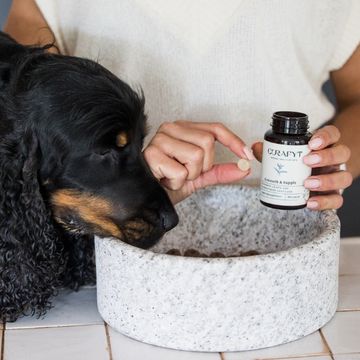
Support joints built for the field
An active, athletic breed like the Braque de l'Ariège puts real strain on hips and elbows over a lifetime of running and hunting. The right joint support can help keep him moving comfortably for years.
Shop joint & mobility supportReferences
[1] Diagnosis, prevention, and management of canine hip dysplasia: a review, Veterinary Medicine: Research and Reports, 2015. pmc.ncbi.nlm.nih.gov/articles/PMC6070021
[2] Editorial: Canine Hip and Elbow Dysplasia Improvement Programs Around the World: Success or Failure?, Frontiers in Veterinary Science, 2021. pmc.ncbi.nlm.nih.gov/articles/PMC8438193
[3] Incidence of and breed-related risk factors for gastric dilatation-volvulus in dogs, Journal of the American Veterinary Medical Association, 2000. pubmed.ncbi.nlm.nih.gov/10638316
[4] Frequency and predisposing factors for canine otitis externa in the UK, Canine Medicine and Genetics, 2021. pmc.ncbi.nlm.nih.gov/articles/PMC8422687
[5] Optimising Puppy Socialisation: Short- and Long-Term Effects of a Training Programme during the Early Socialisation Period, Animals, 2022. pmc.ncbi.nlm.nih.gov/articles/PMC9687081
Share