
























How to treat osteoarthritis in dogs
 by Valerie De Clerck on Sep 21 2023· 4 min read
Key takeaways
- See a vet at the first signs of osteoarthritis rather than waiting until your dog is in pain or lame, since some causes can be treated directly and a vet can prescribe anti-inflammatories.
- Keep your dog at a healthy body weight. Extra weight puts more strain on already affected joints.
- Favor several short, controlled walks on level ground over one long walk or vigorous play, since linear movement is safer for arthritic joints than jumping.
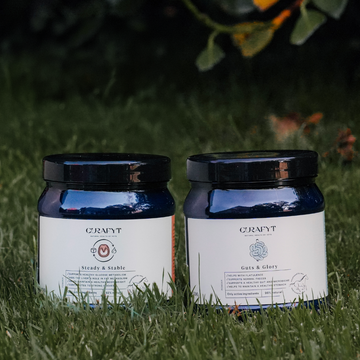
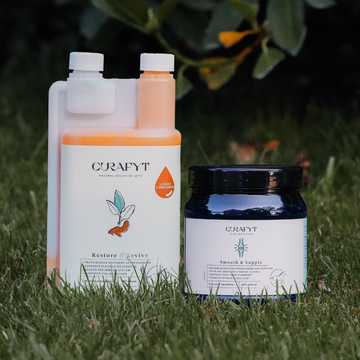
- A qualified animal physiotherapist and a joint supplement such as Smooth & Supple can support natural defences, cartilage and bone nutrition, joint and ligament flexibility, and blood flow as part of managing the condition.
Osteoarthritis in dogs is incurable, and it only moves in one direction: worse over time. The good news is that you can slow that decline and treat the symptoms it causes. The earlier you act, the more good it does. Better still, support your dog's joints even before he shows any signs of osteoarthritis.
What should you do if you suspect your dog has osteoarthritis?
Go to the vet
It's tempting to put off a vet visit until your dog is clearly in pain or limping, but the smarter move is to go at the first signs of stiffness. Sometimes there's a specific, treatable cause behind the symptoms. Your vet can also prescribe anti-inflammatories that dial down the inflammation driving osteoarthritis, as part of a wider management plan built around your dog [1][2].
A healthy body weight
A lot of dogs with osteoarthritis are carrying extra weight, and that's a shame, because every additional kilogram adds strain to joints that are already struggling. Weight is one of the few parts of this disease an owner can actually control [3][4].
What the numbers show
In one long-term study, only 10% of dogs kept at a lean body condition had osteoarthritis in two or more joints by age eight. Among their overweight littermates, that number was 77% [4]. A separate trial found lameness scores improved in dogs with hip osteoarthritis after they lost as little as 6% of their body weight [3].
Suitable exercise
Dogs with osteoarthritis still need movement to keep their joints from stiffening up further. Controlled, linear walking on level ground is easier on the joints than jumping for a ball or roughhousing with other dogs. A few short walks spread through the day beat one long one [1].
Physiotherapy
A qualified animal physiotherapist can make a noticeable difference for an older dog living with osteoarthritis, through targeted exercises, manual therapy and other rehabilitation techniques built into a broader management plan [1].
Nutritional supplement
Healthy bones and joints depend on the right nutrition. Feed your dog a balanced, complete diet, and consider adding a joint supplement on top of it.
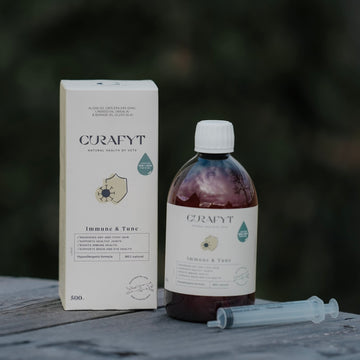
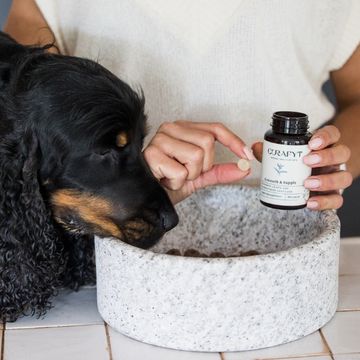
A supplement like Smooth & Supple is designed to support your dog's joints at four levels. Research on joint supplements for dogs, built around ingredients such as glucosamine, chondroitin and green-lipped mussel, has linked this kind of daily support to measurable improvements in mobility and comfort [5][6]:
- Supports your dog's natural defences
- Supports cartilage and bone by supplying extra nutrients
- Helps keep joints and ligaments flexible
- Supports healthy blood flow, an important part of recovery
Start offering it the moment your dog is slower to get up in the morning. Or start earlier, while he's still bounding around like a puppy, to help him stay that way.
Give your dog's joints daily support
Smooth & Supple is Curafyt's vet-formulated joint supplement for dogs. Browse the full range of joint and mobility supplements to find the right fit for your dog.
Shop joint supplements for dogsReferences
1. COAST Development Group. International consensus guidelines for the treatment of canine osteoarthritis. Front Vet Sci. 2023;10:1137888.
2. Salichs M, Badiella L, Sarasola P, Homedes J. Efficacy and safety of enflicoxib for treatment of canine osteoarthritis: a 6-week randomised, controlled, blind, multicentre clinical trial. Vet Rec. 2022;191:e949.
3. Impellizeri JA, Tetrick MA, Muir P. Effect of weight reduction on clinical signs of lameness in dogs with hip osteoarthritis. J Am Vet Med Assoc. 2000;216(7):1089-1091.
4. Kealy RD, Lawler DF, Ballam JM, et al. Effects of diet restriction on life span and age-related changes in dogs. J Am Vet Med Assoc. 2002;220(9):1315-1320.
5. Comblain F, Serisier S, Barthelemy N, Balligand M, Henrotin Y. Review of dietary supplements for the management of osteoarthritis in dogs in studies from 2004 to 2014. J Vet Pharmacol Ther. 2016;39(1):1-15.
6. Corbee RJ. The efficacy of a nutritional supplement containing green-lipped mussel, curcumin and blackcurrant leaf extract in dogs and cats with osteoarthritis. Vet Med Sci. 2022;8(3):1025-1035.
Share