


























Is vegan dog food suitable for all dog breeds?
 by Nicolas Bartholomeeusen on Jul 08 2026· 5 min read
Key takeaways
- Nutritional needs vary by breed, so a vegan diet that suits a German Shepherd's high protein demands may not fit a French Bulldog's smaller, more sensitive digestive system.
- Dogs need 10 dietary essential amino acids that a well-formulated vegan diet can supply through a wider mix of plant ingredients or direct supplementation.
- Breeds like Labrador Retrievers, prone to obesity partly due to a genetic variant in the POMC gene, can benefit from vegan formulas for weight management, while others such as German Shepherds may need added supplements to close protein gaps.
- Any switch to vegan dog food should happen gradually over one to two weeks and ideally with veterinary guidance, since abrupt changes can trigger digestive upset.
Just as many people are switching from a traditional to a vegan diet, more and more dog owners are making the same shift for their pets. Vegan dog food is growing in popularity, but before making any change, it's worth thinking carefully about whether it's appropriate for your specific breed.
Nutritional needs of different dog breeds
Different dog breeds have different nutritional needs. Beyond size and age, breed itself can significantly influence dietary requirements. A Labrador Retriever tends to overeat, making weight management a genuine concern [1], while a Chihuahua is often selective in a way that can cause the opposite problem. Any vegan dog food you consider should be appropriate for your specific breed.
Nutritional requirements
While individual breed needs vary, all dogs share certain core requirements. Dog nutrition involves a complex balance of macro- and micronutrients that work together to support health and wellbeing.
Proteins
Proteins are the building blocks of the body, essential for muscle development, organ function, skin, and coat health. They also support the immune system. Proteins are made up of amino acids: dogs need 22 different ones, but their bodies can synthesise 12 of these. The remaining 10, the dietary essential amino acids, must come from food.
Animal-based sources like meat, fish, and insect protein tend to be rich in all essential amino acids. It's also possible to source them from vegan dog food, which typically uses a wider combination of ingredients to cover all 10. Alternatively, amino acids can be supplemented directly into the food to achieve complete vegan nutrition.
Fats
Fats provide a highly concentrated source of energy and are particularly important for active dogs. They also support healthy skin and coat condition and are involved in cell growth and hormone production.
Carbohydrates
Dogs don't strictly need carbohydrates to survive, but they're a useful energy source, especially for active breeds. Carbohydrates also provide dietary fibre, which supports digestive health and helps dogs feel satisfied after meals.
Vitamins and minerals
All dogs need a range of vitamins and minerals. Calcium and phosphorus are essential for strong bones and teeth; vitamin A supports eye health; B vitamins help the body produce energy from food. The quantities required vary by breed, size, and life stage.
Breed-specific considerations for vegan dog food
Different breeds bring different factors to any dietary change. Here are some common breeds with the specific points worth keeping in mind.
- Labrador Retriever: Labradors are particularly prone to obesity, research has identified a genetic variant in the POMC gene that affects appetite regulation in this breed [1]. A well-balanced vegan dog food can help keep calorie intake in check while still meeting nutritional needs.
- German Shepherd: German Shepherds are energetic working dogs with high muscle mass. They need a protein-rich diet to maintain strength and stamina. A vegan dog food can work, but may benefit from additional dog supplements to close any nutritional gaps.
- French Bulldog: French Bulldogs are small dogs with modest calorie needs. They can be prone to digestive issues, including flatulence, easily digestible vegan ingredients may be worth considering.
- Boxer: Boxers can be prone to heart problems. Food rich in antioxidants that support cardiovascular health is worthwhile. Consult a vet to find a formula that addresses this specifically.
- Golden Retriever: Golden Retrievers need a balanced diet to support an active lifestyle, a good mix of proteins, fats, and carbohydrates. Vegan food can help with weight management, as plant-based formulas tend to be slightly lower in calories.
- Shih Tzu: Small dogs need smaller meals. Shih Tzus are also prone to food allergies. Vegan and vegetarian dog food generally avoids the most common animal-protein allergens, making it a reasonable option for dogs with allergic symptoms.
Consulting a veterinarian
Choosing the right food for your dog, vegan or otherwise, can be complicated by breed, age, energy level, and existing conditions. Before making significant dietary changes, getting advice from a vet is the most reliable way to ensure you're making the right call for your specific dog. They can also help monitor the transition and flag any issues early.
Adjusting the diet
When switching to vegan kibble, tailoring the diet to your dog's individual needs is worth the effort. A few practical points:
- Protein levels: vegan dog food may have a different protein profile to meat-based food. Choose a brand that delivers complete protein. The European pet food regulator FEDIAF defines a minimum crude protein content of 18% DM for adult dogs [2]; IMBY's plant-based formula contains 24%, comfortably above that minimum.
- Additional nutrients: beyond protein, check that the food you choose includes the right vitamins and minerals. Taurine and L-carnitine, in particular, are important for heart health and should be present in quality vegan formulas.
- Adapt to your dog's needs: portions should reflect your dog's age, weight, and activity level, not a one-size-fits-all standard.
- Gradual introduction: sudden diet changes can cause digestive upset. Introduce any new food gradually over one to two weeks, mixing it with your dog's current food and shifting the ratio slowly [3].
Want to try a vegan formula for your dog?
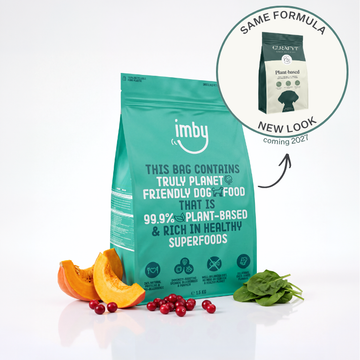
IMBY's Plant-Based Dog Food contains 24% protein, above the FEDIAF minimum, from peas, lentils, and sweet potato. Suitable for most adult dog breeds.
View IMBY Plant-Based Dog FoodReferences
[1] Raffan, E. et al. (2016). A deletion in the canine POMC gene is associated with weight and appetite in obesity-prone Labrador Retriever dogs. Cell Metabolism, 23(5), 893–900. https://doi.org/10.1016/j.cmet.2016.04.012
[2] European Pet Food Industry Federation (FEDIAF). (2021). Nutritional Guidelines for Complete and Complementary Pet Food for Cats and Dogs. Brussels: FEDIAF. https://europeanpetfood.org/self-regulation/nutritional-guidelines/
[3] Liao, P. et al. (2023). Abrupt dietary change and gradual dietary transition impact diarrheal symptoms, fecal fermentation characteristics, microbiota, and metabolic profile in healthy puppies. Animals, 13(8), 1300. https://doi.org/10.3390/ani13081300
Share