





























Reverse Sneezing Dog: Everything You Need to Know and Do
 by Nicolas Bartholomeeusen on Jun 14 2026· 7 min read
Key takeaways
- Reverse sneezing is a brief, reflex-driven event, usually lasting between 10 seconds and 2 minutes, caused by a spasm in the throat and soft palate rather than a true sneeze.
- Triggers range from environmental irritants like dust, strong odours and temperature changes to physical traits, since brachycephalic and small breeds are more prone to episodes.
- You can often shorten an attack by staying calm, gently stroking your dog, briefly pinching the nose shut, or massaging the throat.
- Call a veterinarian if episodes become frequent, involve blood or discharge, or come with breathing trouble between attacks, since these signs can point to an underlying condition.
Reverse sneezing in dogs is a reflex in which the dog inhales air forcefully through the nose, causing a snoring or wheezing sound. This phenomenon lasts from a few seconds up to a maximum of 2 minutes and is usually harmless. Nevertheless, it can seem alarming to dog owners. In this article, you'll discover the causes, symptoms and treatments for reverse sneezing. You'll also learn when to visit a veterinarian and how to prevent attacks.
What is reverse sneezing in dogs?
Reverse sneezing is a reflex reaction in which the dog takes a series of repeated, forceful breaths through the nose, accompanied by a snorting sound and a tense body posture. This is caused by irritation of the throat, nasal cavity or soft palate.
What happens physically during a reverse sneeze?
Reverse sneezing is caused by a sudden spasm in the muscles of the throat and soft palate, which forces the dog to inhale air forcefully instead of exhaling, as it would during a normal sneeze.
What causes reverse sneezing?
There are various factors that can trigger reverse sneezing in dogs.
What environmental factors cause reverse sneezing?
Environmental factors that can trigger an attack include:
- Allergens such as dust, pollen and household cleaning products.
- Strong odours such as perfume, smoke or candles.
- Temperature fluctuations (cold air when inhaled).
Which physical characteristics make a dog more susceptible?
Certain dog breeds and physical characteristics increase the likelihood of reverse sneezing:
- Brachycephalic breeds such as pugs and French bulldogs due to a narrowed airway.
- Small dog breeds such as Chihuahuas and Dachshunds, due to a more sensitive soft palate.
- Dogs with a long soft palate that blocks the airway more easily.
Good to know
A 2022 clinical study of 30 dogs with reverse sneezing found toy breeds under 5 kg made up half of all cases, and small breeds (5 to 15 kg) another quarter, while large dogs over 30 kg accounted for just 7 percent. Body size is one of the strongest predictors of who gets an attack. [1]
Can medical conditions cause reverse sneezing?
Yes, medical conditions can also play a role:
- Infections such as colds, throat infections or kennel cough.
- Nasal polyps or tumours that affect airflow.
- Parasites such as nasal mites that cause irritation.
How do you recognise reverse sneezing in dogs?
Reverse sneezing has a few clear symptoms that distinguish it from other respiratory problems.
What sounds does a dog make when reverse sneezing?
A dog suffering from reverse sneezing produces characteristic sounds, such as:
- A snoring or sniffing sound.
- Rattling, rapid breaths.
- Sometimes slight retching movements.
What does the dog's body look like during an attack?
During an attack, the dog adopts a typical posture:
- Neck extended: the neck stretches forward as the dog tries to clear the airway.
- Legs spread wide apart for balance.
- Body tensed without loss of consciousness.
How long does a reverse sneezing attack last?
An episode usually lasts between 10 seconds and 2 minutes and usually stops on its own. [2]
What can you do during a reverse sneezing fit?
If your dog is having an attack, you can use a few simple techniques to help the episode stop more quickly.
How can you calm your dog?
- Speak calmly to the dog and avoid sudden movements.
- Stay close: gently stroke your dog's back or chest.
What techniques help to stop a fit?
- Briefly pinch the nose shut: hold the nostrils closed for a moment so that the dog swallows and the seizure stops.
- Massage the throat: gently rub the throat to relax the muscles.
- Blow a gentle stream of air into the nose: this can help break the reflex.
These are the same three techniques recommended by Cornell University's Riney Canine Health Center: closing the nostrils briefly, massaging the throat, and blowing gently on the face to encourage the dog to swallow. [2]
When should you take your dog to the veterinarian?
Reverse sneezing is usually harmless, but in some cases a visit to the veterinarian is necessary.
What signs indicate a serious problem?
- Frequency: if reverse sneezing occurs regularly.
- Blood or discharge from the nose.
- Difficulty breathing between attacks.
- Loss of consciousness or extreme panic during an episode.
Frequency is worth paying attention to. In the 2022 case study, 60 percent of dogs had chronic reverse sneezing (lasting more than three months) and 60 percent had episodes at least once a week, and the authors concluded the reflex should always be investigated properly rather than dismissed as harmless by default. [1]
What medical tests can be carried out?
A veterinarian can carry out examinations such as:
- Endoscopy of the throat to detect irritations or polyps.
- X-rays to detect structural abnormalities.
- Allergy tests if allergens appear to be the cause.
How can you prevent reverse sneezing?
Although you cannot completely eliminate reverse sneezing, you can minimise the risk.
What environmental changes can help?
- Avoid smoke, perfumes and cleaning products near your dog.
- Use an air purifier for dogs with allergies.
- Keep the environment clean and vacuum regularly.
Can you prevent reverse sneezing with nutrition and supplements?
- Omega-3 fatty acids may support healthy airways as part of a balanced diet.
- Honey or chamomile tea are sometimes used as gentle, natural soothing remedies, though neither is a proven treatment.
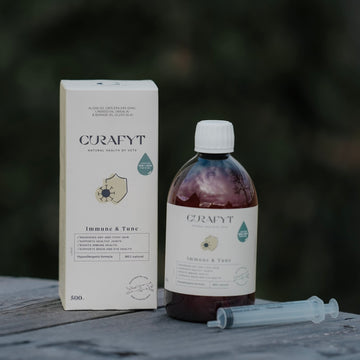
Immune & Tune Supplement
A vet-formulated, plant-based omega-3 supplement that supports everyday immune health, skin and joints, as a daily addition alongside the environmental changes above. It doesn't prevent reverse sneezing attacks directly, but it supports the immune system that helps your dog cope with allergens and irritation more broadly.
Does reverse sneezing affect dogs' health?
Reverse sneezing itself is usually harmless and does not cause serious health problems, unless it is caused by underlying conditions.
Can chronic reverse sneezing cause permanent damage?
No, as long as there is no underlying condition, reverse sneezing does not lead to permanent damage. That said, the same 2022 study found inflammatory airway disorders in 57 percent of the dogs examined, which is exactly why episodes that keep coming back are worth having checked rather than waited out. [1]
Frequently asked questions about reverse sneezing in dogs
Below you will find answers to some frequently asked questions about reverse sneezing.
Is reverse sneezing the same as an allergic reaction?
No, reverse sneezing is a reflex, whereas allergies are an immune response with symptoms such as itching, rashes or sneezing.
Does reverse sneezing require medication?
In most cases, medication is not necessary. Antihistamines can sometimes help with allergic triggers. In the 2022 case study, corticosteroids were the most common treatment prescribed (77 percent of dogs), yet more than 60 percent of dogs with follow-up data kept reverse sneezing anyway. That gap is a good reason to focus on finding and managing the trigger rather than medicating each episode. [1]
Can dogs choke from reverse sneezing?
No, dogs still get oxygen, even during a reverse sneezing fit.
Conclusion
Reverse sneezing in dogs is a harmless but often alarming phenomenon in which the dog suddenly breathes with a snorting or sniffing sound. Causes range from allergens and strong odours to anatomical predispositions such as a long soft palate. An episode is usually brief and can be stopped by briefly pinching the nose shut or massaging the throat. Although it is usually harmless, frequent reverse sneezing can be a sign of an underlying health problem. If in doubt, a visit to the veterinarian is recommended.
Support your dog's daily wellbeing
A healthy diet won't stop every reverse sneezing episode, but daily omega-3 support helps your dog's immune system and airways stay resilient. Try Immune & Tune.
Shop Immune & TuneReferences
[1] Talavera, J., Sebastian-Marcos, P., Santarelli, G., et al. \"Reverse Sneezing in Dogs: Observational Study in 30 Cases.\" Veterinary Sciences, 2022;9(12):665.
[2] Cornell University College of Veterinary Medicine, Riney Canine Health Center. \"Reverse Sneezing.\"
Share