























Spondylosis Dog: Recognise Symptoms and Treatment Options
 by Nicolas Bartholomeeusen on Jun 14 2026· 7 min read
Key takeaways
- Spondylosis is a chronic spinal condition where bony growths form between vertebrae, and it tends to affect older dogs and large breeds like Boxers, German Shepherds, Labradors, Rottweilers and Dobermans most.
- Watch for stiffness when standing or lying down, a stiff or unsteady gait, pain when the back is touched, and reduced enthusiasm for stairs or jumping.
- Vets diagnose it through physical exams, X-rays, and sometimes a CT scan or MRI if nerve compression is suspected.
- There is no cure, but pain medication, physiotherapy, weight management, orthopaedic bedding and joint supplements such as glucosamine and omega-3 can help a dog stay comfortable for years.
Spondylosis in dogs is a degenerative condition of the spine, where bony growths called osteophytes form between the vertebrae. It can restrict movement, cause pain and, in some cases, lead to nerve problems. Older dogs and large breeds are particularly at risk. So how do you recognise it early, and what can actually be done? Below we go through the causes, the warning signs, the treatment options and a few ways to help your dog stay comfortable for longer.
What is spondylosis in dogs?
Spondylosis is essentially the spine's own repair response gone a bit too far. Faced with wear and tear or instability between vertebrae, the body responds by laying down extra bone tissue to stabilise the area. Over time this can bridge adjacent vertebrae with actual bone, and the back loses some of its natural flexibility as a result.
What causes spondylosis in dogs?
Spondylosis is caused by a combination of old age, genetic predisposition and prolonged strain on the spine. Boxers in particular seem to inherit a real tendency toward it: one genetic study estimated heritability of osteophyte development at 25-48%, depending on the spinal site examined [1]. Other risk factors include:
- Congenital abnormalities of the spine
- Obesity, which puts extra pressure on the back
- Trauma or previous back injury
- Excessive strain, for example from sport or work
Which dog breeds are prone to spondylosis?
Although spondylosis can occur in any dog, some breeds are clearly at higher risk:
- Boxer
- German Shepherd
- Labrador Retriever
- Rottweiler
- Doberman
These breeds are genetically more prone to joint and back problems, and the numbers back that up. A radiographic study of over 2,000 purebred dogs found spondylosis in 18% overall, but in Boxers alone that figure jumped to 55% [2]. A separate study of 849 Italian Boxers put breed prevalence as high as 84% [1]. German Shepherds and Labrador Retrievers were also among the breeds most frequently diagnosed in the same research [2].
Good to know
Age is the single biggest risk factor. Dogs with spondylosis were significantly older, on average, than dogs without it in the same 2,000-dog study [2]. It is rarely a young dog's disease, even in high-risk breeds.
What are the symptoms of spondylosis in dogs?
Spondylosis develops slowly, which is exactly why it gets missed for so long. The most common symptoms are:
- Stiffness and difficulty standing up or lying down
- Changes in gait, such as a stiff or unsteady walk
- Painful reactions when the back is touched
- Reduced activity and less enthusiasm when moving
- Difficulty climbing stairs and jumping
- Arched back or tense posture
- Reduced control over the hind legs
- Difficulty urinating or defecating in cases of severe nerve compression
- Behavioural changes, such as aggression or listlessness
How is spondylosis diagnosed?
A vet will usually work through this in stages:
- Physical examination and observation of posture and exercise
- X-rays to detect bone spurs on the vertebrae
- A CT scan or MRI if nerve compression is suspected
What treatment options are available for spondylosis in dogs?
Spondylosis itself can't be cured. The bone bridges that have already formed are permanent. What treatment actually does is reduce pain and keep the dog moving as well as possible, for as long as possible.
Pain relief and medication
- NSAIDs such as carprofen or meloxicam reduce inflammation and pain.
- Muscle relaxants help to relieve spasms in the back.
- Natural painkillers, such as turmeric or omega-3 oils, can offer additional support, though the evidence varies quite a bit by ingredient (more on that below).
Physiotherapy and exercise
- Gradual and consistent exercise, such as short walks.
- Hydrotherapy (swimming) reduces the strain on the joints.
- Laser therapy and acupuncture improve blood circulation and relieve pain.
Lifestyle changes
- Weight management to reduce strain on the back.
- Orthopaedic dog beds for extra support.
- Avoid stairs and jumping by using ramps or lifting.
Dietary supplements
Not all joint supplements carry the same weight of evidence, and it's worth being honest about that rather than just listing ingredients:
- Omega-3 fatty acids (fish oil) have the strongest support. A 2022 review of 20 clinical trials found real analgesic benefit in dogs with osteoarthritis, with only 2 of the 20 trials showing no effect [3].
- Glucosamine and chondroitin sulfate are the most commonly sold joint ingredients, but the same review found the opposite pattern for these used alone: 8 of 9 trials showed no measurable benefit, leading the authors to conclude they shouldn't be relied on by themselves for pain relief [3].
- Combined nutraceuticals that pair several ingredients, such as glucosamine, chondroitin, hyaluronic acid and undenatured type II collagen, have performed better in trials than glucosamine or chondroitin alone. One placebo-controlled study found a significant drop in pain scores after 60 days on a combined formula [4].
- Vitamins C and E are commonly included as antioxidants, though the evidence specific to joint health in dogs is thinner than for the ingredients above.
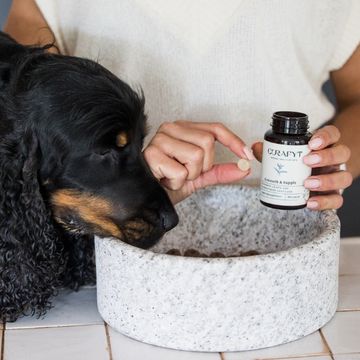
Smooth & Supple Supplement
A daily joint supplement for dogs with stiffness, ageing joints or extra strain on the back, formulated to support cartilage, flexible movement and the body's normal inflammatory response.
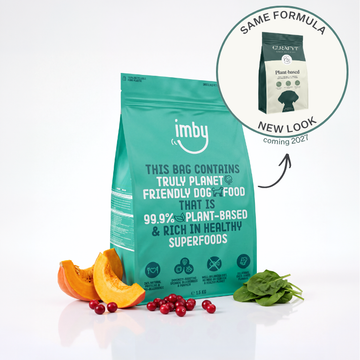
IMBY Hip & Joint Supplement
A combined joint formula built around the ingredient groups shown above, glucosamine, chondroitin and collagen alongside omega-3, for dogs already showing stiffness or at higher genetic risk.
What is the prognosis for a dog with spondylosis?
The outlook depends mostly on how far things have progressed by the time it's caught. With proper treatment and management, most dogs go on to live comfortably for years. Catching it early, and adjusting the dog's routine and diet accordingly, makes a real difference to how that plays out.
How can spondylosis in dogs be prevented?
Spondylosis can't always be prevented outright, but a few habits lower the risk:
- Maintaining a healthy weight
- Low-impact exercise such as walking and swimming
- Avoiding overexertion during the early years
- Providing joint supplements for breeds at increased risk, ideally with omega-3 as a core ingredient given the evidence above [3]
Conclusion
Spondylosis in dogs is a common, chronic condition, and it mainly catches up with older and larger breeds. Symptoms range from mild stiffness to seriously limiting mobility problems, so early signs are worth taking seriously rather than writing off as "just getting old." There's no cure, but the combination of medication, physiotherapy, adapted exercise and the right nutrition can make a real difference to day-to-day comfort. A vet visit for a personalised treatment plan is always worth it before starting anything new.
Support your dog's joints every day
If your dog is an at-risk breed, getting older, or already showing early stiffness, a daily joint supplement is a simple place to start. Smooth & Supple is formulated for exactly that: cartilage support and comfortable movement, one scoop at a time.
Shop Smooth & Supple SupplementReferences
[1] Carnier P, Gallo L, Sturaro E, Piccinini P, Bittante G. Prevalence of spondylosis deformans and estimates of genetic parameters for the degree of osteophytes development in Italian Boxer dogs. J Anim Sci. 2004;82(1):85-92. PMID: 14753351.
[2] Kranenburg HC, Voorhout G, Grinwis GCM, Hazewinkel HAW, Meij BP. Diffuse idiopathic skeletal hyperostosis (DISH) and spondylosis deformans in purebred dogs: a retrospective radiographic study. Vet J. 2011;190(2):e84-e90. PMID: 21571557.
[3] Barbeau-Grégoire M, Otis C, Cournoyer A, Moreau M, Lussier B, Troncy E. A 2022 systematic review and meta-analysis of enriched therapeutic diets and nutraceuticals in canine and feline osteoarthritis. Int J Mol Sci. 2022;23(18):10384. PMID: 36142319.
[4] Martello E, Bigliati M, Adami R, Biasibetti E, Bisanzio D, Meineri G, Bruni N. Efficacy of a dietary supplement in dogs with osteoarthritis: a randomized placebo-controlled, double-blind clinical trial. PLoS One. 2022;17(2):e0263971. PMID: 35171954.
Share
Grazie siete un aiuto prezioso, ci supportate e rassicurate, grazie ancora….