





















How to Choose the Best Dog Food topper for Your Pet?
 by Nicolas Bartholomeeusen on Jun 14 2026· 4 min read
Key takeaways
- Start by naming your dog's main goal, whether that's boosting appetite, addressing a health issue, or simply adding variety, since this decides which topper you actually need.
- Read the ingredients list rather than the marketing claims. Ingredients are listed by weight, so a quality protein at the top of the list matters more than the words on the front of the bag.
- Match functional additives like glucosamine, probiotics, or L-tryptophan to your dog's specific needs, and check the nutritional breakdown of protein, fat, fibre, and moisture against their age, activity level, and weight.
- In one case, combining kibble with a plant-based topper containing algae oil and inulin helped a Labrador with a dull coat and excess weight lose 7% of her body weight in 8 weeks while her coat visibly improved.
The range of premium dog food toppers is growing fast, and that makes choosing one harder, not easier. This ten-step checklist helps you make an informed choice, one that meets your dog's specific needs and lines up with your own values.
Your 10-step checklist
- Determine the main objective – Do you want to boost your dog's appetite, address a specific health issue, or simply add variety?
- Analyse the current diet – Check the label. Omega-3s support skin and coat condition [3], and prebiotics such as inulin feed the good bacteria in your dog's gut [1]. If either is missing, supplement for it directly.
- Check for allergies – A single protein source, like insect or duck, or a plant-based option, tends to work well for sensitive dogs. Watch for hidden animal fats on the label too.
- Read the ingredients list, not the marketing claims – Ingredients are listed by weight, so a high-quality protein at the top of the list matters more than anything printed on the front of the bag [2].
- Check the nutritional analysis – Pay attention to crude protein, fat, fibre and moisture, and match these to your dog's age, activity level and weight.
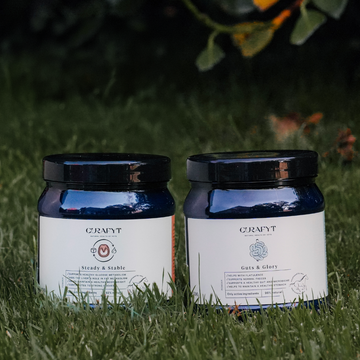
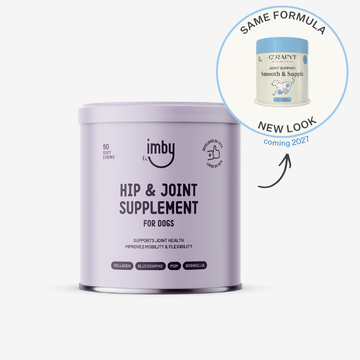
- Functionality and additives – Glucosamine supports joints (found in a Hip & Joint Supplement), probiotics support digestion (like Guts & Glory), and L-tryptophan has a calming effect (as in Calm & Chill). Skip anything with artificial colourings.
- Sustainability and origin – Choose brands with short supply chains, insect- or plant-based protein, and transparent CO₂ reporting.
- Texture and taste test – Try sample sachets first. Some dogs prefer crunchy over wet, or the other way round.
- Price versus value – Work out the cost per portion. A concentrated premium brand can look pricier per kilo but often works out more economical to feed.
- Consult your vet on medical diets – Specialist advice matters most for kidney or pancreatic conditions. Don't guess here.
Good to know
A randomised, single-blinded crossover trial found that dogs fed an essential-fatty-acid-enriched diet showed lower pruritus scores within weeks [3]. An earlier trial supplementing flaxseed and sunflower seed found a similar bump in coat condition, though it faded after four weeks [4], so consistency matters more than a single topper session. Separately, inulin-type prebiotics have been shown to shift gut bacteria and blood metabolites in overweight dogs [1].
A real example: Luna's story
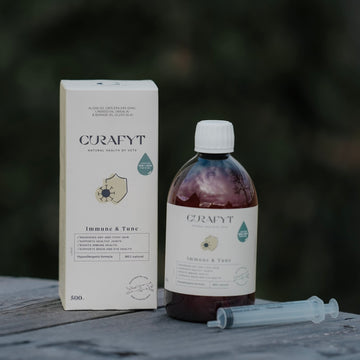
Labrador Luna, 5 years old, had a dull coat and had put on weight. An analysis of her diet turned up a shortfall in omega-3 and fibre. Her owner started combining her kibble with a plant-based topper rich in algae oil, similar to Curafyt's Immune & Tune Supplement, alongside a prebiotic like the inulin in Guts & Glory. Eight weeks later, Luna's weight had dropped by 7%, and her coat was noticeably shinier.
The bottom line
Work through purpose, ingredients, functionality and sustainability in order, and you'll land on a topper that's not just tasty. It'll support your dog's health, and do a little less damage to the planet while it's at it.
Ready to add a topper that pulls its weight?
Browse Curafyt's range of vet-formulated dog supplements, built to fill exactly the gaps a checklist like this one is designed to catch.
Shop dog supplementsReferences
[1] Alexander C, Cross TL, Devendran S, et al. Effects of prebiotic inulin-type fructans on blood metabolite and hormone concentrations and faecal microbiota and metabolites in overweight dogs. Br J Nutr. 2018;120(6):711-720.
[2] Callon MC, Cargo-Froom C, DeVries TJ, Shoveller AK. Canine food preference assessment of animal and vegetable ingredient-based diets using single-pan tests and behavioral observation. Front Vet Sci. 2017;4:154.
[3] Bensignor E, Morgan DM, Nuttall T. Efficacy of an essential fatty acid-enriched diet in managing canine atopic dermatitis: a randomized, single-blinded, cross-over study. Vet Dermatol. 2008;19(3):156-162.
[4] Rees CA, Bauer JE, Burkholder WJ, Kennis RA, Dunbar BL, Bigley KE. Effects of dietary flax seed and sunflower seed supplementation on normal canine serum polyunsaturated fatty acids and skin and hair coat condition scores. Vet Dermatol. 2001;12(2):111-117.
Share