































Meal mite allergy in dogs: causes, symptoms and solutions
 by Nicolas Bartholomeeusen on Jun 14 2026· 5 min read
Key takeaways
- Flour mite allergy in dogs is rare, but it can still trigger itching, skin redness, and excessive licking or scratching of the paws.
- Watch for respiratory signs like coughing, sneezing, and wheezing, plus gastrointestinal issues such as vomiting or diarrhoea, since both can point to a reaction.
- Flour mites favor warm, humid storage conditions, roughly 25 to 30 degrees Celsius with at least 70% humidity, so airtight containers and a clean storage area go a long way toward prevention.
- If food shows a musty smell, lumps, or a dust-like coating, throw it out, clean the storage area, and wash food bowls with warm water and washing-up liquid before offering a fresh supply.
As a dog owner, you naturally want the best for your dog. But did you know that flour mites can have a negative impact on your dog’s health without you even realising it? Although flour mite allergy is relatively rare, it can cause allergic reactions in some dogs. Flour mites are commonly found in dry forms of nutrition such as flour and grains. In this article, you can read all about flour mites, how to recognise an allergy and what you can do to protect your dog.
What are flour mites?
Flour mites, also called storage mites (the species most often involved is Tyrophagus putrescentiae), are microscopic arachnids belonging to the mite family. They are considered a food pest and often infest cereal products and other dry foods. Flour mites thrive in kitchens and storage areas where food is not stored correctly. A review of the veterinary literature on storage mites in commercial pet food found they can multiply directly inside sealed kibble bags once the bag has been opened and resealed, entering through small gaps in the seal rather than boring through the packaging itself [1].
How do you recognise a flour mite allergy in dogs?
Although flour mite allergy in dogs is rare, it can cause problems in sensitive animals. Symptoms of an allergic reaction may include:
- Itching and skin irritation (excessive licking, scratching or biting of the paws)
- Redness and inflammation of the skin
- Respiratory problems such as coughing, sneezing or wheezing
- Gastrointestinal symptoms such as vomiting or diarrhoea
Good to know
Dogs that are already sensitised to house dust mites can react to storage mites in food too, since the two overlap immunologically. Research suggests some of that cross-reaction is non-specific rather than a true separate allergy, which is part of why a flare after a food change can look like a new food allergy when it's really the storage mites [2]. A veterinarian can help tell the two apart.
If you suspect your dog is allergic to flour mites, consult a veterinarian for a proper diagnosis and treatment.
Where are flour mites found?
Flour mites are mainly found in flour, cereal products and other dry foods. They need a warm, damp environment to survive. The ideal conditions for flour mites are:
- Temperature: between 25 and 30 degrees Celsius
- Humidity: at least 70%
They are therefore mainly found in warm and humid areas where nutrition is stored for long periods.
How can you prevent flour mite allergy in your dog?
Preventing flour mite infestation starts with proper storage of dog food. Here are some effective measures:
- Store dog food in airtight containers to prevent infestation.
- Check your stock regularly for signs of flour mites, such as a musty smell, lumps or a dust-like coating.
- Keep the storage area clean by vacuuming regularly and wiping down surfaces.
- Place bay leaves near the food, as the scent may deter flour mites.
- Buy smaller bags your dog will finish within a few weeks, so food doesn't sit open and exposed for months.
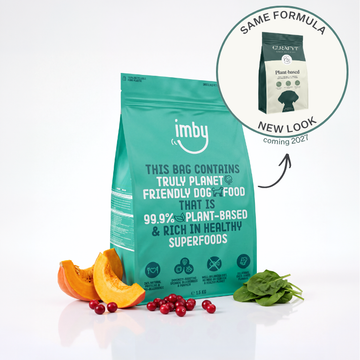
IMBY GI Sensitive Dog Food
Grain-free, insect-based kibble for dogs with food sensitivities, with prebiotics for healthy digestion.
How do you remove flour mites from dog food?
If you suspect your dog’s food is infested with flour mites, it is important to take immediate action:
- Throw away the infested food to prevent further spread.
- Clean the storage area thoroughly by vacuuming and wiping down surfaces with a damp cloth.
- Wash the food bowls with warm water and washing-up liquid to remove all possible traces of flour mites and their eggs.
Flour mites versus dust mites: what is the difference?
Although flour mites and dust mites both belong to the mite family, they differ significantly:
- Flour mite: lives in flour, grains, cheese and other dry foods.
- House dust mites: found in bedding, carpets and upholstered furniture, and feed on human and animal skin flakes.
Is a flour mite allergy dangerous for your dog?
In most cases, flour mites are not directly harmful, but in dogs with allergies, they can lead to unpleasant health problems. The greatest risks arise when a dog eats contaminated food or is exposed to flour mites for a prolonged period.
Possible health risks:
- Allergic reactions (itching, rashes, inflammation)
- Respiratory problems (coughing, sneezing, wheezing)
- Gastrointestinal complaints (vomiting, diarrhoea)
Can flour mites be found in the home?
Yes, flour mites can also be found in the home, particularly in warm and damp environments. Regular cleaning and checking food storage areas helps to prevent an infestation.
Conclusion: how do you protect your dog from a flour mite allergy?
Flour mite allergy is rare, but can still cause health problems in susceptible dogs. It is therefore important to store dog food properly, check regularly for infestation and take hygiene measures. Have you noticed that your dog is showing allergic reactions? If so, consult a veterinarian for the correct diagnosis and treatment. By staying alert and taking preventive measures, you can ensure your dog stays healthy and happy.
Support a sensitive dog from the inside out
Browse Curafyt and Imby's itchy skin and allergy supplements for dogs prone to reactions.
Shop allergy supportReferences
[1] Olivry T, Mueller RS. Critically Appraised Topic on Adverse Food Reactions of Companion Animals (8): Storage Mites in Commercial Pet foods. BMC Vet Res. 2019;15(1):385. https://doi.org/10.1186/s12917-019-2102-7
[2] Song H, Lee J, Jeong KY, Cheon DS, Park JW. Comparison of sensitization patterns to dust mite allergens between atopic dermatitis patients and dogs, and non-specific reactivity of canine IgE to the storage mite Tyrophagus putrescentiae. Exp Appl Acarol. 2022;88(1):41-55. https://doi.org/10.1007/s10493-022-00744-5
Share