





























Home
›
Expert Dog Health & Wellbeing
›
Why is my dog gagging phlegm? Causes and solutions for this problem

Why is my dog gagging phlegm? Causes and solutions for this problem
 by Nicolas Bartholomeeusen on Jun 14 2026· 6 min read
Key takeaways
- Gagging with white, frothy mucus can point to kennel cough, throat irritation, acid reflux or allergies, so watch for accompanying symptoms rather than assuming the worst.
- White foam vomit is often just an empty stomach, but it can also signal gastrointestinal irritation or a dog that is overly excited or anxious.
- Retching without vomiting deserves attention if it persists or comes with breathing difficulty, since it can mean a blockage, irritation or infection in the throat or airways.
- Feeding easily digestible food, keeping vaccinations current, avoiding sudden diet changes and keeping your dog calm are practical ways to reduce the intestinal and throat problems behind gagging.
When a dog is retching and producing phlegm, this can prompt concerned owners to look for possible causes. This behaviour can be caused by various health issues, ranging from mild to serious. Understanding the symptoms and possible causes can help you take the right steps to protect your dog’s health.
View product
What are the most common causes of retching and mucus in dogs?
Dogs may gag and produce phlegm for various reasons. Common causes include:- Throat irritation: This can be caused by something the dog has eaten or inhaled, such as grass or dust.
- Kennel cough: A contagious respiratory infection that causes coughing and the coughing up of white, frothy mucus [1].
- Stomach problems: Coughing up phlegm can also be a result of stomach issues such as acid reflux [2].
- Allergies: Dogs with allergies may suffer from excessive mucus production, which can lead to retching.
Good to know
Kennel cough is one of the most common causes of gagging and mucus. In a vaccine trial, dogs given a single dose of an oral Bordetella bronchiseptica vaccine averaged just 0.2 days of coughing after exposure, compared with 8.6 days in unvaccinated dogs, and none developed a spontaneous cough lasting two or more days [4].
Is white mucus a symptom of a serious problem?
If a dog coughs up or vomits white phlegm, this may indicate a stomach complaint or a respiratory infection. Dogs with kennel cough, for example, often cough up white, frothy mucus [1]. Although white mucus does not always indicate a serious problem, it should be monitored. If it occurs frequently or is accompanied by other symptoms such as listlessness or loss of appetite, a visit to the veterinarian is recommended.What does it mean if my dog is vomiting white foam?
When a dog vomits white foam, this can have various causes:- Empty stomach: Dogs often vomit white foam when their stomach is empty and there is no food to vomit up.
- Gastrointestinal problems: Irritation in the stomach or intestines can lead to vomiting of frothy mucus.
- Excitement or anxiety: Some dogs produce more saliva and foam when they are excited or stressed, which can lead to foamy vomiting.
Can retching without vomiting be a problem?
Yes, if a dog is retching without vomiting, this may indicate a problem in the throat or airways, such as a blockage, irritation or infection. Kennel cough, for example, is a common cause of retching without vomiting in dogs [1]. If the retching persists for a long time or the dog appears to be struggling to breathe, veterinary assistance is required.When should I be concerned about mucus in my dog’s stools?
Although a small amount of mucus in the stool can be normal, an excessive amount of mucus may indicate intestinal inflammation or other digestive problems. Mucus acts as a protective layer in the intestines, but excessive amounts may indicate irritation or inflammation, patterns seen in dogs with chronic enteropathy and colitis [3]. If it is accompanied by diarrhoea, blood or other symptoms, consult a veterinarian.How can I prevent intestinal problems in my dog?
Some ways to prevent intestinal problems in dogs include:- Feeding high-quality, easily digestible nutrition
- Regular worming and vaccinations to prevent parasites and viruses, which also helps guard against kennel cough [4]
- Avoiding sudden changes in diet or stressful situations
- Ensure your dog does not ingest any toxic substances or foreign objects
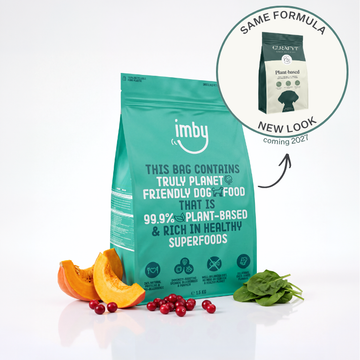
IMBY Plant-Based Dog Food
A complete, meat-free dry food made with quality plant proteins and natural superfoods, formulated to be gentle on sensitive stomachs. A useful option if your dog's gagging or mucus tends to follow mealtimes or seems linked to digestion.
Can my dog gag due to a foreign object in its throat?
Yes, dogs can gag as a result of a foreign object in their throat, such as a piece of bone, grass or a toy. This often causes immediate irritation, causing the dog to try to dislodge the object by gagging. If the dog continues to gag without improvement or has difficulty breathing, prompt intervention by a veterinarian is essential.How do respiratory infections affect my dog’s gagging?
Respiratory infections, such as kennel cough, often cause a dry, harsh cough that may be accompanied by retching and the coughing up of mucus [1]. In severe cases, dogs may also develop pneumonia, leading to more serious symptoms such as fever, breathing difficulties and coughing up blood.What should I do if my dog frequently gags and vomits mucus?
If your dog frequently gags and vomits mucus, there are a few steps you can take:- Check their diet: Indigestible bits of food or irritants may be the cause. Try feeding them easily digestible food.
- Keep your dog calm: Excessive excitement can lead to retching. Ensure a calm environment and avoid strenuous activities.
- Consult your veterinarian: If the problem persists or other symptoms occur, such as breathing difficulties or diarrhoea, consult a veterinarian to rule out serious health issues.
What can I do if my dog keeps coughing up phlegm?
When a dog coughs up phlegm, this may indicate an infection, irritation or allergy. Here are some tips to tackle the problem:- Hydration: Ensure your dog drinks enough water to prevent dehydration, especially if they are vomiting or have diarrhoea.
- Adjust their nutrition: Easily digestible nutrition can help with stomach problems that cause retching.
- Visit the veterinarian: If the dog continues to cough up phlegm persistently, a veterinarian can investigate whether an infection or allergic reaction is the underlying cause.
Conclusion
Gagging and coughing up or vomiting mucus can be symptoms of various conditions in dogs, ranging from mild to severe. It is important to look out for accompanying signs, such as lethargy, loss of appetite, breathing difficulties, diarrhoea or blood in the mucus, since these point to a problem that needs veterinary attention rather than an occasional, harmless gag. Keeping track of when the gagging happens, what it looks like and how often it occurs will help your veterinarian narrow down the cause, whether that is kennel cough, reflux, a food sensitivity or something else. When in doubt, a check-up is always the safer choice.References
- [1] Day MJ, Carey S, Clercx C, Kohn B, Marsilio F, Thiry E, Freyburger L, Schulz B, Walker DJ. Aetiology of Canine Infectious Respiratory Disease Complex and Prevalence of its Pathogens in Europe. Journal of Comparative Pathology. 2020;176:86-108. doi:10.1016/j.jcpa.2020.02.005
- [2] Muenster M, Hoerauf A, Vieth M. Gastro-oesophageal reflux disease in 20 dogs (2012 to 2014). Journal of Small Animal Practice. 2017;58(5):276-283. doi:10.1111/jsap.12646
- [3] Cassmann E, White R, Atherly T, Wang C, Sun Y, Khoda S, Mosher C, Ackermann M, Jergens A. Alterations of the Ileal and Colonic Mucosal Microbiota in Canine Chronic Enteropathies. PLoS One. 2016;11(2):e0147321. doi:10.1371/journal.pone.0147321
- [4] Scott-Garrard M, Wang X, Chiang Y-W, David F. Thirteen-month duration of immunity of an oral canine vaccine against challenge with Bordetella bronchiseptica. Veterinary Record Open. 2020;7(1):e000423. doi:10.1136/vetreco-2020-000423
Support your dog's digestion
If your dog's gagging seems tied to mealtimes or an easily upset stomach, gentle, easily digestible nutrition and targeted gut support can make a real difference.
Shop gut and stomach supportShare