























Home
›
Expert Dog Health & Wellbeing
›
Malassezia in Dogs: Recognise Symptoms and Effective Treatments

Malassezia in Dogs: Recognise Symptoms and Effective Treatments
 by Nicolas Bartholomeeusen on Jun 14 2026· 5 min read
Key takeaways
- Malassezia is a yeast overgrowth that shows up as intense itching, redness, oily skin, flaking and a rancid butter smell, often in skin folds, ears and between the toes.
- Breeds with oilier skin or deep folds, including West Highland White Terriers, Basset Hounds, Shar Peis, Cocker Spaniels, Labradors and German Shepherds, face a higher risk.
- Vets confirm the diagnosis through clinical exams, skin cytology and sometimes a culture test, while also checking for underlying allergies or hormonal issues driving the overgrowth.
- Treatment combines antifungal shampoos or creams with oral medication for severe cases, and addressing the root cause matters just as much as treating the yeast itself.
Malassezia is a yeast infection that is common in dogs and can cause a variety of skin problems. Symptoms range from severe itching, redness and ear wax problems to oily skin and a characteristic ‘rancid butter’ odour. The condition is more common in certain breeds and can be exacerbated by allergies or an overproduction of sebum. In this article, you’ll learn how to recognise Malassezia in dogs, which treatments are effective, and what preventive measures can help keep the problem under control.
What is Malassezia in dogs?
Malassezia is a yeast fungus (Malassezia pachydermatis) that occurs naturally on a dog’s skin but can sometimes cause an overgrowth. This usually happens when there is an underlying skin condition, such as an allergy, hormonal imbalance or disrupted sebum production [1].
Which dog breeds are more prone to Malassezia?
Some dog breeds are more likely to develop Malassezia infections because they have oilier skin or deeper skin folds. These breeds are at increased risk [1]:
- West Highland White Terrier
- Basset Hound
- Shar Pei
- Cocker Spaniel
- Labrador Retriever
- German Shepherd
Increased sebum production and moisture retention in skin folds can contribute to Malassezia overgrowth.
Good to know
Malassezia normally lives on a dog's skin without causing trouble. It only becomes a problem once something disrupts that balance, such as an allergy or a hormonal condition. Vets link Malassezia overgrowth to as many as 70% of the ear infections (otitis externa) they see in general practice [1].
What are the symptoms of Malassezia in dogs?
Symptoms vary from dog to dog, but the most common signs are:
- Severe itching (constant scratching, licking or biting)
- Redness and inflammation, particularly in skin folds, armpits and between the toes
- Oily skin that feels sticky or greasy
- Excessive flaking and scabs on the skin
- Ear infections (head shaking, brown earwax, foul odour)
- Strong odour from the skin, often described as rancid butter
| Symptom | Description | Preferred areas |
| Itching | Dogs scratch, lick and bite frequently | Paws, armpits, groin, belly |
| Redness | Inflamed skin with increased temperature | Skin folds, ears, muzzle |
| Oily skin | Sticky feeling, excessive sebum production | Hind legs, belly, muzzle |
| Flaking | Flaking skin, sometimes thick scabs | Back, legs, neck |
| Ear problems | Head shaking, smelly ears, brown/white earwax | Ear canal, inner ear |
| Strong odour | Rancid butter or yeast-like odour | General body odour |
How is Malassezia diagnosed?
Veterinarians diagnose Malassezia by:
- Clinical examination: Inspection of symptoms and affected areas.
- Cytological examination: Taking a skin sample and analysing it under a microscope to identify fungi.
- Culture test: In severe cases, a culture test may be required to determine resistance to certain medications.
- Ruling out underlying conditions: Allergies and hormonal disorders are tested as possible causes.
What treatments are effective against Malassezia in dogs?
Treatment for Malassezia focuses on killing the yeast and addressing the underlying cause.
Topical treatment
- Antifungal shampoos (e.g. chlorhexidine, miconazole or ketoconazole), which help eliminate the yeast overgrowth. In clinical trials, twice-weekly washing with a 2% miconazole/2% chlorhexidine shampoo cut yeast counts by more than 88% in most dogs within six weeks [2].
- Topical creams or sprays, particularly useful for localised infections in skin folds.
- Ear cleaners containing antifungal ingredients, for Malassezia confined to the ears.
Systemic therapy
- Oral antifungal medication such as ketoconazole, fluconazole or itraconazole, recommended for severe or recurrent infections.
- Corticosteroids, used temporarily to reduce inflammation.
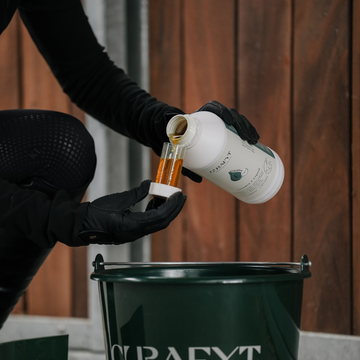
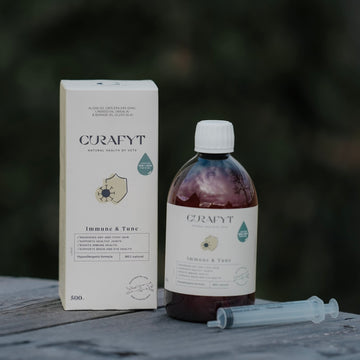
- Dietary supplements, such as omega-3 fatty acids, to support a healthy skin barrier. Curafyt's Immune & Tune Supplement is a hypoallergenic, plant-based omega-3 formulated for dogs with sensitive or reactive skin.
Treating underlying causes
Malassezia is often caused by an underlying condition. Effective strategies include:
- Allergy management: Special diets for dogs with food allergies.
- Hormonal control: Conditions such as hypothyroidism require specific medication.
- Regulation of sebum production: Medical treatments to reduce excessive sebum secretion.
What are natural or supportive treatment options?
In addition to medication, some natural remedies may offer support:
- Coconut oil: Has antimicrobial properties and can be applied topically.
- Apple cider vinegar diluted with water: Can restore the skin’s pH balance.
- Probiotics: Promote healthy gut flora, which strengthens the immune response.
How can Malassezia be prevented in dogs?
Preventive measures can help avoid future infections:
- Regular washing with antifungal shampoos, especially in dogs prone to skin infections.
- Keeping skin folds and ears dry, since moisture encourages yeast growth.
- Balanced nutrition, which supports a strong skin barrier and reduces allergies.
- Regular vet check-ups, for early detection and treatment of underlying conditions.
When should you consult a veterinarian?
Contact a veterinarian if:
- The symptoms do not improve after 2 weeks of treatment.
- Your dog suffers from recurring skin infections.
- Ear infections become severe or are accompanied by pain or balance problems.
Conclusion
Malassezia in dogs is a common condition associated with itching, greasy skin, ear infections and a distinct odour. Early diagnosis and proper treatment with anti-fungal shampoos, medication and appropriate skin care can keep the symptoms under control. For dogs prone to the infection, a combination of good hygiene, prevention and appropriate nutrition helps to minimise recurring problems.
Support your dog's skin from the inside out
If your dog is prone to itchy, flaky or oily skin, a few consistent daily habits go a long way alongside your vet's treatment plan.
Shop skin & allergy supportReferences
[1] Guillot J, Bond R. Malassezia Yeasts in Veterinary Dermatology: An Updated Overview. Front Cell Infect Microbiol. 2020;10:79. doi:10.3389/fcimb.2020.00079
[2] Maynard L, Rème CA, Viaud S. Comparison of two shampoos for the treatment of canine Malassezia dermatitis: a randomised controlled trial. J Small Anim Pract. 2011;52(11):566-572. doi:10.1111/j.1748-5827.2011.01124.x
Share