

























Home
›
Expert Dog Health & Wellbeing
›
You can prevent obesity in yourself and your pet with these practical tips

You can prevent obesity in yourself and your pet with these practical tips
 by Nicolas Bartholomeeusen on Jun 30 2026· 4 min read
Key takeaways
- Assess your dog's weight with the 9-point body condition score rather than the scale alone, since the healthy range of 4 or 5 means ribs are easily felt but not visible.
- Weigh daily food instead of scooping it by volume. A heaped scoop can run 20 to 30% over a level one, and many dogs need 10 to 20% less than the package guide suggests.
- Count treats against the daily food total. Ten small treats a day add up quickly, so switching to low-calorie snacks helps avoid feeding more than intended.
- Favor consistent daily exercise over occasional long sessions. A 30-minute walk every day burns more calories across a week than one long walk on Sunday, and puzzle feeders or training sessions add mental stimulation that reduces food-seeking behaviour.
Between 25% and 59% of dogs seen in veterinary practice are overweight, depending on the study and region. [1] The figure has grown in parallel with human obesity rates, and for similar reasons: calorie-dense food, reduced exercise, and feeding habits that are hard to track day to day. Unlike humans, dogs cannot read the label or ask for a smaller portion. The owner controls everything, which makes prevention straightforward in principle and often surprisingly difficult in practice.
Identify the problem before it becomes serious
Most owners underestimate their dog's weight. The body condition score (BCS) is a more reliable guide than weight alone because it accounts for breed size and build. On a 9-point scale, the ideal is a 4 or 5: ribs easily felt but not visible, a visible waist from above, and a slight abdominal tuck when viewed from the side. [2]
A dog that looks normal can already be at a 6 or 7, early enough to address easily but late enough that the health trajectory has already shifted. Ask your vet for a formal BCS assessment at the next check-up.
Can't feel the ribs?
Press your fingers gently into the side of your dog behind the ribs. If you feel a thick layer of fat before you reach bone, your dog is likely overweight. This check takes five seconds and gives a better indication than scale weight alone.
Portion control: the single highest-leverage change
Overfeeding on an otherwise good diet is the most common driver of canine obesity. Feeding guides on packaging are estimates based on typical activity levels. Many dogs need 10 to 20% less than the guide suggests, particularly indoor dogs with limited exercise. [3]
Weigh the food rather than estimating by volume. A heaped scoop can easily be 20 to 30% more than a level one, and that gap compounds over weeks. Measure the daily ration at the start of the day and stick to it. Treats should count against that total; a dog receiving several rewards and some table scraps may be eating significantly more than intended.
Snacks: frequency matters more than individual size
Small treats repeated throughout the day add up faster than most owners expect. One medium-calorie treat given ten times per day is a meaningful dietary addition. Switching to low-calorie snacks and counting them against the daily total prevents unintended overfeeding without requiring you to stop rewarding your dog.
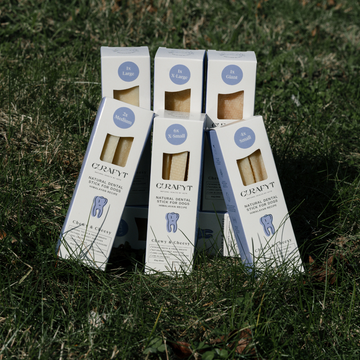
Fresh vegetables make a genuinely good low-calorie option: a carrot stick, a few green beans, or a small piece of cucumber give a dog something to chew without adding significant calories. IMBY's dog snacks are formulated to be low in calories, which makes them practical for daily training and reward use without disrupting the diet.
IMBY Daytime Dog Snacks
Low-calorie daily snacks designed for everyday use. Suitable as training rewards without adding significant calories to the diet.
Exercise: consistency beats intensity
Regular moderate exercise is more effective for weight management than occasional intense activity. A 30-minute walk daily burns more calories across a week than a two-hour walk on Sunday. [3] Aim for genuine movement, not just time outside. A dog standing still in a garden for 20 minutes is not getting exercise.
Mental stimulation, training sessions, puzzle feeders, and nose work, also burns calories and reduces boredom-related food-seeking behaviour. A mentally occupied dog is less likely to demand extra food.
Water: simple and often overlooked
Dogs that drink consistently throughout the day have better digestion and more stable energy levels. Fresh water should always be available. For dogs that eat quickly, offering water before a meal slows the pace of eating and may support satiety. Cats are notoriously poor drinkers; a water fountain encourages intake through running water, which cats strongly prefer over still water in a bowl.
When your pet is already overweight
A 10% reduction in daily food combined with an extra 20 minutes of activity per day is enough to produce a meaningful change in body weight over two to three months without requiring dramatic intervention. Go slowly; rapid weight loss can cause problems in both dogs and cats. If your pet is significantly overweight, a vet consultation before starting a restriction plan is worth the visit.
Small adjustments, maintained consistently
Weigh the daily food, count the treats, keep the walks regular. Most weight problems in dogs don't require a special diet, just better accounting.
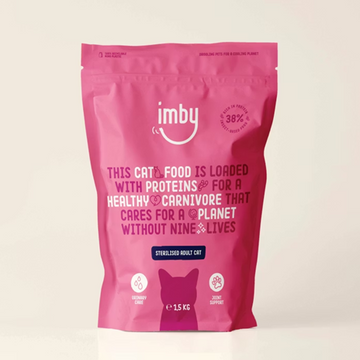
View IMBY dog food rangeReferences
[1] German AJ, et al. (2010). Obesity in the cat and dog. Preventive Veterinary Medicine, 92(3), 233–241. https://doi.org/10.1016/j.prevetmed.2009.10.002
[2] Laflamme D. (1997). Development and validation of a body condition score system for dogs. Canine Pract, 22(3), 10–15.
[3] National Research Council (US). (2006). Nutrient Requirements of Dogs and Cats. National Academies Press.
Share