








Shop by goal








Bundles
Shop all (5) Up to 10% discount
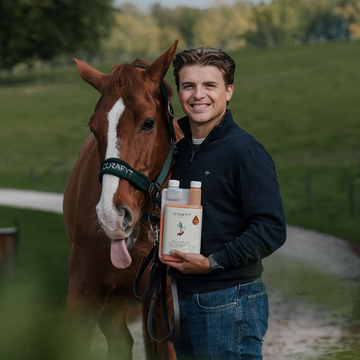
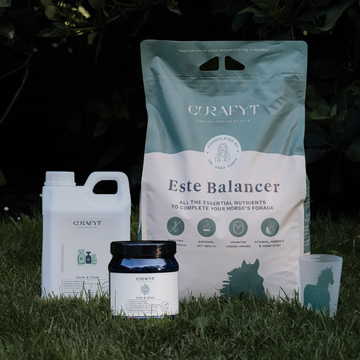
Sugar-Sensitive Horse BundleESTE Balancer + Steady & Stable
Up to 10% discount
Sugar-Sensitive Horse BundleESTE Balancer + Steady & Stable
 Up to 10% discount
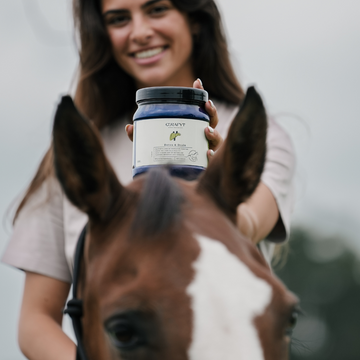
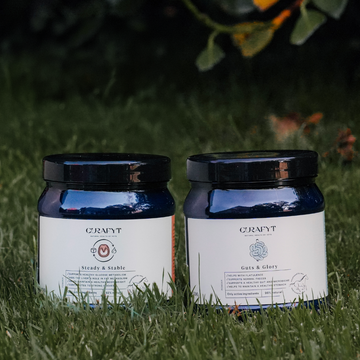
Sugar & Gut Balance BundleSteady & Stable + Guts & Glory
Up to 10% discount
Sugar & Gut Balance BundleSteady & Stable + Guts & Glory
 Up to 10% discount
Skinny Horse BundleESTE Balancer + Grow & Glow + Guts & Glory
Up to 10% discount
Skinny Horse BundleESTE Balancer + Grow & Glow + Guts & Glory
 Up to 10% discount
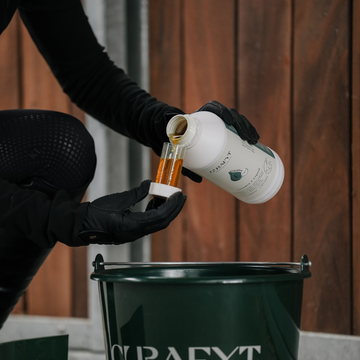
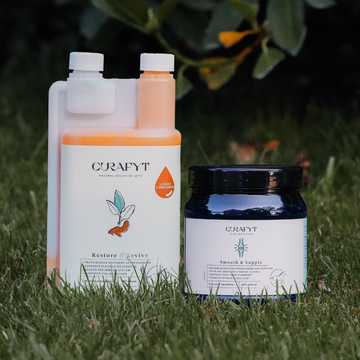
Joint & Mobility BundleSmooth & Supple + Curcumin Liquid
Up to 10% discount
Joint & Mobility BundleSmooth & Supple + Curcumin Liquid
 Up to 10% discount
Digestion Bundle
Up to 10% discount
Digestion Bundle
Bestsellers
Shop all (5)Targeted support
Daily supplements for the feed
Fitness and care
Bundles
Up to 10% discount
Sugar-Sensitive Horse BundleESTE Balancer + Steady & Stable
Up to 10% discount
Sugar & Gut Balance BundleSteady & Stable + Guts & Glory
Up to 10% discount
Skinny Horse BundleESTE Balancer + Grow & Glow + Guts & Glory
Up to 10% discount
Joint & Mobility BundleSmooth & Supple + Curcumin Liquid
Up to 10% discount
Digestion Bundle


Reviews

AdviceBlog, measuring results, Clean Sport
ReviewsRiders, vets, video
Shop by goal


Supplements
Shop all (11)






Bundles
Shop all (0)Bestsellers
Shop all (5)
AdviceBlog, hypoallergenic food, results, sustainability
ReviewsFrom dog owners


Science
About us


Quick view
A Veterinary Specialist's Honest Verdict
I'm a European specialist in equine internal medicine. I tested the balancers on the market against my own horses' bloodwork, then built a better one.
For years I kept seeing dull coats, brittle hooves and slightly-off performance in horses that were supposedly fed well. So I stopped guessing and started measuring. Here is what the blood and hay analyses actually showed, and how Este Balancer compares, nutrient by nutrient, with the balancers you already know.

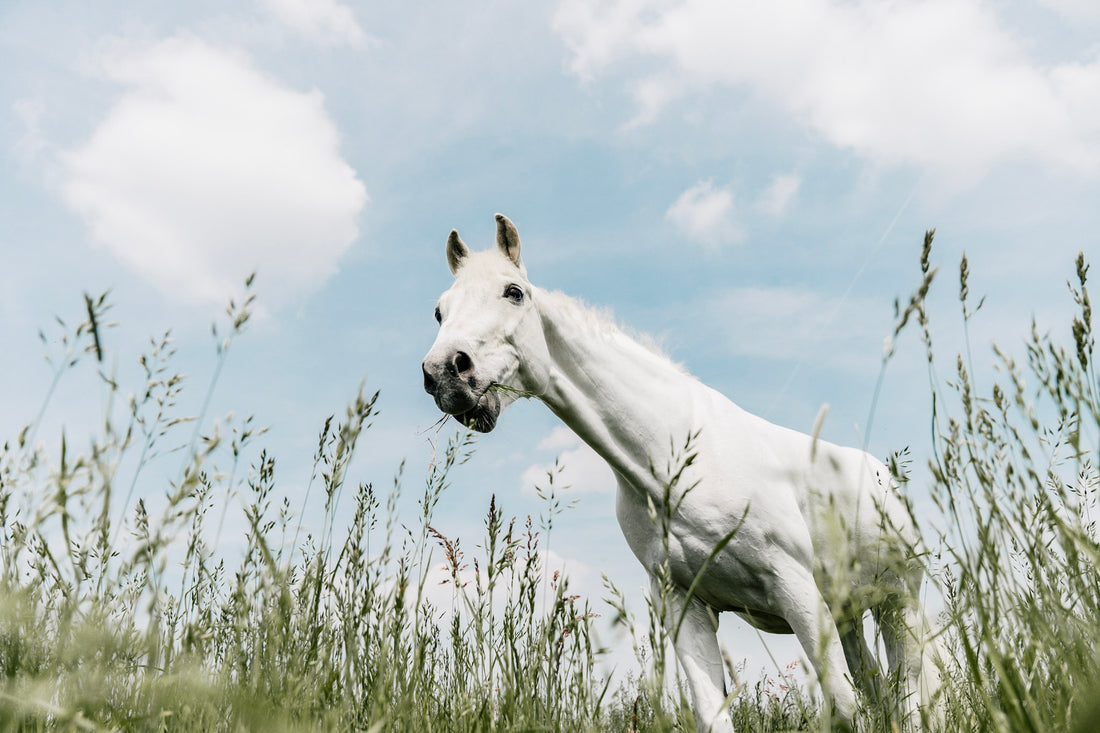
Modern pastures lack the mineral and vitamin diversity horses need. In nature, horses consume roughly 30 different herbs weekly, a variety today's hay and grass simply can't match. Most commercial feeds weren't designed for forage-only diets, leaving nutritional gaps that put your horse at risk.
I'm a veterinarian, osteopath and European specialist in equine internal medicine. I look at horses all day, and for years something kept nagging at me.
Even in well-fed horses already on a balancer, I kept seeing the same quiet signals: a coat that never quite shone, hooves that crumbled, performance that was good but never quite right. Small things. Together, they are the difference between a horse that is fine and one that is truly healthy and performing at its best.
So I did the obvious thing. I ran bloodwork on all of my own horses.
What I found surprised me. Horses that were being fed carefully, by people who knew what they were doing, still showed clear deficiencies in their blood. The assumptions we were all making simply were not holding up.
Why "well fed" so often is not enough
Wild horses roam wide territory and eat dozens of plants on varied soils, which gives them a broad spread of vitamins and minerals on few calories. Our horses get small worked pastures, one or two grasses and the same hay all winter.
That mismatch shows up in the ration. Hay is low in vitamin E, and its minerals just mirror the soil, so an excess of one blocks the absorption of others. Forage rarely delivers the right balance of amino acids either, so a horse can look protein-sufficient on paper and still lack the building blocks for muscle.
Most people patch this with supplements. But each targets a single problem with a high dose of one or two things, not a balanced base, so without a blood test to justify them they can tip the ration further off.
Why I decided to build my own balancer
That bloodwork was the turning point. I set out to build a balancer from measurable data: real blood values, plus hay analyses from Belgium and the Netherlands.
I mapped the most common deficiencies and built one formula to cover them all.
The result
One complete formula, so you can stop switching between balancers that are each high in something different. When one covers everything, you get simplicity and consistency.
What a balancer is actually supposed to do
A balancer is not a feed. It fills only the nutrients forage cannot supply, without adding calories, which is why it suits easy keepers and horses in light work. Need more energy or protein? Adjust the forage (leafy hay, alfalfa, beet pulp, a little oil), not the balancer.
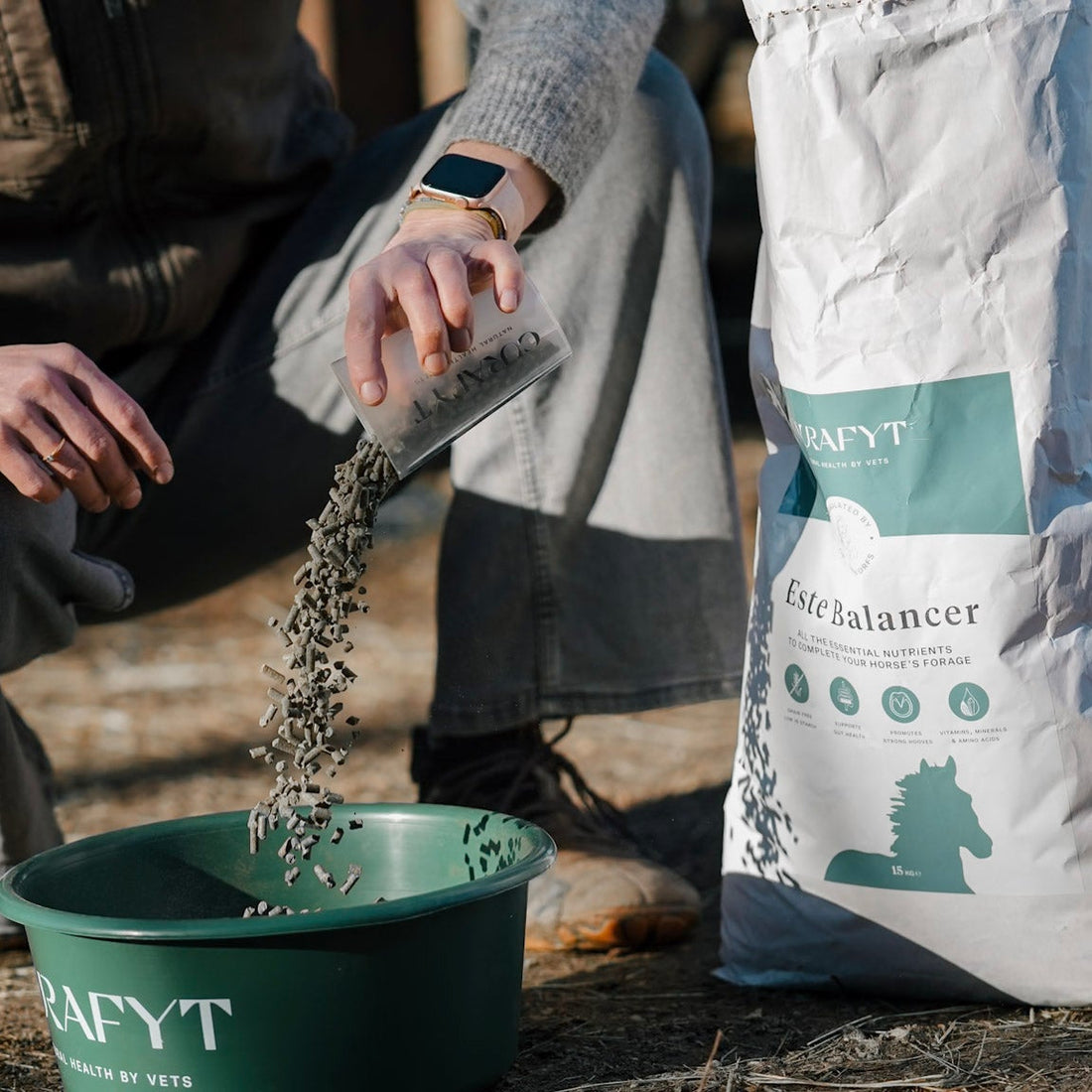
Most horses do not need grain
The feed industry has done a very good job of convincing us otherwise. Walk into any tack shop and the shelves are stacked with bags promising your horse needs a "conditioning mix" or "performance cubes" or something cereal-based. Most horses don't.
Good forage, fed at a minimum of 1.5% of bodyweight, covers the energy and fibre a horse in light work needs. That is most horses. Grain mainly adds energy, largely in the form of starch, and also contributes some protein. But for many horses, it is not needed as a daily default. Excess starch is what can increase the risk of gastric ulcers, hindgut acidosis and laminitis [1].
The research here is more extreme than most people expect. Standardbred trotters in full race training maintained condition and performance on forage-only diets, no oats at all [2,3]. If horses at that workload can manage without grain, the leisure horse working a few hours a week almost certainly can.
So what does forage actually miss? Not calories. Micronutrients. Vitamins, minerals and amino acids. That's the real and only gap. A balancer covers it completely, in a small daily serving, without loading the hindgut with starch.
This is the part people get wrong most often: a balancer is not something you simply feed on top of a full ration of fortified concentrate. It is designed to replace all or part of the fortified concentrate, because that is where the added vitamin and mineral premix normally comes from. For most horses, the base is simple: good forage plus a balancer. Grain or concentrate can still be added when extra energy or protein is genuinely needed.
Forage first
A horse should have forage for most of the day and go no longer than 4 to 5 hours without it. Build the ration on forage, fill the micronutrient gaps with a balancer, and add grain only if very hard work truly demands the calories [1].
Sara's formula is now produced by Curafyt and used and recommended by the 1000+ vets we work with across Europe.

How Este compares with the balancers you already know
What a 500 kg horse actually gets per day at each product's recommended dose, for the nutrients that most often come back short in bloodwork. Targets follow NRC recommendations and regional forage analyses.
Swipe sideways to compare →
| Per day, 500 kg horse | Target | Este | Vitalbix Daily Complete | Pavo Vital | Cavalor Nutri Support | Hartog Essential | Metazoa FitRight |
|---|---|---|---|---|---|---|---|
| Daily dose (g) | – | 250 | 350 | 100 | 100 | 300 | 250 |
| Biotin (mcg) | 15,000–20,000 | 20,000 | 1,750 | 2,000 | 1,000 | 17,143 | 500 |
| Vitamin E (IU) | 500–2,000 | 1,500 | 875 | 600 | 690 | 1,286 | 500 |
| Vitamin C (mg) | work / stress | 1,000 | 175 | 500 | 100 | 0 | 125 |
| Copper (mg) | 120–145 | 120 | 143 | 80 | 100 | 94 | 54 |
| Zinc (mg) | 520–650 | 600 | 535 | 250 | 400 | 343 | 331 |
| Selenium (mg) | 1–1.5 | 1.5 | 1.26 | 1.0 | 1.3 | 1.0 | 0.43 |
| Lysine (g) | ~30 (rest from forage) | 7.5 | 2.0 | 0 | 0 | 1.35 | 3.25 |
| Live yeast probiotic | gut support | ✓ | ✗ | ✗ | ✗ | ✗ | ✗ |
| Linseed / omega-3 | desirable | ✓ | ✓ | ✗ | ✗ | ✓ | ✗ |
| No added iron | forage covers it | ✓ | ✓ | ✓ | ✓ | ✓ | ✗ |
Figures from manufacturers' published 2026 datasheets, converted to the amount delivered per day for a 500 kg horse. Doses used: Este 250 g, Vitalbix 350 g, Pavo 100 g, Cavalor 100 g, Hartog 300 g, Metazoa 250 g, each the maker's stated rate. Note: Cavalor's recommended leisure-horse dose is 50 g, so a leisure horse receives about half the Cavalor values shown; Vitalbix figures are for the Original (lucerne) variant. Targets reflect NRC-based recommendations and regional forage analyses.
How Este ranks against other balancers
Este Balancer
The only formula here that hits the targets across the board: 20 mg biotin, the highest vitamin E with vitamin C and safe selenium, chelated copper and zinc, meaningful lysine and methionine, omega-3 from linseed, a live yeast probiotic, and no added iron. Very low starch (3.5%) and sugar (4.2%) suit EMS, PPID and laminitis-prone horses. The honest tradeoff: not the cheapest per day, because it does not cut the corners the cheaper options cut.
Vitalbix Daily Complete & Hartog Essential
Both are solid, balanced options. Hartog matches Este on biotin (17,143 mcg) and includes linseed for omega-3. However, Este stands out with higher levels of antioxidant vitamins C and E, more amino acids like lysine (7.5 g versus 2.0 g Vitalbix and 1.35 g Hartog), and a live-yeast probiotic that the others lack.
Cavalor Nutri Support & Pavo Vital
Concentrated balancers with sensible core minerals. But low biotin (1,000 mcg Cavalor, 2,000 mcg Pavo), modest antioxidants, no added amino acids, and no probiotic.
Metazoa FitRight & others
Lower across most of the column, and one of the few in the group to add iron, which equine diets are almost always oversupplied in already [4]. Cheaper per day, but you pay for less of what bloodwork says horses actually lack.
What to expect, and when
Nutrition is not a switch you flip. Biotin, copper and zinc work at the speed hoof and coat grow, so set your clock realistically. This is roughly the timeline owners report.
What makes Este stand out
 20 mg biotin per day
Higher than some dedicated hoof supplements, for hoof horn quality and coat, alongside copper and zinc.
 Antioxidant trio
High vitamin E with vitamin C and a safe selenium level, which matters for working and metabolic horses.
 Chelated copper & zinc
Glycine-chelated trace minerals for better bioavailability and absorption [8].
 Live yeast Sc47
Saccharomyces cerevisiae plus prebiotic fibre from apple pulp and alfalfa, supporting fibre digestion and hindgut pH [7].
 Essential amino acids
Lysine and methionine for muscle building, maintenance and growth. Threonine supports gut health because it is an important building block for the mucus layer in the intestinal wall, helping protect the gut barrier and support normal digestive function.
 Low sugar & starch, no added iron
3.5% starch, 4.2% sugar, generous magnesium, suited to EMS and laminitis. No added iron, since forage already oversupplies it.
Get Started
Feed the Foundation. Feel the Difference.
Join 35,000+ horses already benefiting from Este Balancer. Subscribe and save 10% — free shipping, no contract, cancel anytime.
Is the low-sugar claim real? A quick reality check
Este is 4.2% sugar, mostly from 3% molasses that makes a mineral-dense pellet palatable. At 250 g/day that is about 10.5 g of sugar. The same horse on 8 kg of average hay takes in 480 to 800 g a day, so the balancer's share is negligible. The real levers for a low-sugar ration are cutting grain and adjusting the forage, not skipping the balancer.
Who it is for
Easy keepers and horses in light work, sport horses fed to need, and especially horses with EMS, PPID, laminitis history, summer itching or weight to lose. The low starch and sugar, generous magnesium and antioxidants were built for exactly these horses. Most eat it readily once used to the taste, so there is no need to hide it in other feed.
One caution
Because a good balancer is already high in vitamins and minerals, do not stack other vitamin or mineral supplements on top without reason, or you risk surplus and, in extremes, toxicity. In most cases the levels in Este match or exceed those single-purpose supplements anyway. If you need specific support, our supplements range is safe to combine with Este Balancer, however we always recommend to talk to your vet or to our support team if you have any questions.
What horse owners say
Common questions
How much do I feed, and what does it cost per day?
50 g per 100 kg bodyweight per day, so 250 g for a 500 kg horse. That works out to roughly €0.91 a day for a 500 kg horse.
Is it safe for a horse with EMS, PPID or laminitis?
Yes. It is grain-free with very low starch (3.5%) and sugar (4.2%) and a generous dose of magnesium, which is why it was built with these horses in mind.
Can I feed it alongside my other supplements?
A complete balancer is already high in vitamins and minerals, so adding extra vitamin or mineral supplements can create a risk of surplus. It is therefore only useful to add a very specific supplement for a specific issue. Este Balancer can be safely combined with the Curafyt supplements range. When in doubt, always consult your veterinarian or email us at info@curafyt.com.
How long before I see results?
Expect consistency in the first two weeks, coat changes from around week three to six, and hoof horn improvement over six to nine months as new growth reaches the ground.
My horse needs more energy. Will a balancer be enough?
A balancer covers vitamins, minerals and amino acids without calories. If your horse needs more energy or protein, adjust the forage (leafy hay, alfalfa, beet pulp or a little oil) rather than the balancer.
Help Your Horse Make the Transition Easily
Switching to a low-sugar balancer is easier if you do it gradually.
Why it tastes different
Este Balancer is intentionally low in sugar. Horses used to sweet feed need time to adjust. This is completely normal.
Give your horse the complete base, and stop second-guessing
One vet-developed formula, built from bloodwork and hay analysis, and recommended by the 1000+ vets Curafyt works with. Every essential nutrient covered, every day.
About €0.91 a day for a 500 kg horse
50 g per 100 kg bodyweight • 250 g/day for a 500 kg horse • grain-free, soy-free, no preservatives
Scientific references & sources
Ermers C, McGilchrist N, Fenner K, Wilson B, McGreevy P. The fibre requirements of horses and the consequences and causes of failure to meet them. Animals (Basel). 2023;13(8):1414. doi:10.3390/ani13081414
Jansson A, Lindberg JE. A forage-only diet alters the metabolic response of horses in training. Animal. 2012;6(12):1939–1946. doi:10.1017/S1751731112000948
Ringmark S, Roepstorff L, Essén-Gustavsson B, Revold T, Lindholm A, Hedenström U, Rundgren M, Ögren G, Jansson A. Growth, training response and health in Standardbred yearlings fed a forage-only diet. Animal. 2013;7(5):746–753. doi:10.1017/S1751731112002261
McLean NL, McGilchrist N, Nielsen BD. Dietary iron unlikely to cause insulin resistance in horses. Animals (Basel). 2022;12(19):2510. doi:10.3390/ani12192510
Josseck H, Zenker W, Geyer H. Hoof horn abnormalities in Lipizzaner horses and the effect of dietary biotin on macroscopic aspects of hoof horn quality. Equine Veterinary Journal. 1995;27(3):175–182. doi:10.1111/j.2042-3306.1995.tb03060.x
Reilly JD, Cottrell DF, Martin RJ, Cuddeford DJ. Effect of supplementary dietary biotin on hoof growth and hoof growth rate in ponies: a controlled trial. Equine Veterinary Journal Supplement. 1998;(26):51–57. doi:10.1111/j.2042-3306.1998.tb05122.x
Jouany JP, Medina B, Bertin G, Julliand V. Effect of live yeast culture supplementation on hindgut microbial communities and their polysaccharidase and glycoside hydrolase activities in horses fed a high-fiber or high-starch diet. Journal of Animal Science. 2009;87(9):2844–2852. doi:10.2527/jas.2008-1602
Wagner EL, Potter GD, Gibbs PG, Eller EM, Scott BD, Vogelsang MM, Walzem RL. Copper and zinc balance in exercising horses fed 2 forms of mineral supplements. Journal of Animal Science. 2011;89(3):722–728. doi:10.2527/jas.2010-2871
National Research Council.Nutrient Requirements of Horses, 6th rev. ed. Washington, DC: National Academies Press; 2007. doi:10.17226/11653 (expert-consensus reference for equine nutrient requirements; not a peer-reviewed study).
Sources 1–8 are peer-reviewed journal articles. Source 9 (NRC) is the standard expert-consensus reference for equine nutrient requirements. Competitor figures are from manufacturers' published datasheets and are not peer-reviewed.