

Home
›
Expert Horse Health & Wellbeing Advice
›
How to prevent laminitis in horses: diet, pasture and grazing

How to prevent laminitis in horses: diet, pasture and grazing
 by Valerie De Clerck on Sep 21 2023· 7 min read
Key takeaways
- Cutting cereals and high-starch feeds is the single biggest step toward preventing laminitis, since insulin spikes from sugar and starch damage the blood supply inside the hoof.
- A long, overnight hay soak cuts water-soluble sugars meaningfully; a quick 20 to 30 minute dunk barely helps, so soak timing matters more than doing it at all.
- Grass length is not a safety indicator. Short, stressed grass can hold more fructan than lush grass, and turnout timing should follow the weather, avoiding sunny mornings after cold nights.
- A horse that has foundered once needs a permanently stricter routine: year-round grass restriction, conservative feeding, regular weight checks, and hoof care every six to eight weeks.
Laminitis is one of those conditions where prevention beats treatment, no contest. Once the lamellae have been damaged, recovery is slow, painful, and never fully guaranteed. Most horses that founder once carry a higher risk for the rest of their lives. That's the honest starting point.
Laminitis series
Read the other articles: Symptoms and early signals · Treatment and support · Prevention
Adapted feeding: the single biggest lever
The majority of laminitis cases in horses outside the competition world are diet-related. High-sugar, high-starch diets drive insulin spikes, and elevated insulin is directly damaging to the blood supply inside the hoof: experimental work has shown that prolonged high insulin alone, with blood glucose held normal, is enough to trigger laminitis in otherwise healthy ponies within 72 hours [1]. So the first thing to change is what goes in the bucket.
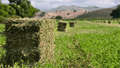
In practice, this means eliminating cereals and hard feeds high in non-structural carbohydrates. Plenty of roughage, ideally hay, forms the backbone of the diet. For horses that are already at risk or have a history of laminitis, soaking helps, but timing matters more than most owners assume. A quick 20 to 30 minute dunk barely moves the needle. Soaking for several hours, ideally overnight in cool water, is what gets you a real reduction: trials on UK hays found losses ranging from a quarter to over half of the water-soluble carbohydrate content after a long soak, though the exact figure varies a lot from one hay to the next [2]. It won't strip out everything, and batch variation means you can't promise an exact number to an owner, but for sensitive horses the longer soak is worth the extra bucket space.
Grass is the other variable most owners underestimate. Limiting pasture time is important, but the type of grass matters just as much. Rye grass varieties were bred for dairy cattle production: maximum yield and high energy content. They're not appropriate for horses prone to laminitis. Pasture nonstructural carbohydrate content can climb well above 400 g per kg of dry matter under the wrong conditions, largely from simple sugars and fructan [3]. A horse-specific grass mix with lower fructan levels is worth the extra cost at seeding time.
The downside of a restricted, hay-based diet is that it can leave horses short on key vitamins and minerals. A low-sugar balancer is the cleanest way to fill those gaps: it delivers what a restricted diet lacks without adding the sugars and starches you're trying to avoid.
ESTE BALANCER by Dr. Sara Torfs
A vet-developed, low-sugar balancer that completes forage-based diets. Delivers the vitamins and minerals horses on hay or restricted rations need, without added sugars, so they get nutritional balance without the insulin spike.
Steady & Stable Supplement
A herbal supplement that supports hoof health, insulin metabolism, and liver function, formulated for horses prone to laminitis.
Exercise matters, and it's often overlooked
Overweight horses are at significantly higher risk, largely because excess fat tissue pushes insulin regulation in the wrong direction, the same pathway that damages the hoof [1]. Exercise helps on two fronts: it supports weight management, and it actively promotes blood circulation through the hoof. Regular, consistent movement is protective in a way that no feed change alone can fully replicate. Even short bouts count: as little as thirty minutes of trot work in a round pen has been shown to improve insulin sensitivity in overweight mares within days, though the effect fades quickly once the horse goes back to standing around [4].
The temptation when a horse has had a laminitis episode is to box-rest indefinitely. That's necessary in the acute phase. But long-term, restricted movement in an overweight horse creates its own risks. Once a horse is stable, gradual return to exercise is usually the right direction.
Pasture management: short grass is not safe grass
This one surprises people. Short, stressed grass can actually contain more fructan per gram than lush, well-nourished grass. The plant is accumulating sugars it hasn't had the leaf area to use [3]. Grazing a closely cropped field in certain conditions carries real risk.
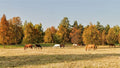
Grazing time should be calibrated to the horse's body weight. A grazing muzzle is a practical tool when total restriction isn't feasible, and it works: ponies fitted with one have been shown to cut their pasture intake by roughly three-quarters compared with unmuzzled grazing on the same field [5]. It doesn't need to feel like punishment. It's simply a way to manage intake when the alternative is a laminitis episode.
Good to know
Well-nourished, adequately grazed pasture with an appropriate grass mix generally carries lower fructan risk than short, stressed, or overgrazed grass. The length of the grass is not a reliable indicator of safety.
When to graze: a season-by-season guide
Fructan accumulation in grass follows light intensity and temperature [3]. Cold nights followed by sunny mornings are the highest-risk scenario.
Summer
Cloudy, warm days above 15C carry the lowest risk. Afternoons and evenings are generally the safest time to turn out. On warm, sunny days, night and early morning grazing is preferable: sugars have been used through the warmer night hours.
Spring and autumn
Cloudy and warm: low risk. Cloudy and cold (below 15C): moderate risk. Sunny and cold, especially after night frost: highest risk, particularly in the morning. This is when horses with any laminitis history should be kept off pasture entirely until temperatures rise through mid-morning.
Winter
Cloudy and cold below 5C: moderate risk. Cold, frosty conditions with sunshine, especially after night frost: high risk in the morning. Winter turnout on bright, frosty mornings is a real danger period that many owners don't account for.
Horses with a history of laminitis need a different baseline
A horse that has foundered once is not the same horse it was before. The lamellae are more vulnerable, insulin regulation is often disrupted, and the threshold for a repeat episode is lower. That distinction matters more than most owners realise when they see a horse that "looks fine" after recovery.
This is particularly true for insulin metabolism. Even a mild episode, one where the horse never fully rotated, can permanently alter insulin sensitivity and leave the horse more susceptible for life. These animals do not return to their pre-laminitis baseline. They should be managed as chronically sensitive horses, not as horses that have recovered [6].
By the numbers
In a two-year follow-up study of horses with endocrinopathic laminitis, just over a third had a second episode. The strongest predictor wasn't diet or exercise, it was the horse's fasting insulin level and whether it had foundered before [6]. That's not a reason to skip management. It's a reason to stay strict even when the horse looks completely sound.
For these horses, everything above applies more strictly. Grass restriction becomes a year-round rule instead of a seasonal one. Hard feeds get a more conservative allowance. Weight gets checked regularly, and hooves get trimmed every six to eight weeks, no exceptions.
Supporting horses prone to laminitis
Browse our full range of supplements developed for horse health, including support for hoof condition and metabolic balance.
View horse supplementsReferences
[1] Asplin KE, Sillence MN, Pollitt CC, McGowan CM. Induction of laminitis by prolonged hyperinsulinaemia in clinically normal ponies. The Veterinary Journal. 2007;174(3):530-535. PubMed
[2] Longland AC, Barfoot C, Harris PA. Effects of soaking on the water-soluble carbohydrate and crude protein content of hay. Veterinary Record. 2011;168(23):618. Veterinary Record
[3] Longland AC, Byrd BM. Pasture nonstructural carbohydrates and equine laminitis. The Journal of Nutrition. 2006;136(7 Suppl):2099S-2102S. PubMed
[4] Powell DM, Reedy SE, Sessions DR, Fitzgerald BP. Effect of short-term exercise training on insulin sensitivity in obese and lean mares. Equine Veterinary Journal Supplement. 2002;34:81-84.
[5] Longland AC, Barfoot C, Harris PA. Effects of grazing muzzles on intakes of dry matter and water-soluble carbohydrates by ponies grazing spring, summer, and autumn swards, as well as autumn swards of different heights. Journal of Equine Veterinary Science. 2016;40:26-33.
[6] de Laat MA, Reiche DB, Sillence MN, McGree JM. Incidence and risk factors for recurrence of endocrinopathic laminitis in horses. Journal of Veterinary Internal Medicine. 2019;33(3):1473-1482. PubMed
Share