























Laminitis in horses: treatment and support.
 by Valerie De Clerck on Sep 21 2023· 7 min read
Key takeaways
- Get an x-ray within hours of the first signs, since a clinical exam alone cannot tell you whether the coffin bone has already rotated.
- Overhaul the diet immediately: pull grass and grain, soak hay to cut sugar content, and keep the horse on soft footing away from dry sand.
- Ice the hooves continuously through the first 72 hours and support insulin response, circulation and liver function with targeted herbal and mineral care.
- Rest the horse completely during the acute phase, then bring in the farrier and reintroduce movement gradually once a follow-up x-ray confirms it is safe.
Laminitis is not just sore feet. It is a breakdown of the laminar tissue that bonds the coffin bone to the hoof wall, and once that tissue is damaged, the bone itself can begin to rotate or sink. That distinction matters more than most owners realise, because it changes the urgency of what comes next.
Laminitis series
Read the other articles: Symptoms and early signals · Treatment and support · Prevention
Step 1: Call your vet and get an x-ray
Before anything else, call your vet. A clinical examination alone cannot tell you whether the coffin bone has moved. An x-ray can. That image shapes every subsequent decision, from how the farrier approaches the trim to how much movement is safe.
For horses over 12, ask for a blood test for PPID (equine Cushing's disease) at the same time. PPID disrupts cortisol metabolism and creates chronic insulin dysregulation, which is one of the most common drivers of recurring laminitis. If your horse has been through this before and you have never checked for PPID, this is the moment to do it.
Step 2: Get the horse off hard ground
Soft footing reduces concussive loading on inflamed laminae. Wet sand, sawdust, or wood shavings all work. Avoid dry sand. Horses eating from the ground can ingest enough to cause sand colic, which is a separate problem you do not want alongside laminitis.
Hoof boots are worth having. They add cushioning and make movement less painful during the acute phase, which helps the horse rest properly rather than standing rigid and loaded on one leg.
Good to know
Do not put laminitis horses on dry sand, even soft. They will eat it while grazing or picking at the ground, and sand accumulates in the hindgut. In horses already stressed, a sand colic event can be serious.
Step 3: Ice the hooves
Continuous cryotherapy applied to the feet in the first 72 hours of an acute episode is one of the most evidence-supported interventions in laminitis care. Cold slows the inflammatory cascade in the laminar tissue and limits secondary damage. The practical approach is a bucket of iced water or purpose-built ice boots kept on throughout the acute phase. This is not a one-hour treatment. Research supports continuous cooling for as long as the acute phase lasts.
Step 4: Overhaul the diet immediately
Remove the horse from grass. Pasture, especially in spring and autumn when fructan levels peak, is one of the primary dietary triggers for insulin-driven laminitis. No grain either. The goal is to drop dietary non-structural carbohydrates (NSC) as low as possible while maintaining gut function.
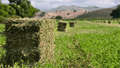
Keep feeding hay. A horse with laminitis still needs forage. Soaking hay for 30 to 60 minutes leaches water-soluble sugars and can meaningfully reduce NSC content [1]. For horses that eat fast and push the hay around, a slow-feeder hay net limits intake without forcing the gut empty. An empty gut raises cortisol, which is exactly what you do not want.
The real number
Soaking hay cuts water-soluble sugar by about a quarter on average, but the actual range runs from 6 to 54 percent depending on the hay itself [1]. That spread is wide enough that soaking should not be treated as a guarantee. If a horse's laminitis is severe, test the hay or send a sample to a lab rather than assume soaking got it low enough.
Step 5: Targeted herbal and mineral support
Most laminitis cases have a metabolic component. The herbs and minerals below address the mechanisms most commonly implicated: insulin response, circulation, liver function, and hoof tissue integrity.
Insulin response and metabolism
Magnesium deficiency impairs insulin receptor sensitivity [2]. Horses on laminitis-prone pastures are frequently low in magnesium, partly because high-fructan grass grows fast in soils where mineral availability is uneven. Supplementing magnesium is low-risk and addresses a real metabolic gap in most of these horses.
Berberis vulgaris (barberry) has been studied for its effect on fat and glucose metabolism. Berberine, its main active alkaloid, works through a mechanism comparable to metformin in metabolic syndrome models [3]. It is not a replacement for veterinary treatment in PPID, but it is a useful metabolic support herb in the broader protocol.
Circulation and hoof perfusion
Damaged laminae have poor blood flow. Pinus pinaster (maritime pine bark) and L-arginine both support vascular dilation. L-arginine is a nitric oxide precursor and has documented blood-pressure-lowering effects through vascular mechanisms [4]. Getting blood into the hoof is part of how the laminar tissue repairs.
Hoof tissue integrity
Equisetum (horsetail) is the primary botanical source of bioavailable silicon. Silicon is a structural component of connective tissue and hoof wall, and research supports its role in tissue integrity and repair [5]. MSM (methylsulfonylmethane) provides organic sulfur, another structural element in keratin and hoof tissue.
Liver and cortisol support
Chrysanthellum americanum has documented hepatoprotective activity in animal models [6], and Silybum marianum (milk thistle) has its own well-studied liver-protective mechanisms [7]. Liquorice has a known role in cortisol metabolism: its compounds inhibit the enzyme that normally breaks cortisol down, which prolongs its activity in the body [8]. In horses with PPID who are not yet medicated, liver and cortisol support can provide some palliation while the full diagnostic picture is established.
Blood oxygenation
Chlorella is a high-magnesium microalgae. The chlorophyll molecule is structurally similar to the heme group in haemoglobin, differing primarily in its central magnesium atom rather than iron [9]. In practice, it is used to support red blood cell quality and oxygen transport to peripheral tissues, including the hoof.
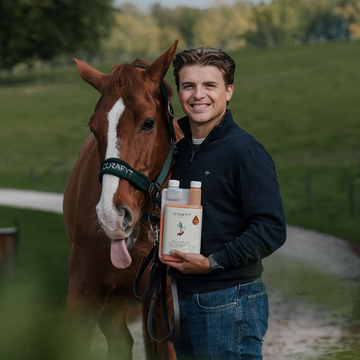
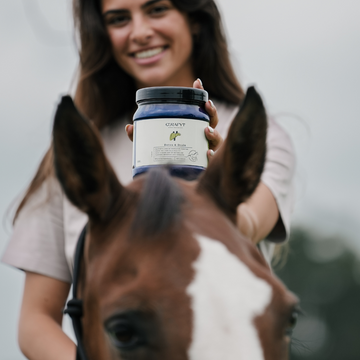
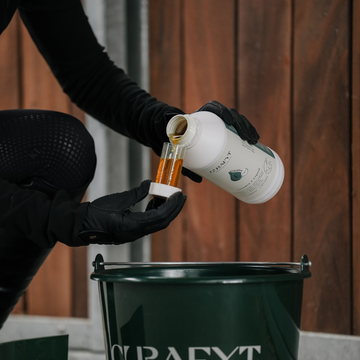
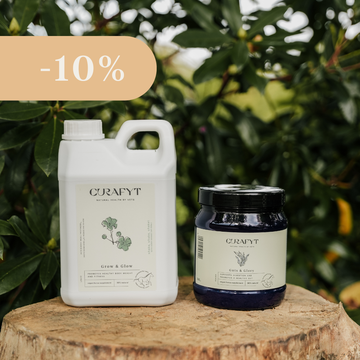
Steady & Stable Supplement
A herbal supplement supporting hoof health, insulin metabolism, liver function and blood circulation, formulated for horses prone to or recovering from laminitis.
Step 6: Hoof care and farrier work
The farrier's role in laminitis is not just cosmetic. Correct trimming and, in rotation cases, remedial shoeing directly influence whether the coffin bone continues to migrate. The trim should relieve rotational forces by lowering the heel and breaking the hoof-pastern axis appropriately for that x-ray, not for a generic template.
Step 7: Movement (but not during the acute phase)
This is where well-meaning owners cause damage. Movement during the acute phase, when the laminae are actively inflamed and the coffin bone is at risk of rotation, increases mechanical stress on already-compromised tissue. Rest the horse completely until the vet confirms inflammation is controlled and the x-ray is stable.
Once the acute phase has passed, gentle movement on soft ground is beneficial. If the horse moves around voluntarily, that is a good sign and worth encouraging. If he is reluctant, do not push it. Forcing movement on a horse that is still uncomfortable will set recovery back rather than advance it. The pace of return depends on the severity of the original episode and what the follow-up x-ray shows.
Supporting horses through laminitis
Browse the Curafyt range formulated for equine hoof and metabolic health.
View the hoof health rangeReferences
[1] Longland AC, Barfoot C, Harris PA (2011) Effects of soaking on the water-soluble carbohydrate and crude protein content of hay. Veterinary Record 168(23):618.
[2] Winter VR et al. (2020) Relationship between intracellular free magnesium concentration and the degree of insulin resistance in horses with equine metabolic syndrome. Pferdeheilkunde - Equine Medicine 36.
[3] Wang H et al. (2018) Metformin and berberine, two versatile drugs in treatment of common metabolic diseases. Oncotarget 9(11):10135-10146.
[4] Siani A et al. (2000) Blood pressure and metabolic changes during dietary L-arginine supplementation in humans. Am J Hypertens 13(5):547-551.
[5] Badole S, Kotwal S (2014) Equisetum arvense: ethnopharmacological and phytochemical review with reference to osteoporosis. Int J Pharm Sci Health Care 1:131-141.
[6] Guenné S et al. (2019) Relevance of Chrysanthellum americanum (L.) Vatke extracts in rat liver protection. International Journal of Biochemistry Research & Review 25(2).
[7] Jiang G et al. (2022) Hepatoprotective mechanism of Silybum marianum on nonalcoholic fatty liver disease based on network pharmacology and experimental verification. Bioengineered 13(3).
[8] Stewart PM et al. (1987) Mineralocorticoid activity of liquorice: 11-beta-hydroxysteroid dehydrogenase deficiency comes of age. Lancet 2(8563):821-824.
[9] Rani K, Sandal N, Sahoo PK (2018) A comprehensive review on chlorella. Pharma Innovation Journal 7(7):584-589.
Share