


Shop by goal








Bundles
Shop all (8)
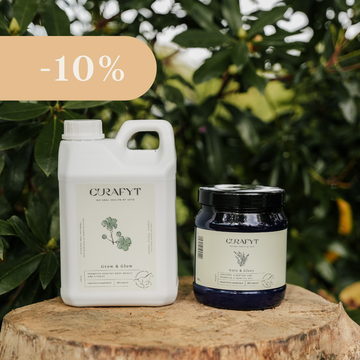


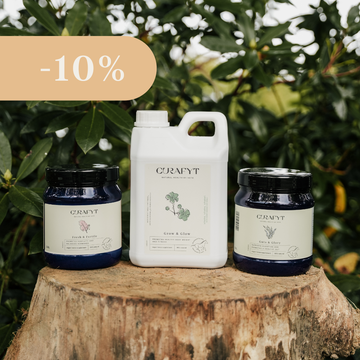
Bestsellers
Shop all (5)Foundation · every day
Targeted support
Daily supplements for the feed
Fitness and care


Reviews

AdviceBlog, measuring results, Clean Sport
ReviewsRiders, vets, video
Shop by goal


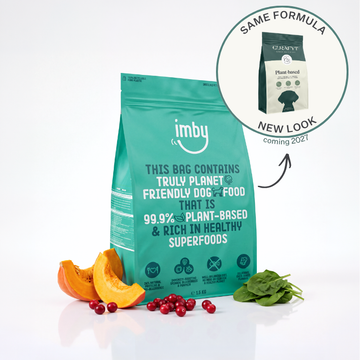
Supplements
Shop all (12)

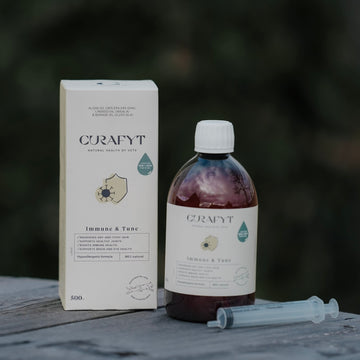
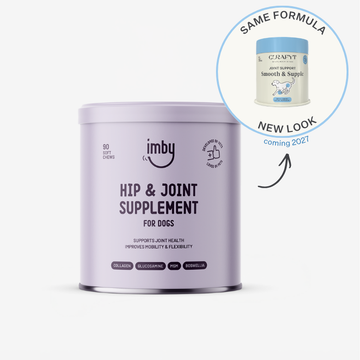
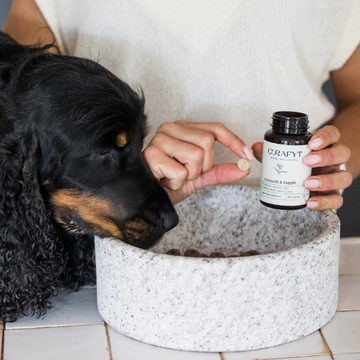




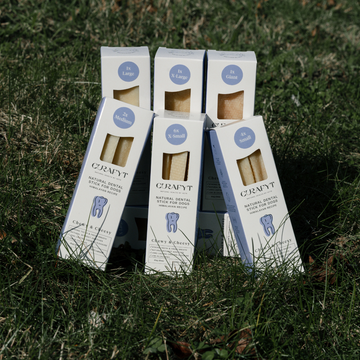

Bestsellers
Shop all (5)
AdviceBlog, hypoallergenic food, results, sustainability
ReviewsFrom dog owners


Science
About us



Quick view

How to evaluate results in your horse
Measure, compare, adjust: see what's really changing.
Small changes are easy to miss
Put this month's photos and measurements next to last month's and you'll see progress you didn't notice day to day. Always compare in the same season.
-
 Weight tape
-
 Photos of both sides: standing square, no saddle or rug
-
 Hoof growth
-
 Same day every week


 Lameness, colic, fever, sudden weight change or a bounding digital pulse? Call your vet immediately.
What to expect and when
Every horse is different, so always compare with your own baseline. With a consistent daily routine, this is what most owners notice.
- 2–4 weeks Manure & energyOften the first things you notice.
- 6–8 weeks Coat shineCompare photos in the same light.
- 2–3 months Muscle & toplineAlongside the right training.
- 9–12 months Full hoof wallHooves grow slowly: mark the new horn monthly.


Score body condition by feel
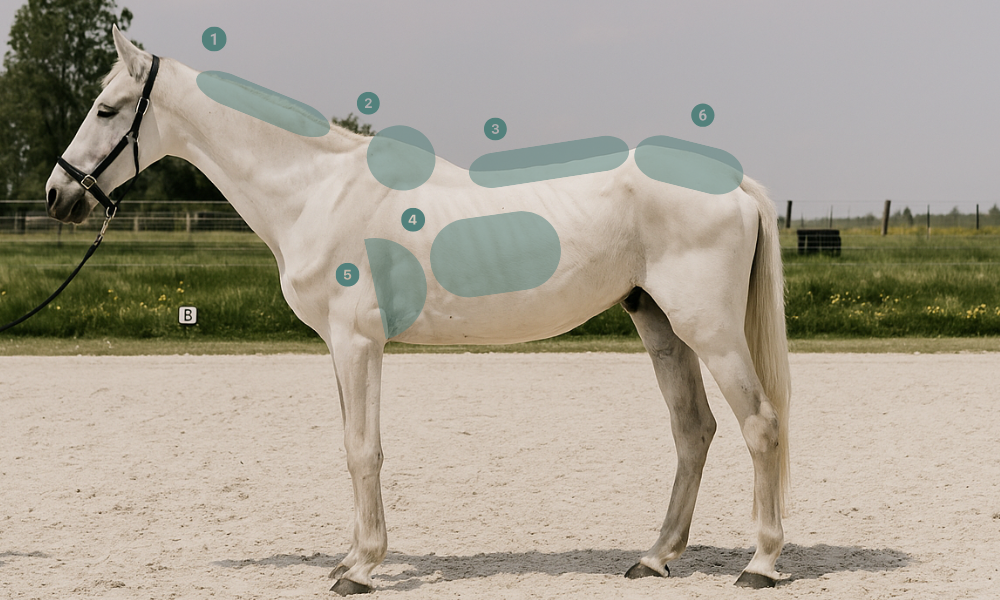
Tap a score to see what it looks like. Once a month, take a photo of both sides with your horse standing square on level ground, without saddle or rug, and run your hands over the six zones: a winter coat hides a lot.

Score 1Poor
- 1Neck: can feel/see the bones, with little to no fat
- 2Withers: can feel/see the bones, with little to no fat
- 3Shoulders: can feel/see the bones, with little to no fat
- 4Ribs: very visible, with little to no fat
- 5Back/loins: spine is very visible, with little to no fat
- 6Tailhead: very visible, with little to no fat
Score 2Very thin
- 1Neck: can feel/see the bones
- 2Withers: can feel/see the bones
- 3Shoulders: can feel/see the bones
- 4Ribs: very visible
- 5Back/loins: vertebrae can be felt
- 6Tailhead: individual vertebrae can be seen or felt

Score 3Thin
- 1Neck: accentuated
- 2Withers: accentuated
- 3Shoulders: accentuated
- 4Ribs: still visible, but covered with a thin layer of fat
- 5Back/loins: vertebrae cannot be felt, but still visible
- 6Tailhead: can be felt, but individual vertebrae are not visible
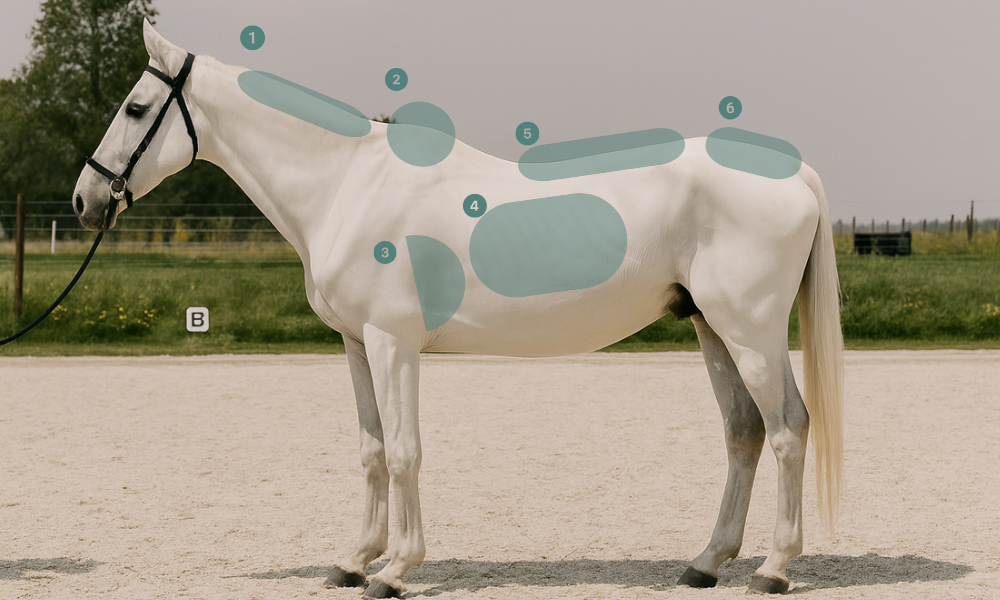
Score 4Moderately thin
- 1Neck: not overly thin
- 2Withers: not overly thin
- 3Shoulders: not overly thin
- 4Ribs: outline is visible
- 5Back/loins: outline of the vertebrae is visible and sticks out slightly
- 6Tailhead: vertebrae may still be visible depending on build; some fat can be felt
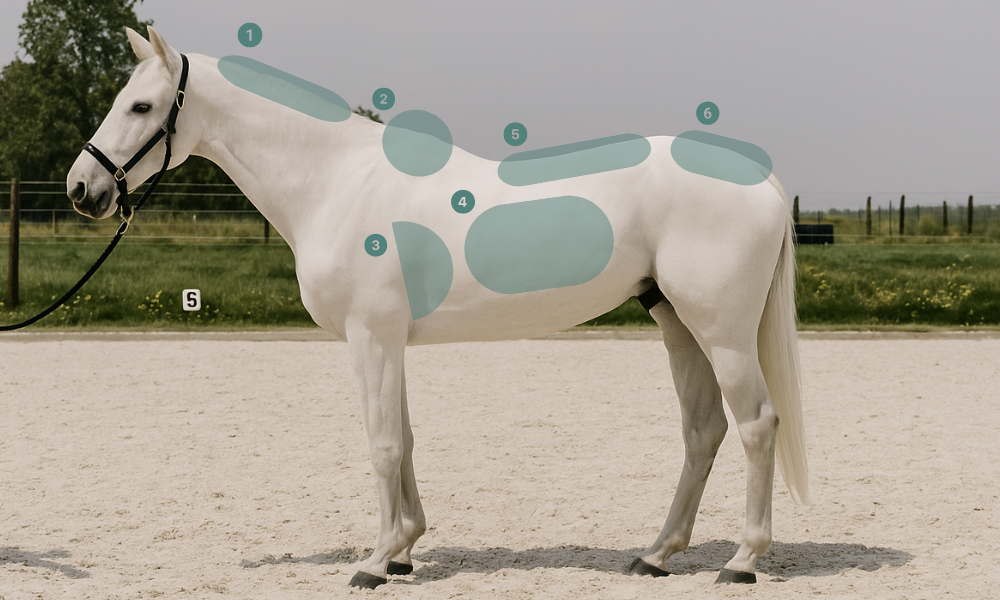
Score 5Good
- 1Neck: transition looks smooth
- 2Withers: looks rounded
- 3Shoulders: smooth transition into the trunk
- 4Ribs: can be felt, but not visible
- 5Back/loins: back is level
- 6Tailhead: fat around the tail starts to feel soft

Score 6Moderately fleshy
- 1Neck: first fat deposits start to show
- 2Withers: first fat deposits start to show
- 3Shoulders: first fat deposits start to show
- 4Ribs: fat over the ribs feels spongy
- 5Back/loins: may have a slight positive crease down the back
- 6Tailhead: fat around the tailhead feels soft
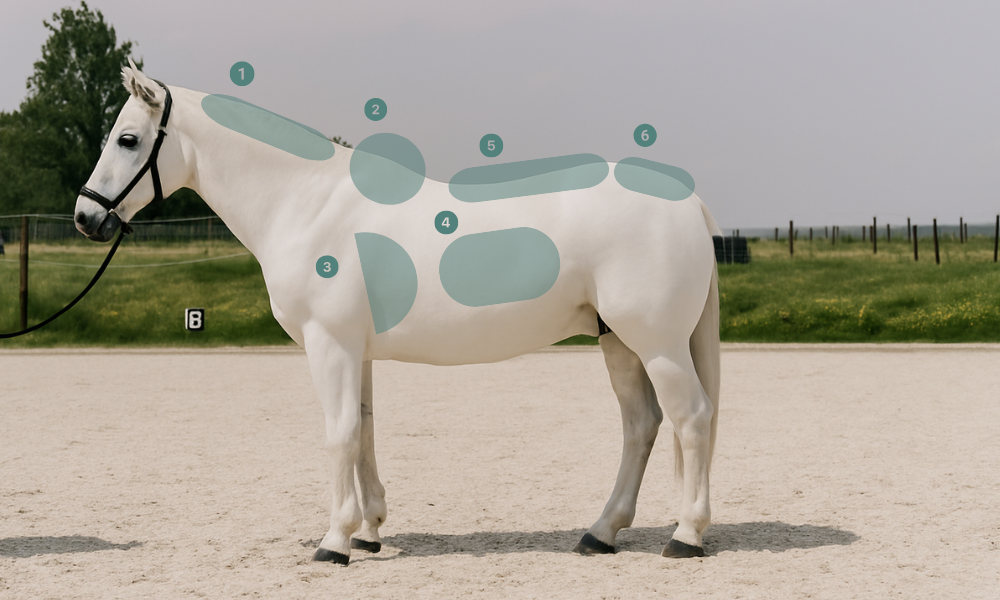
Score 7Fleshy
- 1Neck: fat along the neck can be seen clearly
- 2Withers: fat along the withers can be seen clearly
- 3Shoulders: fat behind the shoulder can be seen clearly
- 4Ribs: individual ribs can be felt with pressure; fat between the ribs is visible
- 5Back/loins: may have a positive crease down the back
- 6Tailhead: fat around the tailhead feels soft
Feel the neck crest too. A thick, firm crest that fills your hand can point to EMS and a higher risk of laminitis: ask your vet about a metabolic check.

Score 8–9Fat to extremely fat
- 1Neck: bulging fat is visible
- 2Withers: bulging fat is visible
- 3Shoulders: bulging fat is visible
- 4Ribs: fat over the ribs looks unevenly distributed
- 5Back/loins: obvious crease down the back
- 6Tailhead: bulging fat around the tailhead is visible
At this score, ask your vet about a metabolic check, especially if the neck crest is thick and firm. Lose weight gradually, never by cutting hay suddenly.
Henneke body condition score: Henneke, Potter, Kreider & Yeates, Equine Veterinary Journal 1983;15:371–372.
Measure it the same way
Do these checks the same way every time and you'll see the trend, not just a good or bad day.
-
Use a weight tapeEvery 2 weeks, at the same time of day, with the tape just behind the withers.
-
Take photos of both sidesOnce a month: standing square on level ground, no saddle or rug, same spot and light.
-
Follow hoof growthOnce a month, photograph each hoof from the side and see how far the new horn has grown down.
-
 Check the manureEvery day: is it firm, soft or loose? Note any change.

Product-specific timelines
Tap a product to see what to expect week by week and what to track.
What you may notice, with consistent daily use
- Coat Shine & Texture: First visible indicator of improving micronutrient status — note changes monthly with a photo.
- Energy & Focus: Rate willingness and stability during work.
- Hoof-Wall Growth (monthly): Mark growth at hairline with non-toxic marker.
What to look for week by week, alongside a low-sugar diet, exercise and your vet's advice
- Energy / Work-Ethic (1–5): Rate willingness and vitality weekly.
- Coat Shine (1–5): Stroke coat against hair lay in daylight.
- Digital Pulse: Faint beat is normal; a bounding pulse is an early laminitis warning — call your vet.
Steady & Stable is a nutritional supplement, not a medicine. 15 g per 500 kg bodyweight/day. Not for pregnant mares.
View Steady & Stable SupplementWhat you may notice, with consistent daily use
- Manure Consistency (1–5): 1 = watery, 5 = hard.
- Manure Frequency (target 6–10 piles/24 h): Sudden spikes or drops may point to motility issues or stress.
- Odour: Mild and earthy is normal.
Microbiome changes are gradual — results typically continue improving for 8+ weeks with consistent daily use.
View Guts & Glory SupplementWhat you may notice, with consistent daily use
- Body Weight (kg): Weigh or use a weighband fortnightly.
- Body Condition Score (1–9): Palpate ribs and backbone.
- Coat Shine (1–5): In daylight, assess sheen and texture.
What you may notice, with consistent daily use
- Topline Photos (monthly): Same spot, same lighting.
- Heart-Rate Recovery: Resting 28–44 bpm.
- Respiration Recovery: Resting 8–16 breaths/min.
What you may notice, with consistent daily use
- Stride Quality (video): Short monthly video at walk and trot on a straight line.
- Joint Heat & Swelling: Run hands over fetlocks, knees and hocks at each session.
- Warm-up Time: How many minutes until movement looks fluid?
What you may notice, with consistent daily use
- Coat Brightness (1–5): In daylight, stroke coat against hair lay.
- Seasonal Itch & Skin Comfort (1–5): Rate itchiness during peak seasons.
- Energy & Appetite (1–5): A consistent, willing appetite (4–5) reflects balanced metabolism.
Start 3 months before insemination for best results
- Cycle Regularity: Normal cycle ~21 days (18–24 days = regular).
- Heat Behaviour (1–5): Mild crankiness in oestrus is normal; severe aggression or back soreness warrants attention.
- Coat & General Condition: Coat improvement often precedes other changes as liver function is supported.
Results week by week — with consistent daily use
- Ease of Movement (1–5): Rate fluidity at walk and trot, especially after demanding work or travel.
- Recovery Time: How quickly does your horse return to normal demeanour after exercise or stress?
- Appetite & General Behaviour: Overall vitality is often the first noticeable change with curcumin support.
What you may notice, with consistent daily use
- Muscle Soreness After Work: Stiffness, reluctance to move forward, or back sensitivity post-exercise can indicate oxidative muscle stress.
- Recovery Speed: How quickly does your horse return to normal movement quality after demanding training sessions?
- Coat Sheen: Vitamin E supports skin cell membrane integrity — coat quality often improves within 4–6 weeks.
Frequently asked questions
How long before I judge results?
Most owners notice small wins such as better manure or a shinier coat within 1–2 months. Muscle takes 2–3 months alongside training, and a full hoof wall 9–12 months.
Why compare in the same season?
Coat, weight and energy change naturally with moulting, grass growth and workload. Compare with a baseline from a similar period.
How do I start a new supplement?
Introduce it gradually: build up over 7 days to the recommended daily dose. That gives your horse's gut time to adjust.
Can I increase the dose to speed things up?
No, stick to the recommended daily dose. Steady, correct dosing plus good management wins every time.
Is it safe to combine products?
Yes, Curafyt formulas are designed to be complementary. Use each at its recommended dose.
Need personalised support?
Our team of vets and animal health experts is available Monday–Friday, 9–5 CET. We aim to respond within 24 hours, usually faster.
Get a free product
Snap clear before & after shots of your horse using Curafyt and email them to info@curafyt.com. If we can see real progress, we'll send you a complimentary product of your choice.