




















Home
›
Expert Dog Health & Wellbeing
›
Dog food toppers: what are they and why does your dog need them?

Dog food toppers: what are they and why does your dog need them?
 by Nicolas Bartholomeeusen on Jun 14 2026· 5 min read
Key takeaways
- Toppers add aroma, flavour, texture and extra micronutrients to regular kibble or fresh meat without changing the whole diet.
- Wet toppers can add up to 80 ml of extra water per 100 g, which supports hydration and kidney and bladder health.
- A 2021 randomised trial found dogs fed a diet enriched with antioxidants and polyphenols saw dermatitis scores drop by up to 49% over 60 days, though that evidence comes from a therapeutic diet rather than a topper.
- Keep toppers under 10% of your dog's daily energy needs, since wet toppers add 20 to 40 kcal per tablespoon and dry crumbles add 50 to 70 kcal.
Dog food toppers, also known as meal toppers, kibble sauces or palatants, are a rapidly growing category within the pet food sector. They were devised as a simple way to add aroma, flavour, texture and extra micronutrients to standard kibble or fresh meat. Originally popular in North America, but also rapidly gaining ground in Europe since 2018, toppers fit the broader trend of humanisation: pets are increasingly given meals that resemble our own.
Four main categories of toppers
- Dry crumbs – freeze-dried pieces of meat, fish or insects that add a crunchy bite.
- Wet sauces and broths – anything from bone broth to plant-based purées, added mainly to increase moisture content.
- Air-dried protein snacks – small, high-protein strips, well suited to sporting or hunting dogs.
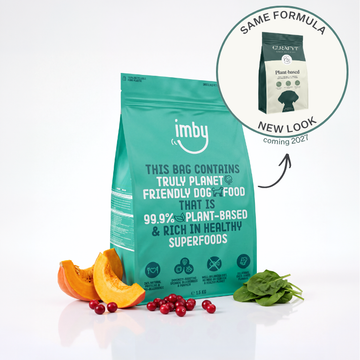
- Plant-based blends – superfood purées built around carrot, pumpkin or cranberry, aimed at sustainability and specific health goals.
Nutritional and health benefits
- Targeted enrichment: extra omega-3, prebiotic fibre or antioxidants, without changing the entire diet.
- Improved appetite: a spoonful of topper releases far more aroma than kibble alone, which tends to matter most for senior dogs and picky eaters. Dogs decide whether to eat largely by smell, and aroma is one of the strongest predictors of intake identified in recent palatability research [1].
- Hydration: wet toppers can add up to 80 ml of extra water per 100 g of product. Dogs fed higher-moisture diets produce more dilute urine, which lowers the concentrating workload on the kidneys and can reduce the risk of calcium oxalate crystals [2].
- Microbiome support: plant-based fibre such as inulin can feed beneficial gut bacteria, though the effect in dogs varies by fibre type, dose and the animal's existing microbiome. Treat it as a possible benefit, not a guarantee.
- Sustainability: plant-based or insect-based toppers can cut the CO₂ footprint of a dog's meal by up to 80%.
Good to know
Wet food typically sits at 70 to 85% moisture, against roughly 6 to 12% for dry kibble. A single spoonful of wet topper closes a meaningful part of that gap without switching your dog onto a whole new diet [2].
Behavioural benefits
Dogs are neophilic: research suggests they're generally drawn to variety rather than put off by it, though puppies show the pattern more strongly than adult dogs do [3]. Changing the flavour or texture on a weekly basis helps prevent flavour fatigue. Pairing a wet topper with a lick mat or slow feeder adds some puzzle-solving to mealtime and slows eating down, which can reduce gulping and the stomach upset that comes with it.
Safe introduction
| Day | Serving size (per 10 kg) | Action |
|---|---|---|
| 1–2 | 1 teaspoon | Mix thoroughly with kibble |
| 3–4 | 2 teaspoons | Place on top, mix lightly |
| 5+ | Recommended portion | Drape over the top for maximum aroma |
Frequently asked questions
How many calories does a topper add?
Expect 20 to 40 kcal per tablespoon of wet topper, and 50 to 70 kcal for dry crumbles. Keep the topper under 10% of your dog's daily energy requirement.
Can I combine several toppers?
It's best to switch weekly. That makes it easier to judge the effect of each one and to catch any intolerance early.
Is a topper suitable for dogs with allergies?
Choose a single protein source, insect protein for example, or a fully plant-based option, and check the label for hidden animal fats.
Scientific evidence
The research base for toppers themselves is still thin, so it helps to separate what's well studied from what's assumed. A 2023 review of the palatability literature across cats and dogs found that aroma compounds, more than taste or texture, are what drive whether a dog finishes the bowl [1]. Moisture is the best-documented benefit: a controlled feeding trial in miniature schnauzers and labrador retrievers found that raising a diet's moisture content produced more dilute urine and lowered the mineral supersaturation linked to bladder stones [2]. On the skin side, a 2021 randomised, placebo-controlled trial found that dogs with atopic dermatitis fed a diet enriched with antioxidants and polyphenols, the same plant-compound family that includes curcumin, saw dermatitis scores drop by up to 49% over 60 days compared with a control diet [4]. That result is worth knowing, but it came from a therapeutic diet built for atopic dogs, not a topper added to an existing bowl, so it's fair to stay a little sceptical about skin claims made for toppers specifically until they're tested the same way.
Conclusion
Dog food toppers combine taste, targeted nutrition and sustainability in one spoonful. Start with small portions, reassess after two weeks, and watch how quickly your dog licks the bowl clean. If what you're really after is gut support or calmer skin, it's worth looking at a dedicated supplement alongside any topper.
IMBY Probiotics Supplement
Vet-formulated chews aimed at calmer digestion and a more balanced gut microbiome, useful if a topper alone isn't moving the needle on stool quality.
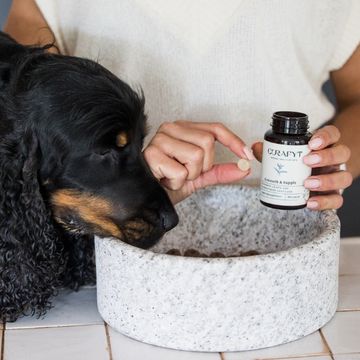
Dealing with itchy skin instead? Curafyt's itchy skin and allergy supplements are built for that, separately from anything you add to the bowl.
Ready to try a topper or supplement?
Browse the full range of Imby food and dog supplements to find what suits your dog.
Shop dog supplementsReferences
[1] Watson PE, Thomas DG, Bermingham EN, Schreurs NM, Parker ME. Drivers of Palatability for Cats and Dogs: What It Means for Pet Food Development. Animals (Basel). 2023;13(7):1134.
[2] Stevenson AE, Hynds WK, Markwell PJ. Effect of dietary moisture and sodium content on urine composition and calcium oxalate relative supersaturation in healthy miniature schnauzers and labrador retrievers. Research in Veterinary Science. 2003;74(2):145-151.
[3] Callon MC, Cargo-Froom C, DeVries TJ, Shoveller AK. Canine Food Preference Assessment of Animal and Vegetable Ingredient-Based Diets Using Single-Pan Tests and Behavioral Observation. Frontiers in Veterinary Science. 2017;4:154.
[4] Sánchez de Santiago M, González Arribas JL, Moral Llamas Y, Becvarova I, Meyer H. Randomized, double-blind, placebo-controlled clinical trial measuring the effect of a dietetic food on dermatologic scoring and pruritus in dogs with atopic dermatitis. BMC Veterinary Research. 2021;17:363.
Share