Home
›
Expert Horse Health & Wellbeing Advice
›
The Hidden Sugar Danger Threatening Your Horse's Health

The Hidden Sugar Danger Threatening Your Horse's Health
 by Valerie De Clerck on Oct 23 2024· 6 min read
Key takeaways
- Around 31% of horses and ponies in Great Britain are classed as obese, and Australian data puts hyperinsulinaemia at 27% in ponies tested, both closely tied to excess dietary sugar.
- Hidden sugar rarely comes from sweet feed or sugar cubes. It hides in premium concentrated feeds, lush green pasture, and even everyday carrot treats.
- Modern pasture grasses were bred to boost milk yield in dairy cattle, not to suit horses, so all-day grazing on rich grass can quietly drive insulin resistance. At one referral hospital, 89% of primary laminitis cases were linked to an underlying endocrine disorder.
- Simple changes make a real difference. Feed less concentrate, manage grazing time with a muzzle, choose low-sugar treats, keep your horse moving, and check body condition regularly to catch problems early.
There's a health problem hiding in plain sight in most horses' diets, and it has nothing to do with treats.
It's sugar. Not the kind in a sugar cube, the kind baked into feed bags, pasture grass, and even the carrots we hand out as rewards.
"Come on," I hear owners say. "My horse doesn't eat sweets."
Fair point. But the numbers tell a different story, and after years of treating laminitis cases that trace straight back to diet, this is the subject I keep coming back to with clients.
In this article:
- What the research says about sugar-related health problems in horses
- Where hidden sugar actually comes from (it's rarely where you'd expect)
- Practical, sugar-smart steps you can start today
The Sugar Nightmare: Shocking Stats You Can't Ignore
Before going further, here are three numbers worth sitting with.
- 31% of horses and ponies in Great Britain are classed as obese, based on a large owner-reported body condition survey.[1]
- 27% of ponies tested hyperinsulinaemic in an Australian population study, meaning their insulin regulation was already impaired.[2]
- 89% of primary laminitis cases at one referral hospital were linked to an underlying endocrine disorder, most often equine metabolic syndrome.[3]
Different studies, different countries, same pattern: insulin dysregulation driven by excess sugar is common, not rare.
Good to know
In the hospital study behind that 89% figure, most laminitis cases traced back to equine metabolic syndrome rather than pituitary dysfunction (PPID).[3] EMS is largely diet and management-driven, which means it's also the type of laminitis owners have the most power to prevent.
The Sugar Trap: It's Not Where You Think

Most owners I talk to don't feed sugar cubes or sweet feed, and they're right to skip them. That's rarely where the real problem sits, though.
Hidden sugar shows up in places that look completely harmless.
The premium concentrate feed in a nice bag on the shelf can carry more non-structural carbohydrate than owners expect, even in products marketed toward "sensitive" horses.
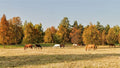
The lush green pasture your horse grazes on all day is often worse. Depending on the season, time of day, and grass species, pasture sugar can spike well above what's in a scoop of feed.
Even the carrots add up. A couple a day won't tip most healthy horses over, but for one that's already insulin resistant, treats matter more than owners assume.
The Pasture Paradox: When Green Isn't Good

A few years ago I treated a mare named Rosa, owned by my friend Eileen.
Eileen was doing everything she'd been told was right. Rosa had 24/7 turnout on a beautiful green pasture. "She's living the natural horse life," Eileen used to say.
Then Rosa started gaining weight. Her energy dropped. One morning Eileen found her standing stiff, refusing to move.
The diagnosis was laminitis, triggered by insulin resistance. The cause wasn't a feed bag. It was the grass.
Many modern pasture grasses were bred to raise non-structural carbohydrate content, because that's what drives milk yield in dairy cattle.[4] Horses grazing that grass all day take in far more sugar than their metabolism is built to handle, and for a horse like Rosa, already insulin resistant, that's exactly the trigger that tips things into laminitis.[4]
At the worst point, her hooves were so sore she could barely walk.

So what do leading vets recommend? A Sugar-Smart Approach
None of this means locking your horse in a stall and feeding nothing but hay. That creates its own set of problems.
But there are practical steps that make a real difference:
- Rethink your feed. Most horses don't need as much concentrate as they're getting. A 500 kg horse in light work rarely needs more than 1 kg of concentrated feed a day.
- Manage pasture time. Use a grazing muzzle or limit turnout, especially in spring and autumn when grass sugar content peaks.
- Choose treats wisely. Reach for low-sugar options, or swap treats for praise and a good scratch.
- Keep them moving. Regular exercise helps regulate insulin levels and burns excess calories.
- Monitor body condition. You should be able to feel, but not see, your horse's ribs. If you can't feel them, it's time to reassess the diet.
The Game-Changer: Steady&Stable
I know making these changes can feel like a lot at once. That's part of why we developed Steady&Stable.
It's not a magic pill. Those don't exist, no matter what anyone tells you.
It's a plant-based supplement built to support healthy sugar metabolism, with ingredients including:
- Berberis vulgaris, studied for its potential to support insulin sensitivity.
- Chrysanthellum, which supports healthy liver function and aids fat breakdown.
- Milk thistle, which supports liver health and helps horses process fats and clear waste products more effectively.

Steady & Stable
Vet-formulated, plant-based support for horses with metabolic imbalance and sensitive hooves.
Steady&Stable can be a useful ally against hidden sugar, but it's one piece of the puzzle. The root causes still need addressing: overfeeding, poor pasture management, and too little exercise.
Your Horse's Health Starts Now
Adjusting a horse's diet and routine isn't always easy. It takes time, and often a shift in habits we've held onto for years.
But consider the alternative. Laminitis that could have been prevented. Early retirement from a condition that was building quietly for months.
You have more control over that outcome than it might feel like right now.
Here's where I'd start:
- Take an honest look at your horse's diet. Too much concentrate? Too much pasture time?
- Pick one sugar-smart change from this article and make it this week.
- Consider adding Steady&Stable to support healthy sugar metabolism as part of a broader plan.
Your horse is counting on the choices you make today. If you need help along the way, we're here.
Veterinarian Valérie
P.S. Want more detail on how Steady&Stable works? See the full product page for ingredients and dosing.
Build a sugar-smart routine
Steady&Stable gives your horse plant-based support for metabolic imbalance and sensitive hooves, one part of a routine that also needs the right feed, pasture management, and exercise.
Shop Steady & StableReferences
[1] Robin CA, Ireland JL, Wylie CE, Collins SN, Verheyen KLP, Newton JR. Prevalence of and risk factors for equine obesity in Great Britain based on owner-reported body condition scores. Equine Vet J. 2015;47(2):196-201.
[2] Morgan RA, McGowan TW, McGowan CM. Prevalence and risk factors for hyperinsulinaemia in ponies in Queensland, Australia. Aust Vet J. 2014;92(4):101-106.
[3] Karikoski NP, Horn I, McGowan TW, McGowan CM. The prevalence of endocrinopathic laminitis among horses presented for laminitis at a first-opinion/referral equine hospital. Domest Anim Endocrinol. 2011;41(3):111-117.
[4] Longland AC, Byrd BM. Pasture nonstructural carbohydrates and equine laminitis. J Nutr. 2006;136(7 Suppl):2099S-2102S.
Share
Hi Miralda, dat hangt af van paard tot paard en het blijft altijd een totaalaanpak. Paarden die al langere tijd kampen met een verstoord suikermetabolisme hebben vaak baat bij ondersteuning op lange termijn, maar dat is niet voor elk paard hetzelfde.
Stuur ons gerust wat meer info via info@curafyt.com, dan kunnen we je gerichter helpen.
Moet ik het hele jaar door geven? Of is het voor een paar mnd en dan ff stoppen