





























Dog food for joints: nutrients, supplements
 by Nicolas Bartholomeeusen on Jun 14 2026· 5 min read
Key takeaways
- Glucosamine, chondroitin, omega-3s, collagen and antioxidants each support joint health in a different way, from cartilage repair to reducing inflammation.
- Fish oil rich in omega-3s has been shown in a canine study to improve weight-bearing and daily mobility in dogs with osteoarthritis.
- Large breeds, including Labradors, German Shepherds and Rottweilers, face a higher genetic risk of hip dysplasia and benefit from proactive joint support.
- Combining the right diet, a vet-recommended supplement and orthopaedic aids like supportive bedding gives dogs the best chance at staying mobile long-term.
Dogs with joint problems, such as osteoarthritis, hip dysplasia and arthritis, can benefit from specialised nutrition that supports their mobility and reduces inflammation. In this article, you'll discover which essential nutrients and supplements contribute to healthy joints for your four-legged friend, and which dietary options work best for dogs with joint problems.
Which Nutrients Support Dogs' Joints?
There are several nutrients that are essential for joint health, including:
- Glucosamine: Helps with cartilage production and reduces joint wear and tear. [1]
- Chondroitin: Ensures supple and resilient joints. [1]
- Omega-3 fatty acids (EPA and DHA): Reduce inflammation and joint pain. [2]
- Collagen: Supports the production of joint cartilage and reduces breakdown. [3]
- MSM (Methylsulfonylmethane): Helps reduce inflammation.
- Antioxidants: Vitamins E and C and selenium protect the joints from damage caused by free radicals. [4]
Why Are Omega-3 Fatty Acids Important for Joints?
Omega-3 fatty acids play a crucial role in reducing inflammation, which matters most for dogs with arthritis or other joint problems. They also improve overall mobility and reduce pain associated with limited movement. [2]
Good to know
In a canine osteoarthritis study, dogs fed a high omega-3 diet showed measurably better weight-bearing after seven weeks, while dogs on a standard diet showed no such change. [2]
What is the Effect of Antioxidants on the Joints?
Antioxidants such as vitamin C, vitamin E and selenium help reduce inflammation and protect the joints from damage caused by free radicals. In one trial, dogs given a high dose of vitamin E showed lower levels of inflammatory markers in their joint fluid and less cartilage damage. This contributes to maintaining healthy joints in the long term. [4]
Which Supplements Help with Joint Problems?
Supplements can be a valuable addition to your dog's diet. Popular supplements for joint health include glucosamine, chondroitin, MSM and omega-3 fatty acids. These help to relieve pain and improve joint function.
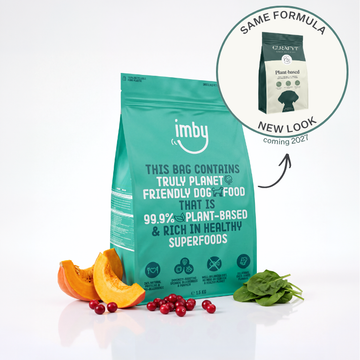
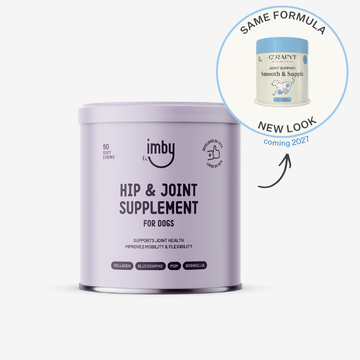
IMBY Hip & Joint Supplement
A vet-formulated daily supplement built around glucosamine, chondroitin and MSM, made to support cartilage and keep senior, large-breed and active dogs moving comfortably.
How Do You Adjust the Nutrition for a Dog with Joint Problems?
- The right balance of proteins, fats and carbohydrates: Nutrition containing high-quality proteins, moderate amounts of healthy fats (such as omega-3 fatty acids) and a lower carbohydrate content helps reduce joint problems and prevent obesity.
- Feeding frequency: It is best to divide the dog with joint problems' nutrition into two to three meals a day. This supports a healthy metabolism and weight control.
- Wet food or dry food?: Both are effective, depending on your dog's needs. Wet food provides extra hydration, whilst dry food is easier to portion and often contains more specific formulations for joint support.
Which Breeds Are More Prone to Joint Problems?
Large breeds and dogs with a genetic predisposition are often more prone to joint problems. A study across nearly 16,000 dogs found weight and hip laxity were consistent risk factors for degenerative joint disease in these breeds. [5] Common breeds include:
- Labrador Retriever
- German Shepherd
- Golden Retriever
- Rottweiler
- Bernese Mountain Dog
Which Accessories Can Help Support Joints?
As well as nutrition, orthopaedic aids can relieve pressure on your dog's joints:
- Orthopaedic dog beds: Reduce pressure on joints.
- Steps: Prevent extra strain when your dog jumps into the car or onto furniture.
- Non-slip mats: Prevent slipping and injuries in dogs with mobility issues.
What Does the Veterinarian Say About the Best Nutrition for Joints?
Veterinarians recommend feeding a high-quality, balanced diet rich in joint-supporting nutrients such as glucosamine, chondroitin and omega-3 fatty acids. Regular check-ups help detect and address joint conditions early.
Conclusion
Healthy joints are essential for your dog's quality of life. By providing the right nutrition and supplements, you can support your four-legged friend's joints. Glucosamine, chondroitin and omega-3 fatty acids are backed by veterinary research for improving mobility and reducing inflammation. Always consult a veterinarian to draw up the best diet plan for your dog, and consider additional orthopaedic aids for extra comfort.
Give their joints a daily head start
A vet-formulated joint supplement, paired with the right diet, can help keep your dog moving comfortably for years to come.
Shop joint & mobility supplementsReferences
[1] McCarthy G, O'Donovan J, Jones B, McAllister H, Seed M, Mooney C. Randomised double-blind, positive-controlled trial to assess the efficacy of glucosamine/chondroitin sulfate for the treatment of dogs with osteoarthritis. The Veterinary Journal. 2007;174(1):54-61. pubmed.ncbi.nlm.nih.gov/16647870
[2] Moreau M, Troncy E, Del Castillo JRE, Bédard C, Gauvin D, Lussier B. Effects of feeding a high omega-3 fatty acids diet in dogs with naturally occurring osteoarthritis. Journal of Animal Physiology and Animal Nutrition. 2013;97(5):830-837. pubmed.ncbi.nlm.nih.gov/22805303
[3] Cabezas MÁ, Benito J, Ortega Á, Garcia-Pedraza E. Long-term supplementation with an undenatured type-II collagen (UC-II) formulation in dogs with degenerative joint disease: Exploratory study. Open Veterinary Journal. 2022;12(1):91-98. pmc.ncbi.nlm.nih.gov/articles/PMC8956235
[4] Rhouma M, de Oliveira El Warrak A, Troncy E, Beaudry F, Chorfi Y. Anti-inflammatory response of dietary vitamin E and its effects on pain and joint structures during early stages of surgically induced osteoarthritis in dogs. Canadian Journal of Veterinary Research. 2013;77(3):191-198. pmc.ncbi.nlm.nih.gov/articles/PMC3700444
[5] Smith GK, Mayhew PD, Kapatkin AS, McKelvie PJ, Shofer FS, Gregor TP. Evaluation of risk factors for degenerative joint disease associated with hip dysplasia in German Shepherd Dogs, Golden Retrievers, Labrador Retrievers, and Rottweilers. Journal of the American Veterinary Medical Association. 2001;219(12):1719-1724. pubmed.ncbi.nlm.nih.gov/11767921
Share