


Quick view
Vet-formulated food.
From insects.
For your dog.
Imby is a complete, scientifically backed dog food made from insects. Perfect for dogs with a food allergy, but also healthy and delicious for all other dogs.
Is this really complete nutrition?
Short, honest explanation. No marketing speak.
Yes. Imby is a complete meal food that meets all official nutritional standards for dogs (FEDIAF).
Based on internationally recognised standards for complete dog food
What's in it?
The main ingredients are carefully chosen for a dog with a sensitive system: one protein source and a range of functional additions that support your dog from head to tail.
Stars (⭐) = functional extras with proven health benefits, on top of the base nutrition.
Insects in dog food? Really?
We understand the surprise. Here is why it makes sense.

🐛 Insects are protein powerhouses
Black Soldier Fly larvae (Hermetia illucens) contain all the essential amino acids a dog needs, comparable to chicken or beef. More than 85% of that protein is absorbed by your dog's body. Scientific evidence even shows a better trend than traditional proteins like venison.
🌍 Better for the planet
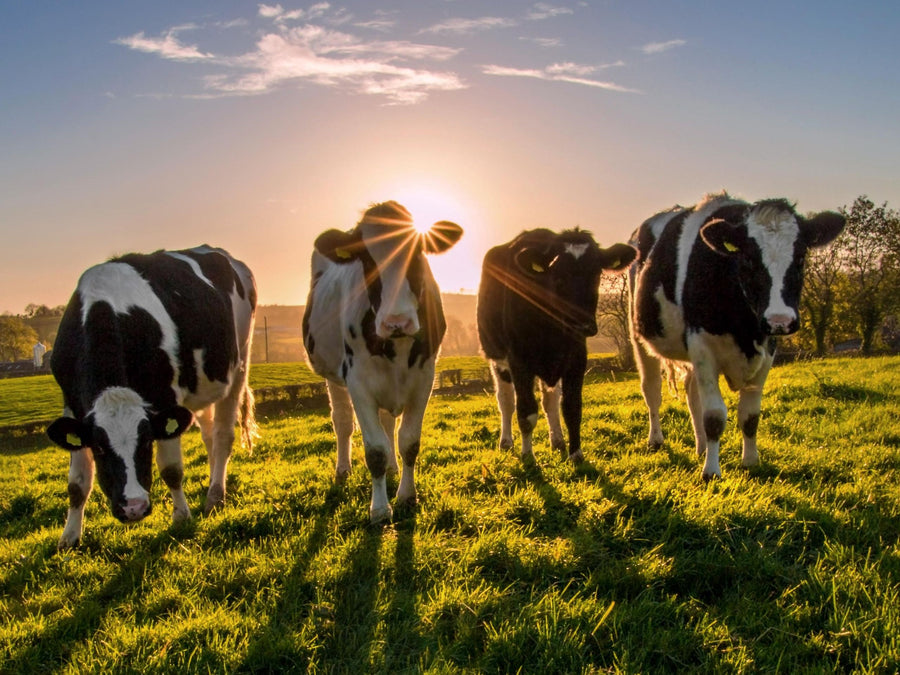
Insect farming produces 2 to 5 times fewer greenhouse gases than beef or chicken. They grow on food waste (circular economy), need very little space and use a fraction of the water. By choosing Imby you do something good for your dog and for the earth.
🆕 "Novel protein" what does that mean?
Your dog has never been exposed to insect proteins before. That means their immune system cannot have built up a reaction against insects, because it simply does not know them.
This is exactly why vets recommend insect-based food when your dog reacts to chicken, beef, lamb or salmon. It is a clean slate: a protein with no history of allergic reactions.
🤔 Isn't that a bit gross?
Understandable thought! But the insects in Imby are quality-farmed, carefully processed and dehydrated into a hygienic, stable protein powder. In large parts of the world insects have been a normal part of the menu for centuries. And your dog? They do not question it, they just eat what tastes good. 🐾
What does Imby do for your dog?
Beyond basic nutrition: benefits you will actually notice.

Calmer stomach
Diarrhoea, soft stools, a bloated feeling... Many dogs with a sensitive digestive system respond strongly to switching to a single, digestible protein. Insect is light to digest and easy on the gut.

Better skin & coat
Dogs that switched to insect-based food showed measurable improvement in skin lesions and a healthier skin barrier after 8 weeks. Less scratching, fewer red patches, a shinier coat.

Healthier gut bacteria
Chitin from insect walls acts as a prebiotic fibre: it feeds the good bacteria in your dog's gut. Together with FOS (0.7%) in the formula, Imby actively supports a balanced gut flora.

Anti-allergenic potential
Made with novel insect protein, this recipe is ideal for dogs with suspected food sensitivities or allergies and is a healthy, delicious choice for every dog.

Dental health
Insect fat consists of 40–55% lauric acid, a medium-chain fatty acid with proven antimicrobial action against the bacteria that cause tartar and gum disease.
Chitosan from the insect shells also inhibits plaque-forming bacteria. Double protection from within, through the food.

Energy & vitality
The improved omega fatty acid profile, spirulina (antioxidants) and complete amino acid profile together make Imby a food that does not just maintain your dog, but actively supports them.
But... will my dog like it?
The question we get asked most. The honest answer:
Dogs do not judge on what is in their bowl. They judge on smell, taste and texture. And insect scores well on all three.
What does the research say?
In a scientific study with Golden Retrievers, dogs were offered preference tests between insect food and standard chicken food. The insect food was well accepted, with no signs of refusal or reluctance.
In Imby's own clinical trials it was very rare for a dog to refuse to eat for more than 24 hours. Most dogs switch over after a proper transition.
Yeast: the secret flavour weapon
Imby contains yeast, not by accident. Yeast naturally provides glutamates: umami flavour components that make food taste deeper and richer. Dogs love it.
This is also why the transition goes smoothly for most dogs, even if they are used to strongly flavoured food.
🎉 Tip: use Imby as a reward too
Our hypoallergenic dog snacks are a smart choice for dogs with allergies or sensitivities. Snacks are often overlooked when managing allergies, but they can contain ingredients that trigger reactions. With our snacks, you can reward your dog while staying consistent with their diet.
How do I switch to Imby?
Slowly and step by step, that is what works best.
Day 1 to 3: Start gently
Mix 75% of the old food with 25% Imby. This lets your dog's digestive system gradually get used to the new protein.
Day 4 to 5: Halfway
50% old food, 50% Imby. Check that stools remain normal. A small adjustment is normal; if diarrhoea persists, slow the schedule down.
Day 6 onwards: Fully switched
100% Imby. Your dog has their daily portion, and you can also freely use part of it as a treat or reward.
✅ You can
- Lightly moisten kibble with warm water (soak 10 minutes = softer and more fragrant)
- Use part of the daily portion as a reward
- Fresh drinking water always available
- Medication approved by your vet
❌ Avoid this
- No other kibble or wet food alongside (especially not during an elimination diet)
- No treats, biscuits or table scraps
- No stock or toppings
- No supplements with animal proteins (such as fish oil capsules with gelatin) without consultation
🐕 My dog is refusing to eat, now what?
Give your dog 24 hours. Add some lukewarm water and let the kibble soak for 10 minutes, that greatly intensifies the smell. If your dog still will not eat after 24 hours, contact your vet or our team.
Frequently asked questions
Honest answers to the questions we get most.
Is Imby suitable as daily food, not just as a diet?
Absolutely. Imby Vitality is suitable as complete daily food for dogs of all ages, including puppies.
The Plant-Based and GI Sensitive recipes are complete daily foods for adult dogs from 12 months onwards. For puppies, senior dogs, or dogs with specific health needs, your vet can always advise on the best choice.
My dog has a shellfish allergy. Can they eat insects?
This is a good question to discuss with your vet. Insects and shellfish contain a similar protein (tropomyosin) that some dogs with shellfish allergies may react to. It is rare, but it exists. Definitely discuss this if your dog has a confirmed mite or shellfish allergy.
How do I know how much to give?
The portion guide on the packaging is based on your dog's weight. Active dogs need a little more, less active dogs a little less. Weigh the portion for the first few weeks for best results.
Can I combine Imby with wet food?
In a normal feeding context: yes, with an insect-compatible wet food. But if you are using Imby as an elimination diet (to test for food allergy), then absolutely nothing else is allowed alongside, not even wet food. Follow your vet's advice strictly.
Does it smell strange? My dog is used to chicken.
Insect food has a lightly nutty, earthy smell, different from chicken but certainly not unpleasant. Dogs are strongly attracted by the smell. The yeast in the formula increases the appeal further. Most owners are pleasantly surprised by how enthusiastically their dog responds.
Is insect-based food ethically responsible?
This is a valuable question. Insect farming requires significantly less space, water and energy than livestock, and insects can grow on food waste making production circular. Compared to the ecological cost of traditional pet food, insect is a considerably more sustainable choice, without compromising on quality for your dog.
My vet has recommended Imby as an elimination diet. What now?
Great news: your vet is following the latest scientific insights. Follow the transition schedule above, give only Imby food (and fresh water) for the full trial period of 6–8 weeks, and keep the scorecard your vet gave you. Questions along the way? Your vet or our team is here for you.
Science-backed hypoallergenic dog food
You've read the science. Now let your dog feel the difference. Try Imby and see results in 8 weeks.
FOR ALL DOGS
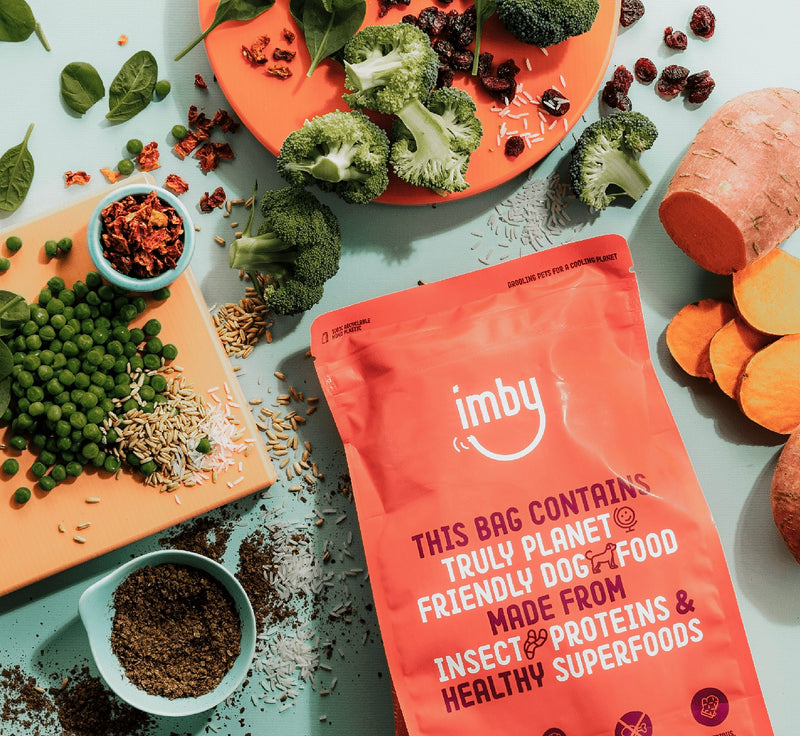
IMBY Vitality
Hypoallergenic insect protein kibble with sweet potato, spinach, oats, broccoli, blueberries, and olive oil. Available in sizes for all life stages and breeds.
View product →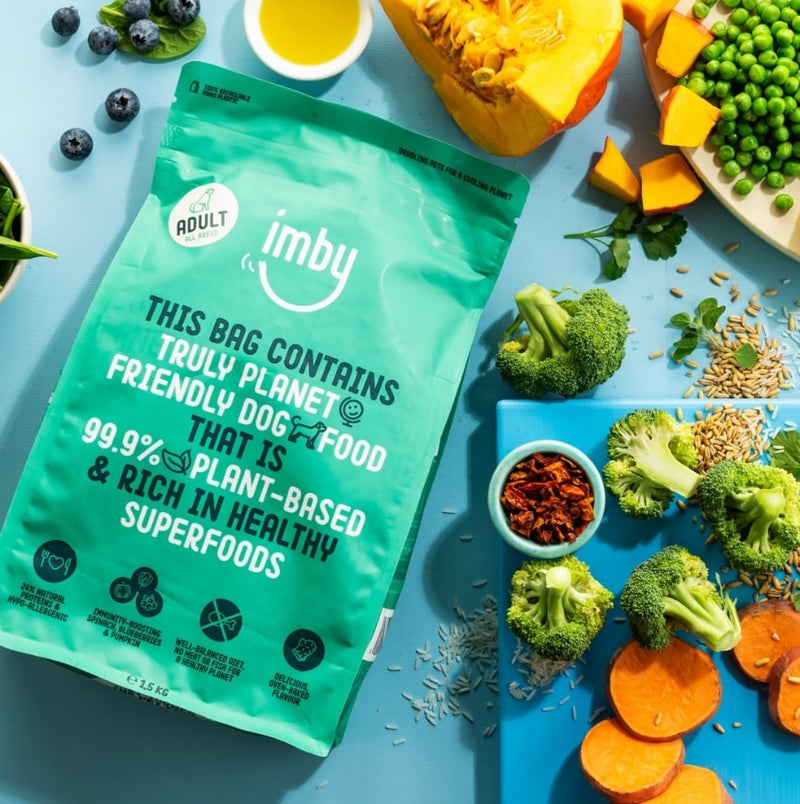
FOR ADULT VEGAN DOGS
IMBY Plant-Based
Vegan kibble made from sustainable plant ingredients including pumpkin.
View product →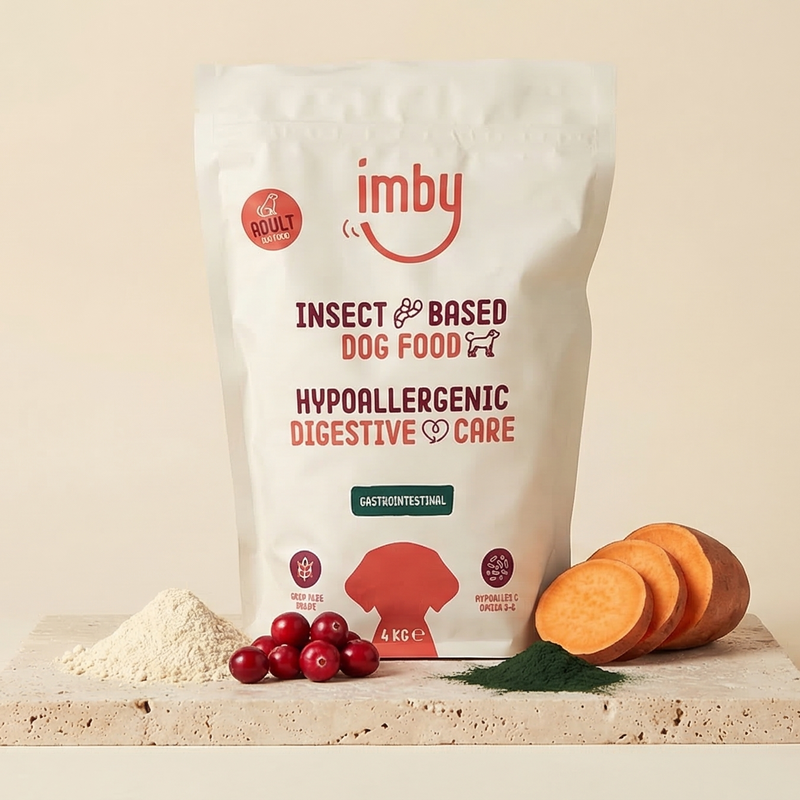
WITH EXTRA GI SUPPORT
IMBY Sensitive
Grain-free insect protein + prebiotics formula, specifically for dogs with sensitive stomachs or allergies.
View product →