


































German Shepherd: history, character and care
 by Nicolas Bartholomeeusen on Jun 14 2026· 6 min read
Key takeaways
- This intelligent, loyal working breed needs 1 to 2 hours of daily exercise and consistent, structured training from puppyhood to thrive.
- Hip and elbow dysplasia affect roughly 1 in 5 to 1 in 6 German Shepherds, so early joint support and regular vet checks are worth prioritising.
- Coat care stays manageable with brushing 2 to 3 times a week (daily during spring and autumn shedding) and monthly bathing.
- With consistent care, German Shepherds typically live 9 to 13 years, making early socialisation and preventive health checks pay off long-term.
The German Shepherd is one of the most versatile, intelligent and popular dog breeds in the world. In this article, we cover everything you need to know about this wonderful breed, covering its origins, physical characteristics, temperament, care and more. This breed is known for its loyalty, working ability and protective instincts. German Shepherds are not only kept as family dogs, but also play an important role as police and rescue dogs. Below, we take an in-depth look at the key aspects of the German Shepherd.
Size: 55–65 cm
Weight: 22–40 kg
Temperament: Intelligent, alert, loyal
Coat: Short/long, black with brown/wolf grey
Origin: Germany
FCI Breed Group: Group 1 – Sheepdogs
Life expectancy: 9–13 years
What is the history of the German Shepherd?
Origin and Development
The German Shepherd was first bred in Germany at the end of the 19th century. Captain Max von Stephanitz, the founder of the breed, saw this dog as the perfect working dog. He selected Horand von Grafrath as the first dog to be used as the standard for the breed. Von Stephanitz founded the Verein für Deutsche Schäferhunde (SV) in 1899 to further develop this breed.
Function and Use
- Traditional role: Originally, these dogs were used as sheepdogs.
- Modern roles: They are now indispensable as police dogs, rescue dogs and even in the military due to their intelligence and obedience in stressful situations.
International Footprint
After the First World War, the German Shepherd became known worldwide, partly thanks to its versatility and working abilities. Today, the breed is valued all over the world as a working and family dog.
What are the physical characteristics of the German Shepherd?
Height and Weight
- Males: 60–65 cm tall, weighing 30–40 kg.
- Bitches: 55–60 cm tall, weighing 22–32 kg.
Build and Head
- Head: Wedge-shaped and powerful, with an intelligent, alert expression.
- Body: Strong and well-balanced. Their back is slightly sloping and the chest deep.
Coat and Colour
- Coat: These dogs have a double coat with a soft undercoat and a hard, straight topcoat.
- Coat colours: Common colours include black, black and tan, and shades ranging from grey to sable. White and cream German Shepherds are rarer.
How do you care for a German Shepherd's coat?
Coat care is essential to maintain a German Shepherd's health and appearance.
- Regular brushing: During normal periods, brushing two to three times a week is sufficient. During the shedding seasons (spring and autumn), you should do this daily.
- Bathing: Bathing is only necessary once a month, unless the dog is very dirty.
- Nail care: Check and trim the nails if necessary to prevent discomfort.
- Ear hygiene: Clean the ears weekly and watch for signs of infection.
How does a German Shepherd behave with other dogs?
Socialisation
Proper socialisation is essential to prevent undesirable behaviour:
- Managing dominance: Without socialisation, they may display dominant behaviour towards other dogs.
- Proper introductions: Introduce a German Shepherd to other dogs gradually, preferably on neutral ground.
Tips for socialisation
- Ideally, start socialisation when the puppy is between 8 and 14 weeks old.
- Be consistent and reward good behaviour.
How do you train a German Shepherd correctly?
Basic principles of training
- Socialisation from a young age: Get your puppy used to people, other pets and different situations.
- Clear rules: German Shepherds thrive in a structured environment.
- Training exercises: Focus on obedience training and use positive reinforcement.
Trainable traits
Thanks to their intelligence, German Shepherds can learn:
- Basic commands such as 'sit' and 'down'.
- More complex tasks such as tracking and agility.
What kind of living conditions does a German Shepherd need?
- Space and activity: Although they can live in a flat, German Shepherds need at least 1 to 2 hours of exercise every day.
- Social companionship: They thrive best in a family environment and do not like being left alone for long periods.
- Indoors versus outdoors: These dogs can live outdoors well, as long as they have a warm and dry shelter.
What health problems are common in German Shepherds?
- Hip dysplasia: A common hereditary condition that affects the joints. Population studies using OFA screening data put the prevalence in German Shepherds at roughly 16–20 per cent [1].
- Elbow dysplasia: This leads to pain and mobility problems. A radiographic screening study of German Shepherds in France found a prevalence of around 19 per cent [2].
- Degenerative myelopathy: A neurological condition that can cause progressive paralysis. It has been linked to a mutation in the SOD1 gene, identified in German Shepherds and several other breeds [3].
- Allergies and skin problems: Often caused by food or environmental factors. The German Shepherd is considered a higher-risk breed for atopic dermatitis, and a genetic locus associated with the condition has been identified in the breed [4].
Prevention
- Regular health checks at the veterinarian.
- Dietary supplements containing glucosamine and chondroitin for the joints.
Good to know
Hip and elbow dysplasia are among the most common orthopaedic issues in the breed, each affecting somewhere in the range of one in five to one in six German Shepherds screened [1][2]. This is why many owners start supporting their dog's joints early, rather than waiting for signs of stiffness to appear.
How long does a German Shepherd live?
The average life expectancy of German Shepherds is between 9 and 13 years, with a large UK veterinary-care study reporting a median longevity of around 10.3 years [5]. This depends on factors such as hereditary conditions, nutrition quality and general care.
How much does a German Shepherd cost?
Purchase costs
- From a breeder: Between €600 and €2,500, depending on the pedigree.
- Adoption: Expect to pay €50 to €300 at an animal shelter.
Recurring costs
- Nutrition: Between €75 and €150 per month.
- Veterinarian & insurance: Variable, but essential for unexpected medical costs.
What kind of diet does a German Shepherd need?
- Protein-rich nutrition: Around 30%–40% protein, ideal for muscle maintenance.
- Supplements: Such as fish oil for a shiny coat and joint health.
- Regularity: Split meals into two portions a day to support the digestive system.
What names are suitable for a German Shepherd?
Tough names
- Thor
- Odin
Cute names
- Buddy
- Floki
Conclusion
The German Shepherd is an ideal choice for experienced dog owners looking for an intelligent, loyal and versatile dog. However, they do require a lot of attention and exercise. Whether you choose a working dog or a family dog, this breed offers a lifetime of love and devotion.
References
[1] Loder RT, Todhunter RJ. "The Demographics of Canine Hip Dysplasia in the United States and Canada." Journal of Veterinary Medicine. 2017;2017:5723476. https://doi.org/10.1155/2017/5723476
[2] Remy D, Neuhart L, Fau D, Genevois JP. "Canine elbow dysplasia and primary lesions in German shepherd dogs in France." Journal of Small Animal Practice. 2004;45(5):244-248. https://doi.org/10.1111/j.1748-5827.2004.tb00230.x
[3] Awano T, Johnson GS, Wade CM, et al. "Genome-wide association analysis reveals a SOD1 mutation in canine degenerative myelopathy that resembles amyotrophic lateral sclerosis." Proceedings of the National Academy of Sciences. 2009;106(8):2794-2799. https://doi.org/10.1073/pnas.0812297106
[4] Tengvall K, Kierczak M, Bergvall K, et al. "Genome-Wide Analysis in German Shepherd Dogs Reveals Association of a Locus on CFA 27 with Atopic Dermatitis." PLoS Genetics. 2013;9(5):e1003475. https://doi.org/10.1371/journal.pgen.1003475
[5] O'Neill DG, Coulson NR, Church DB, Brodbelt DC. "Demography and disorders of German Shepherd Dogs under primary veterinary care in the UK." Canine Genetics and Epidemiology. 2017;4:7. https://doi.org/10.1186/s40575-017-0046-4
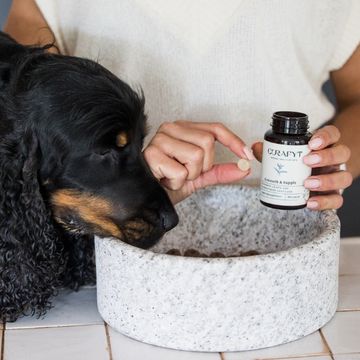
Support their hips and joints every day
Hip and elbow dysplasia are two of the most common health concerns for this breed, so daily joint support is worth starting early, not just once stiffness shows up.
Shop IMBY Hip & Joint SupplementShare