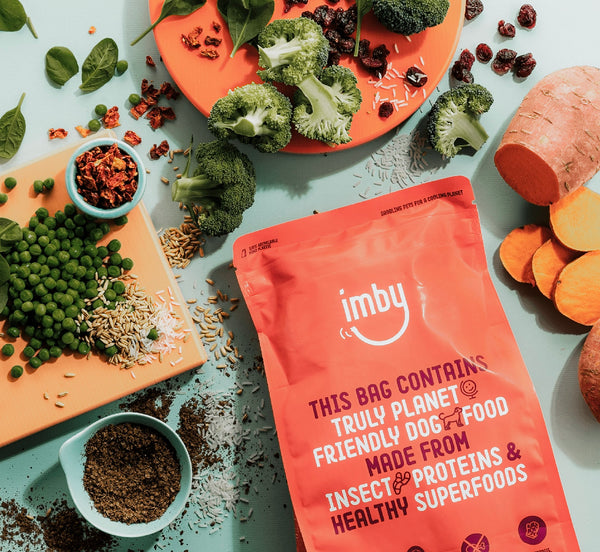
INSECT-BASED NUTRITION FOR EVERY DOG

IMBY Insect-Based Vitality Dog Food

A complete, everyday dry dog food for dogs of all breeds and life stages. Powered by hypoallergenic insect protein for highly digestible, eco-conscious nutrition that works for every dog.

✔ Novel protein to reduce the risk of allergies
✔ High digestibility for easy daily nutrition
✔ Contains the 10 essential amino acids
✔ Balanced formula developed by vets
✔ Highly palatable kibble

Great for puppies, adults, and seniors of all breeds, including picky eaters and dogs with mild sensitivities, while supporting everyday wellbeing with a lighter pawprint.

1. Select size

10 kg
1.5 kg
5 kg
15 kg

1. Select size

Puppy (Up to 12 months)
Adult Mini (1 - 10 kg)
Adult Medium (10 - 35 kg)
Adult Maxi (> 35 kg)
Senior (from 9 years)

2. Select your order type

One-time purchase
/
(g)
Subscribe & Save 10%
/
(g)
  • American Express
  • Apple Pay
  • Bancontact
  • Google Pay
  • iDEAL Wero
  • Klarna
  • Maestro
  • Mastercard
  • PayPal
  • Shop Pay
  • Union Pay
  • Visa
  • American Express
  • Apple Pay
  • Bancontact
  • Google Pay
  • iDEAL Wero
  • Klarna
  • Maestro
  • Mastercard
  • PayPal
  • Shop Pay
  • Union Pay
  • Visa

🔒 All transactions secure and encrypted

Ingredients: Dried insect protein (16%) · sweet potatoes · naked oats · peas · white rice · vegetable protein · animal fat · dried beet pulp · minerals · hydrolized animal protein · potato protein · dried chicory (FOS) · yeast hydrolysate (MOS) · dried brewer’s yeast · dried pumpkin · algae oil (EPA and DHA) · olive oil · canola oil · dried thyme (0.1%) · dried marjoram (0.1%) · dried oregano (0.1%) · dried parsley (0.1%) · dried sage (0.1%) · dried stinging nettle (0.1%) · dried broccoli (0.05%) · dried spinach (0.05%) · dried tomatoes (0.05%) · dried cranberries (0.05%) · dried blueberries (0.05%) · glucosamine hydrochloride (0.01%) · chondroitin sulphate (0.01%).

Additives, per KG

Vitamin A, 20.000 IE
Vitamin D3, 2.000 IE
Vitamin E, 400 mg
Vitamin C, 200 mg
Taurine, 1500 mg
Iron (3b103, 3b107), 50 mg
Copper (3b405, 3b406), 10 mg
Zinc (3b605, 3b612), 60 mg
Manganese (3b503, 3b505), 40 mg
Iodine (3b202), 1,5 mg
Selenium (3b801), 0,2 mg
Vegetable oil tocopherol extract (1b306(i))

Analytical  Constituents 

Crude protein, 26.0%
Crude fat, 15.0%
Crude ash, 7.5%
Crude fibre, 3.0%
Humidity, 9.0%
Calcium (Ca), 0.9%
Phosphorus, 0.8%
EHA + DHA, 0.2%
Omega-3 fatty acids, 0.7%
Omega-6 fatty acids, 2.1%

Ingredients: Dried insect protein (15%) · sweet potatoes · naked oats · peas · white rice · vegetable protein · animal fat · dried beet pulp · minerals · hydrolized animal protein · potato protein · dried chicory (FOS) · yeast hydrolysate (MOS) · dried brewer’s yeast · dried pumpkin · algae oil (EPA and DHA) · olive oil · canola oil · dried thyme (0.1%) · dried marjoram (0.1%) · dried oregano (0.1%) · dried parsley (0.1%) · dried sage (0.1%) · dried stinging nettle (0.1%) · dried broccoli (0.05%) · dried spinach (0.05%) · dried tomatoes (0.05%) · dried cranberries (0.05%) · dried blueberries (0.05%) · glucosamine hydrochloride (0.01%) · chondroitin sulphate (0.01%).

Additives, per KG

Vitamin A, 20.000 IE
Vitamin D3, 2.000 IE
Vitamin E, 400 mg
Vitamin C, 200 mg
Taurine, 1500 mg
Iron (3b103 · 3b107), 50 mg
Copper (3b405 · 3b406), 10 mg
Zinc (3b605 · 3b612), 60 mg
Manganese (3b503 · 3b505), 40 mg
Iodine (3b202), 1.5 mg
Selenium (3b801), 0.2 mg
Vegetable oil tocopherol extract (1b306(i))

Analytical  Constituents 

Crude protein, 25.0%
Crude fat, 13.0%
Crude ash, 7.5%
Crude fibre, 3.0%
Humidity, 9.0%
Calcium (Ca), 0.9%
Phosphorus, 0.8%
EHA + DHA, 0.2%
Omega-3 fatty acids, 0.5%
Omega-6 fatty acids, 1.9%

Ingredients: Naked oats · sweet potatoes · peas · white rice · vegetable protein · dried pumpkin · dried insect protein (4%) · animal fat · dried beet pulp · minerals · dried brewer’s yeast · potato protein · olive oil · canola oil · hydrolized animal protein · dried chicory (FOS) · yeast hydrolysate (MOS) · algae oil (EPA and DHA) · dried thyme (0.1%) · dried marjoram (0.1%) · dried oregano (0.1%) · dried parsley (0.1%) · dried sage (0.1%) · dried stinging nettle (0.1%) · dried broccoli (0.05%) · dried spinach (0.05%) · dried tomatoes (0.05%) · dried cranberries (0.05%) · dried blueberries (0.05%) · glucosamine hydrochloride (0.02%) · chondroitin sulphate (0.02%).

Additives, per KG

Vitamin A, 20.000 IE
Vitamin D3, 2.000 IE
Vitamin E, 400 mg
Vitamin C, 200 mg
Taurine, 1500 mg
Iron (3b103 · 3b107), 50 mg
Copper (3b405 · 3b406), 10 mg
Zinc (3b605 · 3b612), 60 mg
Manganese (3b503 · 3b505), 40 mg
Iodine (3b202), 1.5 mg
Selenium (3b801), 0.2 mg
Vegetable oil tocopherol extract (1b306(i))

Analytical  Constituents 

Crude protein, 23.0%
Crude fat, 10.0%
Crude ash, 7.0%
Crude fibre, 4.0%
Humidity, 9.0%
Calcium (Ca), 0.9%
Phosphorus, 0.8%
EHA + DHA, 0.2%
Omega-3 fatty acids, 0.4%
Omega-6 fatty acids, 1.5%

Ingredients: Dried insect protein (19%) · sweet potatoes · naked oats · white rice · green peas · animal fat · vegetable protein · dried beet pulp · minerals · dried brewer’s yeast · pea protein · hydrolized animal protein · dried chicory (FOS) · yeast hydrolysate (MOS) · algae oil (EPA and DHA) · olive oil · dried thyme (0.1%) · dried marjoram (0.1%) · dried oregano (0.1%) · dried parsley (0.1%) · dried sage (0.1%) · dried stinging nettle (0.1%) · dried broccoli (0.1%) · dried spinach (0.1%) · dried tomatoes (0.1%) · dried cranberries (0.05%) · dried blueberries (0.05%) · glucosamine hydrochloride (0.01%) · chondroitin sulphate (0.01%).

Additives, per KG

Vitamin A, 20.000 IE
Vitamin D3, 2.000 IE
Vitamin E, 400 mg
Vitamin C, 200 mg
Taurine, 1500 mg
Iron (3b103 · 3b107), 50 mg
Copper (3b405 · 3b406), 10 mg
Zinc (3b605 · 3b612), 60 mg
Manganese (3b503 ·3b505), 40 mg
Iodine (3b202), 1.5 mg
Selenium (3b801), 0.2 mg
Vegetable oil tocopherol extract (1b306(i))

Analytical  Constituents 

Crude protein, 27.0%
Crude fat, 17.0%
Crude ash, 8.0%
Crude fibre, 2.5%
Humidity, 9.0%
Calcium (Ca), 1.0%
Phosphorus, 0.9%
EHA + DHA, 0.2%
Omega-3 fatty acids, 0.4%
Omega-6 fatty acids, 2.5%

Ingredients: Dried insect protein (19%) · sweet potatoes · naked oats · white rice · green peas · animal fat · vegetable protein · dried beet pulp · minerals · dried brewer’s yeast · pea protein · hydrolized animal protein · dried chicory (FOS) · yeast hydrolysate (MOS) · algae oil (EPA and DHA) · olive oil · dried thyme (0.1%) · dried marjoram (0.1%) · dried oregano (0.1%) · dried parsley (0.1%) · dried sage (0.1%) · dried stinging nettle (0.1%) · dried broccoli (0.1%) · dried spinach (0.1%) · dried tomatoes (0.1%) · dried cranberries (0.05%) · dried blueberries (0.05%) · glucosamine hydrochloride (0.01%) · chondroitin sulphate (0.01%).

Additives, per KG

Vitamin A, 20.000 IE
Vitamin D3, 2.000 IE
Vitamin E, 400 mg
Vitamin C, 200 mg
Taurine, 1500 mg
Iron (3b103 · 3b107), 50 mg
Copper (3b405 · 3b406), 10 mg
Zinc (3b605 · 3b612), 60 mg
Manganese (3b503 · 3b505), 40 mg
Iodine (3b202), 1.5 mg
Selenium (3b801), 0.2 mg
Vegetable oil tocopherol extract (1b306(i))

Analytical  Constituents 

Crude protein, 28.0%
Crude fat, 18.0%
Crude ash, 8.0%
Crude fibre, 2.5%
Humidity, 9.0%
Calcium (Ca), 1.0%
Phosphorus, 0.9%
EHA + DHA, 0.2%
Omega-3 fatty acids, 0.9%
Omega-6 fatty acids, 2.4%

2 to 6 kg, 51 to 106 g
6 to 10 kg, 106 to 149 g
10 to 15 kg, 149 to 196 g
15 to 20 kg, 196 to 276 g
20 to 25 kg, 276 to 378 g
40 kg, >378 g

For first time use introduce gradually over 7 days:
25%*, (day 1 to 2)
50%, (day 3 to 4)
75%, (day 5 to 6)
100%, (day 7+)
* of daily recommended dose

35 to 40 kg, 437 to 482 g
40 to 50 kg, 482 to 570 g
50 to 60 kg, 570 to 654 g
60 to 70 kg, 654 to 734 g
70 to 80 kg, 734 to 811 g
70 to 80 kg, 811 to 900 g

For first time use introduce gradually over 7 days:
25%*, (day 1 to 2)
50%, (day 3 to 4)
75%, (day 5 to 6)
100%, (day 7+)
* of daily recommended dose

0 to 2 kg, 29 to 48 g
2 to 4 kg, 48 to 81 g
4 to 6 kg, 81 to 110 g
6 to 8 kg, 110 to 136 g
8 to 10 kg, 136 to 166 g

For first time use introduce gradually over 7 days:
25%*, (day 1 to 2)
50%, (day 3 to 4)
75%, (day 5 to 6)
100%, (day 7+)
* of daily recommended dose

10 to 15 kg, 166 to 225 g
15 to 20 kg, 225 to 280 g
20 to 25 kg, 280 to 331 g
25 to 30 kg, 331 to 379 g
30 to 35 kg, 379 to 430 g

For first time use introduce gradually over 7 days:
25%*, (day 1 to 2)
50%, (day 3 to 4)
75%, (day 5 to 6)
100%, (day 7+)
* of daily recommended dose

0 to 2 kg, 60 to 69 g
2 to 6 kg, 69 to 95 g
6 to 10 kg, 95 to 184 g
10 to 15 kg, 184 to 241 g
15 to 20 kg, 241 to 292 g
20 to 25 kg, 292 to 339 g

For first time use introduce gradually over 7 days:
25%* (day 1 to 2)
50% (day 3 to 4)
75% (day 5 to 6)
100% (day 7+)
* of daily recommended dose

IMBY Insect-Based Vitality Dog Food
701,00 kr
701,00 kr
  • Trusted by 20.000+ dogs
  • Recommended by 1000+ vets
  • No fillers or binders
  • Made in Belgium
Reviewed by a veterinarian
With IMBY's hypoallergenic food, I'm able to keep itching in dogs with food allergies under control in the long term. It's a great option for dogs that react to common protein sources.
Ruben Van VlasselaerSmall Animals VeterinarianDAP Daktari

when to use

For which dogs is Imby Vitality suitable?

  • Everyday nutrition for every dog

    Everyday nutrition for every dog

    Complete daily food for puppies, adults and seniors of all breeds.

  • Easy to digest, rich in nutrition

    Easy to digest, rich in nutrition

    Highly digestible insect protein supports muscles, energy and daily vitality.

  • Dogs with sensitive skin

    Dogs with sensitive skin

    Made with insect protein, a novel protein source with a very low allergy risk.

WHY IT WORKS

Why hypoallergenic nutrition matters.

Food sensitivities are one of the most common reasons owners bring their dog to the vet. Here's what science shows.

  • Prevalence

    Up to 40%

    of dogs presenting with chronic itching may have a food-related trigger.

    Source: veterinary dermatology literature
  • Common triggers

    34 · 17 · 15%

    Beef (34%), dairy (17%) and chicken (15%) are among the most commonly reported food allergens in dogs.

    Source: Mueller et al., BMC Vet Research
  • Digestibility

    80%+

    Apparent digestibility shown in canine studies on black soldier fly larvae protein.

    Source: peer-reviewed canine nutrition studies

What to expect

With correct dietary transition

Complete insect-based dog food for everyday vitality and allergy prevention

  1. DAYS 1 – 10

    Dietary transition

    Transition gradually: 25% IMBY / 75% old food (days 1–3) → 50/50 (days 4–6) → 75% IMBY (days 7–9) → 100% IMBY (day 10+). Allows the gut microbiome to adapt to the insect protein matrix.

  2. WEEKS 2 – 4

    Digestive adaptation complete

    The gut microbiome fully adapts to insect protein and chicory root prebiotics. Stool quality and consistency normalise. Brewers yeast beta-glucans support gut barrier integrity and immune function.

  3. WEEKS 4 – 8

    Coat & vitality improve

    Algae oil DHA, vitamin E and zinc contribute to skin and coat quality. Spirulina antioxidants and all 10 essential amino acids from insect protein support lean muscle and daily vitality.

  4. WEEKS 8 – 12+

    Long-term allergy & vitality support

    Novel protein (black soldier fly larvae) minimises allergen exposure compared to common proteins like chicken or beef. Glucosamine contributes to normal joint function with long-term feeding. Sustainable nutrition fully integrated.

SEEING IS BELIEVING

Real Stories. Real Results.

BEFORE
AFTER

Ranger

“Ranger loves this food, it really makes her feel better. Her allergies are really bad but this is a fantastic help.”

BEFORE
AFTER

Veronique S.

Our dog Boss used to get hot spots all the time and kept licking and biting them. Since we switched to Imby’s hypoallergenic food, things have improved a lot!

96%

of customers are seeing improvements in digestion and overall vitality, with their dogs showing more energy and fewer sensitivities.

* Based on current trustpilot review score

90%

of customers are seeing fewer digestive issues and less itching, with their dogs feeling more comfortable day to day.

* Based on current trustpilot review score

Imby vs. other dog food

A smarter protein source for your dog and a lighter footprint for the planet.

Insect-based (Best option)
Chicken-based (Better option)
Beef-Based (Worst option)
Feed needed (per kg edible weight)
1.8 kg
9.4 kg
25 kg
Allergy profile
Hypoallergenic ( <0.5%)
Common allergen (15%)
Common allergen (36%)
Contains all amino acids
Water use (per 100 g protein)
60 L
381 L
901 L
Greenhouse gases (per 100 g protein)
1.1 kg
5.7 kg
49.9 kg
Animal cruelty
Key Ingredients

Nature holds the power. Science unlocks it.

Every ingredient is chosen based on documented mechanisms of action and peer-reviewed evidence. Select a compound below to go deeper.

Pumpkin

Cucurbita pepo

Pumpkin (Cucurbita pepo) is valued in pet nutrition for its naturally high fiber content and balanced nutritional profile. It contains both soluble and insoluble fibers that help support normal digestive processes and contribute to healthy intestinal function.

Soluble fibers can help nourish beneficial gut bacteria, while insoluble fibers support normal intestinal movement and stool consistency. Maintaining a balanced gut microbiome is an important factor in overall digestive health and nutrient absorption.

Pumpkin also provides micronutrients such as beta-carotene, a precursor of vitamin A, together with other vitamins and antioxidants that contribute to overall nutritional balance. Because of these properties, pumpkin is commonly included in dog food formulations to support digestive wellbeing and overall vitality.

Source

Central and South America

Primary benefit

Digestive and gut microbiome support

Part of the plant

Fruit

Spinach

Spinacia oleracea

Spinach (Spinacia oleracea) is a leafy green vegetable valued for its high concentration of vitamins, minerals, and plant antioxidants. It provides nutrients such as vitamin A precursors, vitamin C, vitamin K, iron, and magnesium that contribute to normal metabolic processes.

The antioxidant compounds found in spinach, including carotenoids and flavonoids, help support the body’s natural defense against oxidative stress and contribute to maintaining healthy tissues.

Because of its nutrient density, spinach is often included in pet nutrition to provide additional micronutrients and plant compounds that support overall vitality and balanced nutrition (Verhelst, 2025).

Source

Persia / Western Asia

Primary benefit

Nutrient and antioxidant support

Part of the plant

Leaves

Sweet potato

Ipomoea batatas

Sweet potatoes (Ipomoea batatas) provide complex carbohydrates, dietary fiber, and a variety of micronutrients including vitamin C, vitamin B6, and beta-carotene, a precursor of vitamin A. These nutrients contribute to normal metabolic processes and help maintain healthy tissues. 

Dietary fiber supports normal gastrointestinal function and helps maintain digestive balance. At the same time, carotenoids and vitamin C contribute to antioxidant defenses that help protect cells from oxidative stress. 

Because of their balanced nutritional profile and natural palatability, sweet potatoes are often included in pet nutrition to provide digestible energy and support overall vitality, including healthy skin and coat condition (Waisundara et. al., 2017). 

Source

Central and South America

Primary benefit

Digestive and antioxidant support

Part of the plant

Root (tuber)

Cranberry

Vaccinium macrocarpon

Cranberry is used to support urinary tract health in dogs and cats because it contains proanthocyanidins (often called PACs) that can make it harder for certain bacteria, especially E. coli, to stick to the bladder wall. When bacteria cannot attach as easily, they are more likely to be flushed out during normal urination. This is why cranberry is mainly positioned for prevention support in pets that are prone to recurring urinary issues, not as a stand-alone solution for an active infection. 

In practice, cranberry works best as part of a broader urinary plan, alongside good hydration and regular toilet breaks for dogs. It should not replace veterinary care if a pet shows signs of a UTI such as frequent urination, straining, accidents, blood in the urine, pain, or lethargy. Cats in particular can have urinary problems that are not bacterial (for example stress-related inflammation), so getting the right diagnosis matters. Chou HI et al., 2016, Olby et al., 2006 

Source

USA / Canada

Primary benefit

Urinary support

Part of the plant

Fruit (berry)

Peas (yellow/green peas)

Pisum sativum

Peas are widely used in animal nutrition as a plant-based protein and fiber source. Their protein can be highly digestible depending on processing, and peas can also contribute fermentable fiber that supports normal stool quality. Wang et al., 2022

Source

France

Primary benefit

Plant protein

Part of the plant

Seeds

Algae oil (DHA-rich)

Algae oil

Algal oil is a sustainable, traceable source of omega-3s, naturally rich in DHA and often EPA, and it supports the body’s healthy inflammatory balance. 

  • Joint health: Omega-3s help keep the normal inflammatory response in check, which can support more comfortable movement and recovery after exercise. 
  • Skin and coat: DHA and EPA support the skin barrier, helping reduce dryness and supporting a softer, shinier coat, especially in animals prone to flaky skin or seasonal itchiness. 
  • Lung health: Omega-3s can support respiratory comfort by helping maintain a balanced inflammatory response in the airways, which is relevant for pets that react to dust, pollen, or environmental triggers. 

Because algal oil delivers omega-3s in a consistent way, it is a practical alternative to fish oil for long-term daily support of joints, skin, and respiratory resilience (ScienceDirect). 

Source

France

Primary benefit

DHA omega-3

Part of the plant

Whole plant

Broccoli (and broccoli sprouts)

Brassica oleracea var. italica

Broccoli and especially broccoli sprouts provide precursors to sulforaphane, a plant compound known for activating the body’s natural “cell protection” systems. This matters for longevity support because sulforaphane helps switch on pathways linked to healthy aging, including antioxidant defenses and normal cell repair processes. 

It can also support hormonal health indirectly by promoting healthy liver detox activity, which is important for how the body processes and clears hormones. In animals, research has shown that sulforaphane from broccoli sprout supplements is absorbed and converted into measurable metabolites after oral intake, meaning they can actually use these compounds. Curran KM et al., 2018Kubo E et al., 2017; Verhelst, 2025

Source

Italy

Primary benefit

Cellular defense

Part of the plant

Sprouts

Blueberry

Vaccinium corymbosum

Blueberries (Vaccinium corymbosum) are well known for their high concentration of polyphenols, particularly anthocyanins. These plant compounds are widely studied for their antioxidant activity and their role in protecting cells from oxidative stress. Verhelst, 2025

Antioxidants contribute to maintaining healthy tissues and supporting the body’s natural defense systems. In animal nutrition, antioxidant-rich ingredients are often included to help support overall vitality and healthy aging.

Because blueberries provide both micronutrients and beneficial plant compounds, they are commonly used in pet nutrition to support balanced nutrition and natural antioxidant protection.

Source

North America

Primary benefit

Antioxidant support

Part of the plant

Fruit

Brewer’s yeast (inactive)

Saccharomyces cerevisiae

Brewer’s yeast (Saccharomyces cerevisiae) is a functional yeast ingredient naturally rich in nutrients and yeast-derived compounds such as beta-glucans, mannan-oligosaccharides, and fermentation metabolites. These components are studied for their role in supporting digestive health, immune function, and overall wellbeing in dogs.

In canine studies, Saccharomyces cerevisiae products have been shown to positively influence the gut microbiota, including increased beneficial bacteria such as Bifidobacterium, while also supporting immune markers and normal inflammatory balance.

Research in dogs also links Saccharomyces cerevisiae fermentation products to skin and coat support, including effects on skin sebum, antioxidant status, and immune responses. This makes brewer’s yeast especially relevant in formulations aimed at supporting gut health, skin resilience, and coat quality (Jouany et al., 2009; Davenport, 2023; Lin, 2019; Wilson, 2022).

Source

Belgium

Primary benefit

Gut, skin, and immune support

Part of the plant

Yeast biomass

Insect protein (Mealworm)

Tenebrio molitor

Mealworm protein derived from Tenebrio molitor larvae is an alternative animal protein source increasingly used in pet nutrition. It provides a highly digestible source of essential amino acids that contribute to normal muscle maintenance, tissue repair, and overall metabolic function.

Because insect proteins differ from traditional animal proteins such as beef or chicken, they are often used in nutritional strategies designed for pets with food sensitivities. Using a novel protein source can help support balanced nutrition in animals that may react to more common protein ingredients.

In addition to its nutritional value, mealworm protein contains beneficial fatty acids, micronutrients, and highly bioavailable proteins that contribute to overall health and vitality in dogs and cats. Because of its digestibility, nutritional quality, and sustainability, insect protein is increasingly used as a complete protein source in modern pet foods.

Primary benefit

Highly digestible and hypoallergenic protein source

Parsley

Petroselinum crispum

Parsley (Petroselinum crispum) is a nutrient-rich herb commonly used in pet nutrition for both its functional and sensory benefits. It naturally contains vitamins such as vitamin C and vitamin K, along with antioxidant compounds that help support normal cellular function.

Parsley is well known for its role in supporting fresh breath. Its natural plant compounds can help neutralize odor-causing substances, making it a popular ingredient in dental-focused products such as chews and treats.

In addition, parsley contributes to overall wellbeing by providing micronutrients and supporting normal physiological processes, making it a versatile ingredient in both daily nutrition and oral care formulations (Verhelst, 2025).

Source

Europe / Mediterranean

Primary benefit

Fresh breath and general health support

Part of the plant

Leaves

Tomato

Solanum lycopersicum

Tomatoes (Solanum lycopersicum) provide dietary fiber together with important micronutrients such as vitamin C and carotenoids including beta-carotene and lycopene. These nutrients contribute to maintaining normal metabolic functions and healthy tissues.

Dietary fiber supports digestive function by helping regulate intestinal activity and contributing to a balanced gut environment. At the same time, antioxidant compounds in tomatoes help protect cells from oxidative stress and support the body’s natural defense mechanisms.

Because digestive balance and antioxidant intake are important for overall vitality, tomato-based ingredients are sometimes included in pet nutrition to support healthy digestion and tissue maintenance (Waisundara et. al., 2017).

Source

Central and South America

Primary benefit

Antioxidant and digestive support

Part of the plant

Fruit

White rice

Oryza sativa

White rice (Oryza sativa) is widely used in pet nutrition because it is a highly digestible source of carbohydrates that provides readily available energy. Its mild composition and low fiber irritants make it gentle on the digestive system.

Because rice starch is efficiently digested in the small intestine, it can help support digestive comfort and consistent nutrient absorption. For this reason, rice-based ingredients are commonly included in diets designed for animals with sensitive digestion (ScienceDirect, 2003; Frontiers, 2023; Zoran, 2008).

When combined with other natural ingredients and protein sources, white rice contributes to balanced nutrition while helping maintain stable energy levels and digestive wellbeing.

Source

Asia

Primary benefit

Digestive comfort and easily digestible energy

Part of the plant

Grain (seed)

Oatmeal

Avena sativa

Oatmeal derived from oats (Avena sativa) provides a dense source of essential nutrients including zinc, iron, and B vitamins (European Journal of Nutrition). These micronutrients play important roles in metabolic pathways involved in normal hormone production and reproductive physiology.

Zinc and iron contribute to enzymatic processes that are important for cellular metabolism and tissue development, while B vitamins support energy metabolism and the synthesis of hormones and signaling molecules. Maintaining adequate levels of these nutrients is particularly important for broodmares before breeding and during pregnancy, when nutrient demands increase to support both the mare and the developing foal. (Kelleher, S.L., 2009)

Because of its balanced nutritional profile and high digestibility, oatmeal is often included in equine breeding rations to help maintain metabolic balance and support overall reproductive nutrition.

Source

Europe / North America

Primary benefit

Hormonal and reproductive nutrition support

Part of the plant

Grain (seed)

Rapeseed (canola) oil

Brassica campestris

Brassica campestris oil, commonly known as rapeseed or canola oil, is a plant-derived oil rich in essential fatty acids such as omega-3 and omega-6. These fatty acids play an important role in maintaining healthy skin and supporting a soft, shiny coat.

Essential fatty acids contribute to the structure of cell membranes and support the skin’s natural barrier function. A well-functioning skin barrier helps maintain hydration and overall skin condition.

In addition, these fatty acids are involved in normal metabolic processes and contribute to overall physiological balance, making them an important part of a complete and balanced diet for dogs and cats.

Source

Europe

Primary benefit

Skin, coat, and fatty acid support

Part of the plant

Seeds (oil)

Chicory root

Cichorium intybus

Chicoryroot isrich in inulin-type fibers that act as prebiotics, feeding beneficial gut bacteria. In dog feeding research, chicory root powder has been studied for effects on gut health indicators and immunological status, supporting its use as a digestive-friendly fiber ingredient. For sensitive dogs, prebiotics are often best introduced gradually to avoid gas or loose stools. ScienceDirect

Source

Belgium

Primary benefit

Healthy microbiome

Part of the plant

Root

Nettle leaf extract

Urtica dioica

Nettle (Urtica dioica) leaves are valued for their dense nutritional profile, providing plant protein and a wide range of naturally occurring minerals including iron, calcium, magnesium, and silica. These nutrients play an important role in the maintenance of bones, connective tissues, and normal musculoskeletal function. Gülçin I. et al., 2004

Minerals such as calcium and magnesium contribute to normal bone metabolism, while silica is associated with connective tissue integrity, including ligaments and tendons. Because of this nutrient composition, nettle leaves have traditionally been included in animal nutrition to support the musculoskeletal system during growth, aging, or periods of increased physical workload.
Halder & Sharma, 2017

For horses exposed to repetitive joint loading, such as sport horses, as well as growing foals or older horses, providing adequate mineral support is an important part of maintaining healthy bones and connective tissues and supporting comfortable movement.

Source

Europe

Primary benefit

Mineral support for bones and connective tissues

Part of the plant

Leaves

Glucosamine

Glucosamine hydrochloride

Glucosamine is a naturally occurring amino monosaccharide that serves as a building block for glycosaminoglycans and other structural molecules in the body. Glycosaminoglycans are important components of connective tissues such as cartilage and also contribute to the structure of mucosal surfaces throughout the body.

These molecules help maintain the strength, elasticity, and structural integrity of connective tissues. In biological systems, glucosamine participates in pathways that support the synthesis and maintenance of these structural components, which are essential for maintaining normal tissue function.

Glycosaminoglycans and related molecules also contribute to the protective mucosal layers found in the gastrointestinal tract. These layers help maintain barrier integrity and support the interaction between the intestinal lining and the microbiome, which is important for digestive stability and overall physiological balance.

Because of its role as a structural precursor in connective tissues and mucosal systems, glucosamine is often included in nutritional formulations aimed at supporting tissue maintenance, gastrointestinal integrity, and overall physiological resilience. ScienceDirect

Primary benefit

Connective tissue and gastrointestinal mucosal support

Vitamin D3

Cholecalciferol

Vitamin D3 (cholecalciferol) is a fat-soluble vitamin that plays an essential role in regulating calcium and phosphorus metabolism. These minerals are important for maintaining normal bone formation and overall structural support.

Beyond its role in mineral metabolism, vitamin D3 also contributes to immune system regulation. Immune cells contain vitamin D receptors, and adequate vitamin D levels support normal immune responses and physiological balance.

Vitamin D is also involved in cellular growth and differentiation, including in tissues such as the skin. These processes contribute to maintaining skin integrity and overall tissue health.

Because of its role in immune function, skin health, and metabolic balance, vitamin D3 is commonly included in nutritional formulations designed to support overall wellbeing and resilience in dogs (Chrobak-Chmiel, 2023; Dogru, 2017; Hattangdi-Haridas, 2019; Mostafa, 2015).

Primary benefit

Immune, skin, and metabolic support

Vitamin C

Ascorbic acid

Vitamin C (ascorbic acid) is an important antioxidant involved in many metabolic processes in the body. It helps neutralize reactive oxygen species and supports the body’s natural defense against oxidative stress, which can increase during exercise, growth, and other physiologically demanding periods (Garcia, 2022).

Vitamin C also plays a key role in collagen synthesis, a process essential for the formation and maintenance of connective tissues such as tendons, ligaments, cartilage, and skin. These tissues are important for movement, flexibility, and overall structural support.

Because of its combined role in antioxidant defense and connective tissue metabolism, vitamin C contributes to maintaining normal mobility, recovery, and overall physiological balance in horses (Curely, 2025).

Primary benefit

Antioxidant and metabolic support

Vitamin E

Natural Vitamin E

Vitamin E (D-alpha-tocopherol) is an essential fat-soluble antioxidant that helps protect cell membranes from oxidative stress. Because these membranes are rich in fatty acids, they are particularly sensitive to oxidative damage, making antioxidant protection important for normal cellular function (ScienceDirect, 2014).

Vitamin E plays an important role in maintaining muscle cell integrity and supports normal nerve function. It also contributes to immune function and helps maintain healthy tissues such as skin and coat (Fagan, 2018).

Horses naturally obtain vitamin E from fresh grass, but intake can be limited when pasture access is restricted, making additional supply relevant (University of California, 2019).

Vitamin E can occur in different forms (tocopherols), each with specific antioxidant properties. A combination of these forms provides broader antioxidant support compared to a single form alone. As a fat-soluble vitamin, delivering vitamin E in an oil-based form supports its natural absorption (Quigley, 2021).

Primary benefit

Antioxidant support for cellular, muscle, and immune health

Zinc

Zinc

Zinc is an essential trace mineral involved in hundreds of enzymatic reactions throughout the body. It plays a key role in cellular metabolism, immune function, and tissue maintenance.

In the skin, zinc contributes to normal cell turnover and supports the structural integrity of skin tissues. Adequate zinc intake is therefore important for maintaining healthy skin and coat condition.(Schwartz et. al., 2006; Glutsch et. al., 2019).

Zinc is also involved in immune system activity and antioxidant defense mechanisms that help protect tissues from oxidative stress. Because of these roles, zinc is commonly included in pet nutrition to support immune balance, skin health, and overall physiological function (Animals, 2021).

Primary benefit

Skin, immune, and coat support

Can my dog get all the nutrients it needs from insect-based food?

Old way of feeding

Chicken based dog food

40 g of chicken

85%

protein digestibility in dogs

  • Responsible for 15% of food allergy cases in dogs
  • High land & water use per kg of protein
  • Not suitable for dogs with chicken sensitivity

New way of feeding

Insect-based dog food

40 g of mealworms

100%

of daily protein needs when complete & balanced

  • All 10 essential amino acids
  • Up to 10× lower CO₂ footprint
  • Novel protein — ideal for sensitive dogs

FAQs

Product FAQs

A team of experts, led by our Co-Founder and Veterinarian Valérie De Clerck, together with a biochemist and a pharmacology expert.

Up to 99% natural. Whenever we can, we choose natural ingredients. In the rare cases where a natural option is virtually impossible, we use a synthetic alternative.

Yes. Curafyt was founded by Veterinarian Valérie De Clerck and is now recommended by over 1000+ veterinarians. All our formulas are developed from real veterinary insights and in close co-development with vets, ensuring they are trusted and used in daily practice.

Yes. When developing our food, we follow the strict FEDIAF guidelines, the European Pet Food Industry Federation, and our dog and cat food meets all FEDIAF nutritional requirements.

That means all essential nutrients, including amino acids, fatty acids and minerals, are present at the recommended levels. Especially for growing puppies and adult cats, the right balance between these nutrients is extremely important. We’ve taken all necessary steps to make sure the food is complete.

There isn’t a huge difference in taste, and there are quite a few overlapping ingredients between the insect-based food, the red bag, and the plant-based food.

The plant-based food is more suitable for senior dogs or dogs that are overweight, because it contains less protein, more fibre, fewer calories and less fat.

The insect-based food in the red bag is suitable for all ages and breeds. It comes in 5 variants: Puppy, Mini, Medium, Maxi and Senior. Please note: this food contains hydrolysed chicken fat, so we don’t recommend it for dogs with a specific poultry allergy. In that case, we recommend the Gastrointestinal food.

The Gastrointestinal food is best suited for very sensitive dogs. It is insect-based, grain-free and contains extra prebiotics. It also contains fewer different ingredients, which greatly reduces the chance of allergic reactions.

Yes. At the moment, we have 3 options for dogs: our plant-based food, insect-based food and Gastrointestinal food.

You can perfectly rotate between these 3 options. The insect-based food has a more meaty smell than the plant-based food. The Gastrointestinal food is better suited for more sensitive dogs. It is also insect-based, grain-free and contains extra probiotics.

Yes. We only use rice and naked oats as grains, and these are gluten-free. We don’t use wheat or barley, which are often linked to sensitivities or allergies.

Vitamin B12 is added to the food, and it is also naturally present in mealworms. It is not listed on the packaging because it is not mandatory to declare it.

We add 60 mcg/kg, and mealworms naturally contain 1.08 µg/100 g.

The food contains:

  • EPA + DHA: 0.2%
  • Omega 3 fatty acids: 0.9%
  • Omega 6 fatty acids: 2.4%

Our food is not specifically a veterinary urinary diet. If your dog has bladder grit, urinary crystals or recurring urinary issues, it’s always best to check with your vet first.

When looking at the composition, the first ingredient in Royal Canin Hypoallergenic is rice flour. In our food, the first ingredient is the protein source: insect protein.

Our food also contains more complex carbohydrates, such as sweet potato and oats. There’s no need to worry about losing out on protein, because insects are very protein-dense compared to, for example, chicken. Royal Canin Hypoallergenic contains around 21% protein, while our insect-based food contains 26% protein.

  • Puppy: 3,940 kcal/kg
  • Mini: 3,852 kcal/kg
  • Medium: 3,738 kcal/kg
  • Maxi: 3,643 kcal/kg
  • Senior: 3,444 kcal/kg
  • Plant-based: 3,525 kcal/kg

The carbohydrates mainly come from oats, peas and sweet potato. These are nutritious sources with a low glycaemic index, meaning they release energy slowly and help support a more stable blood sugar level.

  • Puppy: 34.5%
  • Mini: 36.5%
  • Medium: 39.5%
  • Maxi: 42.5%
  • Senior: 47%
  • Plant-based: 43.5%

Yes. Puppies go through intense growth and development during their first months, so choosing the right food is really important. Our insect-based puppy food provides everything a young dog needs. The high-quality proteins are complete and easy to digest. The food is designed to support healthy growth and is suitable for all breeds.

The taste is the same for the Mini and Medium variants. The main difference is the kibble size.

Our Mini kibble is only 9 mm, while the Medium kibble is around 14 mm. So for dogs that prefer smaller pieces, the Mini version is the better choice.

The difference isn’t huge, but it’s mainly in the protein level, kibble size and fat content.

Larger dogs eat more, need larger kibble and generally require slightly less protein and fat in proportion. Senior dogs need more fibre and a little less protein, because their digestion tends to work a bit more slowly than that of younger adult dogs.

Insect protein has several interesting nutritional benefits:

  • Hypoallergenic: the chance of food allergies is very low.
  • Digestibility: the thin chitin layer around mealworms supports good digestibility and healthy stool quality.
  • Natural protective layer: chitin also acts as an antimicrobial layer, helping protect against harmful bacteria.
  • High protein density: mealworms are very protein-rich. For example, according to FEDIAF requirements, only around 40 g of mealworms may be needed to meet the daily protein requirement, compared to around 90 g of chicken. Mealworms contain around 75% protein.
  • Naturally rich in antioxidants: these are not typically found in the same way in traditional meat sources and may help support overall cellular health.

The animal fat used only in our red insect-based food comes from chicken. More specifically, it is hydrolysed chicken fat.

Because it is hydrolysed, the chance of an allergic reaction is low. However, for dogs with a specific chicken allergy, we recommend choosing the Gastrointestinal food instead.

Higher percentages on packaging can sometimes be misleading, because some brands list the amount before heating or processing.

We add a small, stable dose and make sure the formula meets FEDIAF guidelines. For dogs that need extra joint support, we always recommend using a separate, non-heated supplement, such as our Hip & Joint supplement.

General FAQ's

Email us at info@curafyt.com or use the chat in the bottom-right corner of the page. We’ll get back to you ASAP.

Shipping FAQ's

Order on weekdays before 11:00 and we ship the same day. Order after 11:00 and we ship the next day. Weekends or holidays? Next business day it is.

  • Belgium <5kg (Bpost): usually delivered in 1-3 business days.
  • Belgium >5kg (PostNL): usually delivered in 1-3 business days.
  • Netherlands (PostNL): usually delivered in 1-3 business days.
  • Rest of Europe (PostNL): usually delivered in 2-5 business days.

For delivery and shipment costs, please look at our Shipping and Refund Policy.

Belgium. Made here, shipped from here.

Subscription FAQ's

On desktop:

1. Click 'Account' top right

2. Click 'My Subscription'

3. Login - enter your email and click 'Continue'

4. Go to your inbox and copy the one-time code you received into the login screen.

5. You are now logged into your subscription management account.

On desktop:

1. Click 'Account' top right

2. Click 'My Subscription'

3. Login - enter your email and click 'Continue'

4. Go to your inbox and copy the one-time code you received into the login screen.

5. You are now logged into your subscription management account. Next to the green 'Renew' button click the 3 dots and hit 'Cancel' and then follow the instructions.

------

Problems? Email info@curafyt.com for help.

Please visit our FAQ page