






















My dog smells, what to do?
 by Valerie De Clerck on Sep 21 2023· 5 min read
Key takeaways
- Dog odor often traces back to neglected teeth, since up to 80 percent of dogs build up plaque from saliva, food particles, and bacteria, so daily brushing and chew treats matter more than any bath.
- Head shaking and ear scratching usually signal an ear infection caused by bacteria, yeast, or mites, which a vet can diagnose quickly with a simple swab.
- Skin fold inflammation, disturbed skin flora, and blocked or inflamed anal glands are common, treatable causes of persistent smell, and diet plus targeted skincare can help manage them.
- A wet or dirty coat and smelly gas round out the list of usual suspects. Gentle, microbiome-friendly grooming products support recovery after washing, and ongoing digestive issues are worth mentioning to your vet.
Being a dog parent is not always a bed of roses, and your dog does not always smell of roses either. Every animal has its own specific odour, but in some cases there is more to it than that. Maybe your four-legged friend would benefit from a visit to the vet. From unkempt teeth to skin problems to farts, here are the most common causes of unpleasant dog odours.
The most common causes of unpleasant dog odours
1. Unhealthy teeth
The most common cause of a smelly dog is neglected teeth. As many as 80 percent of dogs older than two suffer from plaque: a sticky layer of saliva proteins, food particles, and biofilm (a mass of bacteria) on the teeth. [1]
Good to know
Periodontal disease is the most common disease seen in dogs past the age of two or three, according to veterinary research. Left alone, it does more than cause bad breath. It can damage gums and teeth and eventually reach the jaw. [1]
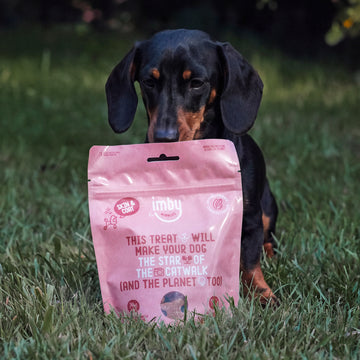
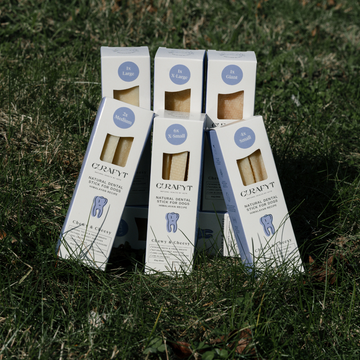
Brushing helps, and it needs to happen often, daily if you can manage it. Skip it too long and plaque hardens into tartar, which a vet can only remove under general anaesthetic. Better to brush than to cure. Give your dog a Chewy&Cheesy chew regularly too. Pick one hard enough to actually reduce plaque, not just a high-calorie snack in disguise.
Chewy & Cheesy Himalayan Dental Stick
A vegetarian dental chew based on a traditional Himalayan recipe, hours of chewing that helps keep teeth clean without piling on the calories.
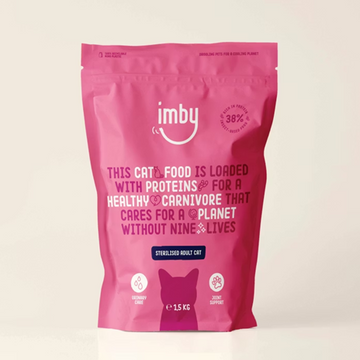
Diet plays a role here too. A 2023 crossover study in beagles found that a black soldier fly insect-protein diet, the same protein base behind IMBY's Insect-Based Vitality Dog Food, reduced the sulphur-producing bacteria behind bad breath and raised levels of Moraxella, a bacterium linked to a healthier mouth, over 50 days of feeding.[6]
2. Ear infection
Does your dog shake its head, scratch, or rub at its ears? The poor animal probably has an ear infection. That means pain for your dog and an unpleasant smell for you.
Ear infections show up more often in long-haired dogs and breeds with long, floppy ears, but a short-haired boxer can get one too. Bacteria, yeast, and ear mites are the usual culprits. [2] Your vet can identify the cause quickly with a cotton swab and get your dog back to normal. Easy does it.
3. Skin problems
Another possible cause of foul smells is inflammation between the skin and lip folds. Heat and moisture drive it, and it shows up often in breeds with extra skin, such as the English bulldog. [3]
Once the skin's natural flora gets disrupted, bacteria, fungi, yeast, and mange move in fast. Keep your dog's skin dry and support its skin flora with Sheen&Shine, a shampoo built on healthy probiotics.
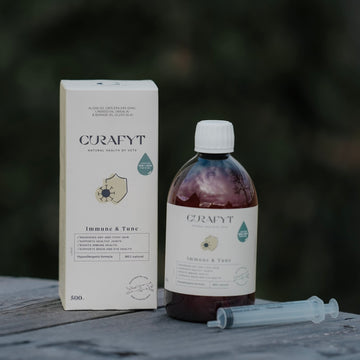
A balanced diet with the right nutrients helps from the inside too. Immune&Tune is packed with vitamin B, omega-3 fatty acids (DHA and EPA), and zinc, which keep skin healthy from within.
4. Blocked or inflamed anal glands
If your dog has ever had a problem with the anal glands, you already know the smell. Dogs with blocked or inflamed anal glands drag their bottoms across the floor and lick under their tails, which releases a sharp, unpleasant odour. [4]
Blocked or inflamed anal glands are fairly common in dogs. In most cases the vet clears it up quickly by expressing the glands. It's a dirty job, but someone has to do it.
5. Smelly fur
You've probably heard the phrase "it smells like wet dog in here." It's not an unfair comparison. Dogs with a wet or dirty coat smell bad, plain and simple. You should wash your dog as little as possible, but after a plunge in a dirty creek, a bath earns its keep.
After a wash, most dog shampoos need about seven days for the skin to recover. That's why we built Sheen&Shine, a pH-neutral shampoo that does not strip your pet's skin. It carries only mild ingredients, no sulphates, and it's microbiome-friendly.
Keeping the environment clean helps too, with friendly micro-organisms or probiotics such as those in a pillow or fabric spray. These leave a layer of good bacteria that crowd out the bad bacteria responsible for odour, and they keep breaking down dirt for days after cleaning, so the effect lasts.
The result: odour removal that lasts, not just masks.
6. Smelly farts
If your dog passes gas often, check with your vet whether the diet is right for them. [5] Is there diarrhoea too, or vomiting? Call your vet for that as well.
So, if an unpleasant smell hangs around your four-legged friend, there could be several reasons, and not all of them are harmless. If you suspect a medical problem, call your vet. Then you can cuddle your buddy without holding your nose. Good luck.
Give your dog's skin and coat some help
Sheen&Shine is a pH-neutral, microbiome-friendly shampoo built for sensitive canine skin, no sulphates, no harsh strippers.
Shop Sheen&ShineReferences
[1] Cornell University College of Veterinary Medicine, Riney Canine Health Center. "Periodontal disease."
[2] VCA Animal Hospitals. "Ear Infections in Dogs (Otitis Externa)."
[3] Diesel, G. et al. "Ironing out the wrinkles and folds in the epidemiology of skin fold dermatitis in dog breeds in the UK." Scientific Reports, 2022.
[4] VCA Animal Hospitals. "Anal Sac Disease in Dogs."
[5] dvm360. "Flatulence in dogs: Annoyance or sign of GI illness?"
[6] Santos Neto, E.L. et al. "Black soldier fly (Hermetia illucens) larvae meal based extruded diets: potential to improve canine oral health." Journal of Insects as Food and Feed, 2023. doi.org/10.1163/23524588-20230098
Share
Hallo,
Une malassezia présente depuis la naissance et qui ne réagit pas aux shampoings et changements d’alimentation, c’est très parlant. Chez le Basset, cette levure est en effet presque toujours secondaire — elle révèle le plus souvent une cause sous-jacente. Tant que celle-ci n’est pas identifiée et traitée, on continue malheureusement à tourner en rond.
Plusieurs choses peuvent entrer en jeu dans cette race (une prédisposition cutanée, une allergie sous-jacente ou un problème de thyroïde), mais seul votre vétérinaire peut déterminer laquelle.
Mon conseil serait donc de faire vraiment examiner cela en profondeur par votre vétérinaire, avec les tests nécessaires pour identifier la cause sous-jacente. C’est la clé pour s’en débarrasser sur le long terme, plutôt que de traiter sans cesse les symptômes.
Bon courage !
Bonjour mes basset ont la malazezia depuis qu’ils sont nés.
J’ai essayé pas mal de soins shampoings alimentation … sans résultats importants.
Pouvez-vous me conseiller ? Merci