



































Kennel Cough in Dogs: Symptoms, Treatment and Prevention
 by Nicolas Bartholomeeusen on Jun 14 2026· 6 min read
Key takeaways
- Kennel cough is really a multi-pathogen complex (CIRDC), not one single germ, and spreads easily wherever dogs gather in numbers.
- Watch for a harsh, dry cough, sneezing, a runny nose and reduced appetite, with mild cases clearing in 1 to 3 weeks and severe ones lasting up to 6.
- Peer-reviewed research into the 2023-2024 US outbreak scare found no confirmed new pathogen, so standard prevention still holds.
- Vaccination reduces severity but not full protection, so pair it with good hygiene, and see a vet for breathing difficulty, fever or a cough lasting past 3 weeks.
Kennel cough is a highly contagious respiratory infection in dogs. Despite the name, it's rarely caused by a single germ. Bordetella bronchiseptica and canine parainfluenza virus are the usual suspects, often alongside other viruses and bacteria at the same time, which is why vets increasingly call it canine infectious respiratory disease complex (CIRDC) rather than one single illness [1]. Recent diagnostic surveys have even found parainfluenza and Mycoplasma species turning up more often than the classic vaccine-targeted bacteria in some CIRDC cases [3]. It spreads through the air and is common wherever dogs gather in numbers: kennels, training centres, dog walking groups, daycare. Puppies, older dogs and dogs with weakened immune systems carry the highest risk of complications like pneumonia. Here's what the symptoms actually look like, how it's treated, and how to prevent it.
What are the symptoms of kennel cough in dogs?
The hallmark symptom is a harsh, dry cough that sounds like something's stuck in the throat, sometimes with retching or even vomiting. Other symptoms include:
- Sneezing and a runny nose, occasionally with pus-like discharge
- Watery eyes
- Reduced appetite and listlessness
- Occasionally, a mild fever or shortness of breath
Some dogs get away with a runny nose and little else. Others develop a cough that drags on for weeks, even while otherwise acting completely normal, still eating, still keen for a walk [1]. Complications from secondary bacterial infection, most seriously pneumonia, bring more severe symptoms: high fever, real difficulty breathing [1][2].
How long do the symptoms of kennel cough last?
- Mild cases typically clear within 1 to 3 weeks.
- Severe cases with complications can drag on for up to 6 weeks.
Dogs can stay contagious for a while after they've stopped showing symptoms, so a full recovery period matters more than it might seem.
How do you recognise severe cases of kennel cough?
Difficulty breathing, a fever, or blue-tinged mucous membranes (cyanosis) are not wait-and-see symptoms. Get to a vet right away.
Good to know
You may remember reports of a mysterious new dog respiratory illness spreading across parts of the US in 2023 and 2024. A 2025 peer-reviewed investigation into that outbreak found no confirmed new pathogen behind it. Established culprits, mostly Mycoplasma species, were responsible for the large majority of cases [5]. Worth knowing if you've seen the headlines and wondered whether standard prevention still applies. It does.
How do you treat kennel cough in dogs?
Most dogs recover on their own with rest and a calm environment. Consensus veterinary guidelines are clear that antibiotics aren't needed for most cases, only when a secondary bacterial infection, especially pneumonia, is suspected [2].
What medication is used for kennel cough?
Depending on severity, a vet may reach for:
- Cough suppressants, for a dry, painful cough
- Anti-inflammatories (NSAIDs), to ease irritation and pain
- Antibiotics, only if a secondary bacterial infection is present [2]
- Mucolytics, to help loosen and clear phlegm
What can you do at home to relieve kennel cough?
- Keep the air humid. A humidifier, or even a few minutes in a steamy bathroom, can ease breathing.
- Skip the collar for now. A harness avoids added pressure on an already irritated windpipe.
- Let your dog rest. Skip the long walks and high-energy play until the cough clears.
When should you visit a veterinarian?
- The cough hasn't improved after 3 weeks.
- Your dog seems short of breath or is struggling to breathe.
- Appetite has dropped and lethargy is setting in.
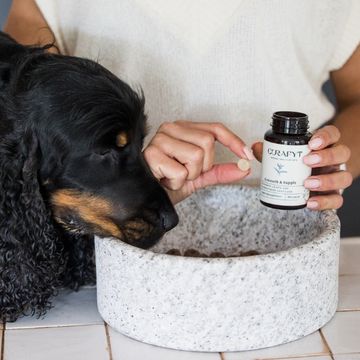
Immune & Tune Supplement
A hypoallergenic omega-3 formula high in EPA and DHA, supporting everyday immune resilience while your dog recovers.
How can you prevent kennel cough?
Prevention comes down to vaccination and consistent hygiene.
How effective is vaccination against kennel cough?
No vaccine offers full protection, since CIRDC involves several pathogens and new ones keep showing up in the mix. That said, controlled studies show vaccination meaningfully reduces disease severity after exposure to Bordetella bronchiseptica specifically [4]. Two main options exist:
- Injectable vaccine: covers viral and bacterial components.
- Intranasal (Bordetella) vaccine: builds faster local immunity right where the infection starts.
When should you have your dog vaccinated?
- Puppies can start as early as 6 weeks old.
- Adult dogs typically need boosting annually or every six months, depending on exposure risk.
- Kennels and training schools often require it as a condition of entry.
What hygiene measures reduce the risk of kennel cough?
- Avoid contact with visibly sick dogs in busy walking areas or kennels.
- Disinfect food and water bowls regularly.
- Keep indoor spaces well ventilated to cut down on airborne spread.
Is kennel cough contagious to other animals or humans?
Among dogs, extremely so, particularly in larger groups.
Can humans catch kennel cough?
People with significantly weakened immune systems, chemotherapy patients, for instance, can rarely pick up Bordetella bronchiseptica. In healthy people, this is exceptionally rare.
Can other animals become infected with kennel cough?
- Cats can be infected, though it's uncommon.
- Rabbits and rodents can also carry Bordetella bronchiseptica.
Conclusion
Kennel cough is common, contagious, and usually more of an inconvenience than a crisis. Most dogs come through it fine with rest and, if needed, symptomatic treatment. Vaccination and basic hygiene remain the best prevention, even with newer pathogens occasionally entering the mix. If your dog develops a persistent cough or any real difficulty breathing, that's the moment to call your vet rather than wait it out.
Give your dog's immune system a head start
Immune & Tune delivers high levels of EPA and DHA to support everyday immune resilience, alongside skin, coat and joint health.
Shop Immune & TuneReferences
[1] Reagan KL, Sykes JE. Canine infectious respiratory disease. Vet Clin North Am Small Anim Pract. 2020;50(2):405-418. doi:10.1016/j.cvsm.2019.10.009
[2] Lappin MR, Blondeau J, Boothe D, et al. Antimicrobial use guidelines for treatment of respiratory tract disease in dogs and cats: Antimicrobial Guidelines Working Group of the International Society for Companion Animal Infectious Diseases. J Vet Intern Med. 2017;31(2):279-294. doi:10.1111/jvim.14627
[3] Yondo A, Kalantari AA, Fernandez-Marrero I, et al. Predominance of canine parainfluenza virus and Mycoplasma in canine infectious respiratory disease complex in dogs. Pathogens. 2023;12(11):1356. doi:10.3390/pathogens12111356
[4] Ellis JA, Haines DM, West KH, et al. Effect of vaccination on experimental infection with Bordetella bronchiseptica in dogs. J Am Vet Med Assoc. 2001;218(3):367-375. doi:10.2460/javma.2001.218.367
[5] Thieulent CJ, Laverack M, Carossino M, et al. Detection of pathogens in dogs with respiratory disease during winter 2023-2024 using multiplex qPCR/RT-qPCR assays and next-generation sequencing. Front Vet Sci. 2025;12:1617147. doi:10.3389/fvets.2025.1617147
Share