Home
›
Expert Horse Health & Wellbeing Advice
›
Sweet Itch in Horses: The Science Behind the Itch (and What Actually Helps)

Sweet Itch in Horses: The Science Behind the Itch (and What Actually Helps)
 by Valerie De Clerck on Jul 06 2026· 9 min read
Key takeaways
- Sweet itch is driven by IL-31 from skin cells responding to the allergic cytokine environment, not by direct midge allergen contact. This is why antihistamines have poor efficacy in horses (Marti et al., 2023).
- IBH-affected horses have nearly twice the circulating eosinophils of healthy controls, confirming this is a whole-body allergic response, not just a local skin condition (Frontiers in Immunology, 2024).
- Physical midge avoidance (close-weave rug, dawn/dusk stabling, fans) is the single most evidence-based management tool.
- A 2024 placebo-controlled trial found allergen immunotherapy produced more than 50% improvement in 89% of treated horses by year two. The most promising long-term treatment on the horizon, though not yet commercially available.
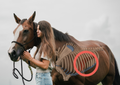
Every summer, the same story. A horse has rubbed the top of his tail raw overnight. The owner tries the rug, the lotion, stabling through dusk. Some years are better than others. The itch never fully stops.
Vets see this constantly, and the profession has not always had good answers. The last few years of research have changed that. Not with a cure, but with a clearer picture of what's actually happening inside the skin and why some treatments do nothing while others help.
What's Actually Happening Under the Skin
Sweet itch, or insect bite hypersensitivity (IBH), is an allergic reaction to proteins in Culicoides midge saliva. Most people know that. What's less understood is why it escalates year after year instead of stabilising.
When a midge bites a sensitive horse, its immune system overreacts. This is what allergists call a Th2 response: the body makes IgE antibodies and releases a wave of inflammatory signals (among them IL-4, IL-5 and IL-13). The next time the horse is bitten, those antibodies tell immune cells in the skin to release their contents all at once, and that is what produces the swelling, redness and intense itching owners know well.1,3
What drives the severity is eosinophils: a type of white blood cell at the centre of allergic inflammation. A 2024 study of 80 horses found their numbers in the blood nearly doubled in affected horses versus healthy ones, and rose further in the worst cases.4 Skin samples from severe horses were also high in IL-5 and its receptor, the signals that call those cells into the skin and keep them there.10 In short, this is a whole-body allergic condition, not just a local skin problem.
IL-31, the immune messenger known as the "itch molecule" in people and dogs, plays a subtler role in horses. In that same cohort, it was the IL-31 receptor (IL-31RA) that tracked with the moderate-to-severe form, while IL-31 itself was raised mainly in mild cases.10 Itch signalling is real in equine IBH, but it is not the lead actor the human picture suggests, which is why the antibody therapies now in development for horses target IL-5 and the IL-31 receptor rather than IL-31 itself.
Even so, the skin is primed to react before a midge lands. A 2020 study found the skin's itch-signalling genes were already switched on in affected horses, even where the skin looked completely normal,2 and a 2022 study showed the skin cells making IL-31 in response to the allergic signals around them, not to the midge itself.1 The skin is sitting there, ready to react, waiting.
Why Antihistamines Don't Work for Sweet Itch Horses, and What to Do Instead
Antihistamines are still commonly prescribed for sweet itch, because it feels like a logical first step for any allergic condition. Horses itch, midges cause the itch, block the histamine, problem solved. Except it doesn't work like that, and the research now explains why.
Histamine is one small piece of a much larger inflammatory puzzle in IBH. The condition involves what's called a mixed Type I and Type IVb hypersensitivity, meaning both immediate antibody-driven reactions and slower, cell-mediated inflammatory processes. A placebo-controlled trial of the antihistamine cetirizine found no meaningful improvement in sweet itch. Marti et al. (2023) put it bluntly in their clinical review: the response to antihistamines in horses is poor.3
Steroids work better, because they suppress the response more broadly. But long-term steroid use in horses with PPID or metabolic syndrome is a real concern. The trade-off is not always acceptable.
Supporting the inflammatory response from the inside is worth considering as part of a longer-term plan.
Restore & Revive
Restore & Revive is a curcumin-based supplement. Curcumin has documented anti-inflammatory properties that support skin healing and help moderate the immune response over time. It doesn't address the root cause of IBH. The underlying hypersensitivity doesn't go away. But for horses carrying chronic inflammatory load, keeping that baseline lower is a meaningful part of long-term management.

Omega-3s: The One Dietary Change With Direct Evidence
Most feed-based claims for sweet itch are borrowed from general anti-inflammatory effects. Omega-3 fatty acids are the exception, because they have been tested in this exact condition. In a controlled study, horses with Culicoides hypersensitivity fed flaxseed for 42 days showed a reduced skin-test reaction to Culicoides extract compared with their own unsupplemented baseline.6
The mechanism is well established: the omega-3 fats (EPA, DHA and ALA) partly take the place of an inflammatory building block in the body's cells, so the skin ends up producing fewer inflammatory signals. That maps directly onto the problem the research keeps pointing at, a skin sitting at a raised inflammatory set-point, primed to react. Omega-3s do not remove the hypersensitivity, and they are no substitute for midge avoidance. What they can do is help hold that baseline lower across a season.
Grow & Glow
An omega-3 oil supplement for coat and skin condition. Fed daily, it shifts the skin's fatty-acid profile over several weeks, the same timescale the flaxseed trial measured its effect over. No added sugars, so it suits laminitis-prone and metabolic horses.
The Nutritional Foundation: Zinc and Vitamin E
Skin that has to repair itself daily, and an immune system already working overtime, draw on the same nutrient pool. Two nutrients matter here, and forage-based diets are commonly short on both.
Zinc is needed for healthy skin and coat and for the immune cells to do their job. A controlled study in horses and ponies found that dietary zinc measurably affects the equine immune system.8
Vitamin E is the main antioxidant in the skin, and the horse cannot make its own, so it has to come from the diet. It helps regulate the immune system too.9 The catch: vitamin E is highest in fresh growing grass and drops sharply once grass is cut and stored, so horses on hay-based rations with little grazing are the ones most likely to be running low.
This will not stop a midge, and it is not a treatment for the allergy. What adequate zinc and vitamin E status does is give the skin the raw materials to hold its barrier and the immune system a steadier footing, the baseline every other measure builds on.
Este Balancer
A low-sugar, low-starch balancer developed by equine vet Dr. Sara Torfs to complete a forage ration with the vitamins and minerals hay and grass fall short on, zinc and vitamin E among them, for coat, skin and immune support. One daily measure alongside hay or grass.
Vitamin E Liquid
A vet-formulated vitamin E oil in a highly absorbable form, for horses whose hay-based diet and limited grazing leave them short. Accurate daily dosing to top up the skin's main antioxidant and support immune function, the two roles that matter most here.
The Most Important Thing You Can Do: Midge Avoidance
This is unsexy advice. Most owners have already heard it. But the evidence is clear: midge avoidance is the single most effective management tool for IBH horses, more than any medication or supplement.3
Culicoides midges are active at dawn and dusk. They prefer still, warm, humid air near water sources. They can't fly in much wind, which is worth knowing if you have any choice about where your horses graze.
Midge avoidance protocol
Close-weave sweet itch rug covering the belly and chest. Stable through dusk and the first two hours of darkness. Fans in the stable to disrupt the midge flight zone. Higher, more exposed grazing during peak season if possible. Not everyone can do all of this. But doing more of it consistently matters more than any supplement or medication.
What the Latest Research Says About Sweet Itch Treatment
The most promising direction right now is allergen immunotherapy. A 2024 randomised controlled trial using recombinant Culicoides allergens found that 89% of treated horses showed more than 50% improvement in lesion scores by year two. In the placebo group, that figure was 14%.5 The likely mechanism is that it trains the immune system to make blocking antibodies that head off the original allergic reaction.
Not available yet. That's the straightforward answer. It remains a research tool, not something a vet can currently prescribe. But the direction of travel is clear, and the results are the best seen in this condition in a long time.
A second line of research goes after the immune signal itself. Building on the finding that IBH horses run high eosinophil counts,4 a vaccine was developed that prompts the horse to make antibodies against its own IL-5, the cytokine that recruits and sustains those eosinophils. In a placebo-controlled trial of 34 Icelandic horses, 47% of vaccinated horses reached at least a 50% reduction in lesion scores and 21% reached 75%, against 13% and 0% in the placebo group.7
Like allergen immunotherapy, it is still in clinical development rather than something a vet can prescribe today, but it is one of the few approaches aimed at the mechanism rather than the symptoms.
Conclusion: sweet itch is not a simple skin allergy. It's a systemic inflammatory condition that primes the skin to react, worsens year on year, and responds poorly to antihistamines. The most effective management is still midge avoidance, backed by anything that supports the skin's baseline inflammatory state. That's not the most exciting conclusion, but it's the honest one.
References
1. Cvitas I, et al. (2022). Equine keratinocytes in the pathogenesis of insect bite hypersensitivity: Just another brick in the wall? PLOS ONE. PMC9342730
2. Hallamaa RE, et al. (2020). Characterization of equine insect bite hypersensitivity by transcriptome analysis. PLOS ONE. PMC7188278
3. Marti E, et al. (2023). Insect bite hypersensitivity in horses: A clinical and immunological review. Animals. PMC10416928
4. Riihimäki M, et al. (2024). Peripheral blood immune cell phenotyping in horses with insect bite hypersensitivity. Frontiers in Immunology. PMC11471737
5. Van der Burg NMD, et al. (2024). Allergen immunotherapy using recombinant Culicoides allergens improves clinical signs of equine insect bite hypersensitivity. Frontiers in Allergy.
6. O'Neill W, McKee S, Clarke AF. (2002). Flaxseed (Linum usitatissimum) supplementation associated with reduced skin test lesional area in horses with Culicoides hypersensitivity. Canadian Journal of Veterinary Research. 66(4):272-277. PubMed 12418783
7. Fettelschoss-Gabriel A, et al. (2018). Treating insect-bite hypersensitivity in horses with active vaccination against IL-5. Journal of Allergy and Clinical Immunology. 142(4):1194-1205. PubMed 29627082
8. van Bömmel-Wegmann S, Zentek J, Gehlen H, Barton A-K, Paßlack N. (2023). Effects of dietary zinc chloride hydroxide and zinc methionine on the immune system and blood profile of healthy adult horses and ponies. Archives of Animal Nutrition. 77(1):17-41. PubMed 36790082
9. Finno CJ, Valberg SJ. (2012). A comparative review of vitamin E and associated equine disorders. Journal of Veterinary Internal Medicine. 26(6):1251-1266. JVIM 2012
10. Jebbawi F, et al. (2024). Cytokines and chemokines skin gene expression in correlation with immune cells in blood and severity in equine insect bite hypersensitivity. Frontiers in Immunology. 15:1414891. PMC11284025