DEVELOPED BY DR. SARA TORFS TO COMPLETE FORAGE-BASED DIETS
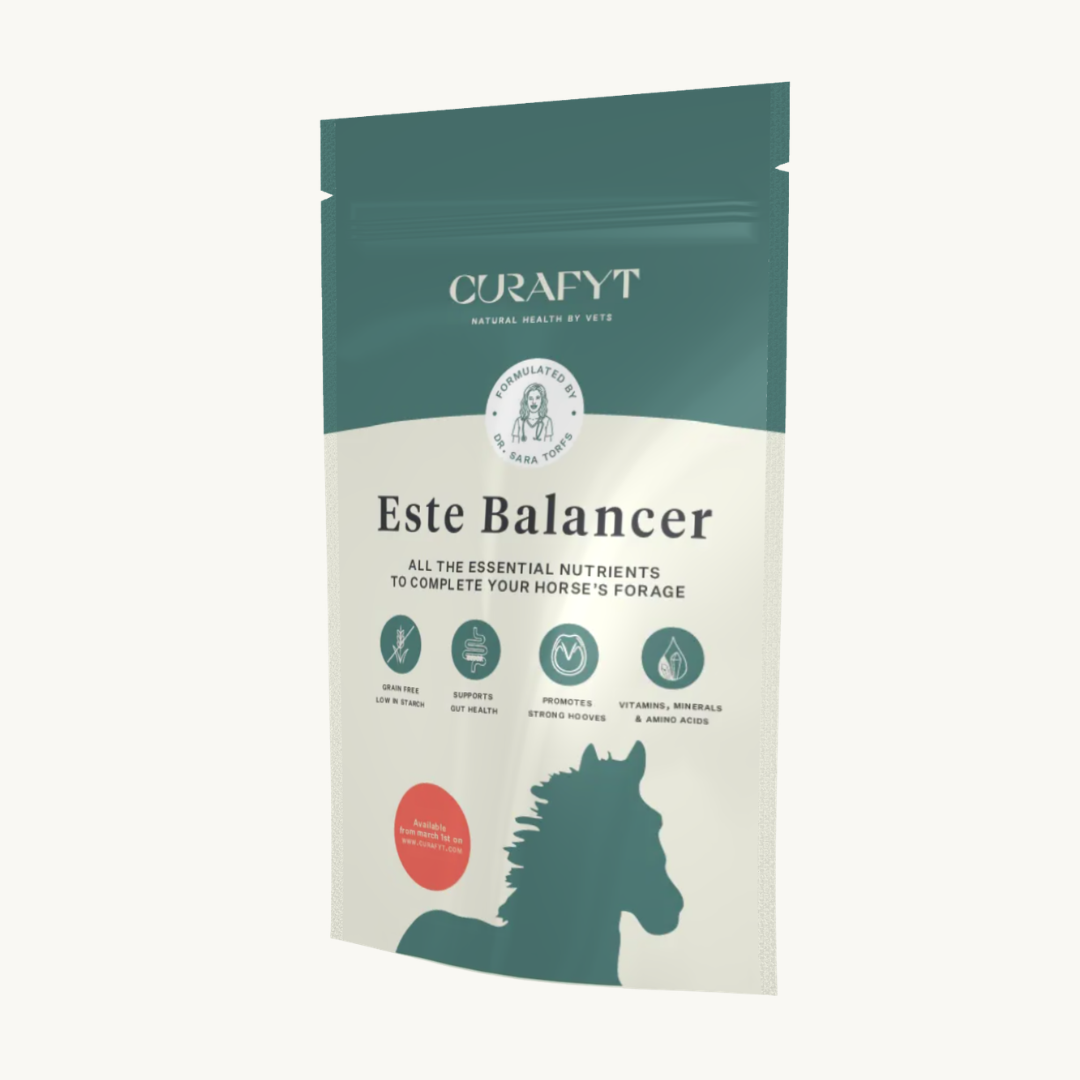
The daily vitamins and minerals every horse needs next to forage. Developed by equine internal medicine specialist Dr. Sara Torfs.
✔ Completes the forage ration ✔ Supports digestive health ✔ Low sugar & starch formula ✔ Promotes hoof & coat quality ✔ Suitable for daily use
For horses and ponies on hay- or grass-based diets, easy keepers, horses on controlled rations, and horses needing extra daily nutritional support beyond forage alone.
Dr. Sara TorfsEquine Internal Medicine Specialist, phd, DVM · DAP Torfs
As a veterinarian, osteopath, and internal medicine specialist, I often met horses who weren't truly unwell, just not quite themselves or performing slightly below their potential. Blood tests regularly revealed specific nutrient deficiencies, yet no balancer on the market addressed them all. So I developed my own formula and continued to refine it over time.
Today, I work with Curafyt: they help more owners discover and use this balancer, while I can stay focused on my veterinary practice.
The daily vitamins and minerals every horse needs next to forage. Developed by equine internal medicine specialist Dr. Sara Torfs.Read more
Dosage Cup Este Balancer €1,99
A full cup is about 250 g: the daily amount for a 500 kg horse.
Add the dosage cup?
Dosage Cup Este Balancer · €1,99
A full cup is about 250 g: the daily amount for a 500 kg horse.
🔒 All transactions secure and encrypted
Free shipping on orders €80+ (under 20 kg)
About this product
DEVELOPED BY DR. SARA TORFS TO COMPLETE FORAGE-BASED DIETS
The daily vitamins and minerals every horse needs next to forage. Developed by equine internal medicine specialist Dr. Sara Torfs.
✔ Completes the forage ration ✔ Supports digestive health ✔ Low sugar & starch formula ✔ Promotes hoof & coat quality ✔ Suitable for daily use
For horses and ponies on hay- or grass-based diets, easy keepers, horses on controlled rations, and horses needing extra daily nutritional support beyond forage alone.
Dr. Sara TorfsEquine Internal Medicine Specialist, phd, DVM · DAP Torfs
As a veterinarian, osteopath, and internal medicine specialist, I often met horses who weren't truly unwell, just not quite themselves or performing slightly below their potential. Blood tests regularly revealed specific nutrient deficiencies, yet no balancer on the market addressed them all. So I developed my own formula and continued to refine it over time.
Today, I work with Curafyt: they help more owners discover and use this balancer, while I can stay focused on my veterinary practice.
Reviewed by a veterinarian
Free shipping on supplement orders €80+ (under 20kg)
Composition: Vitamin/mineral premix (see “Additives”); apple pulp; alfalfa; linseed; linseed oil; molasses (3%)
Additives per kg Technological additives:
Saccharomyces cerevisiae Sc47 (4b1702)
Nutritional additives:
Vitamin A (3a672a), 136,000 IU
Vitamin D3 (3a671), 32.000 IU
Vitamin E (3a700), 6.000 IU
Vitamin C (3a300), 4.000 mg
Biotin (3a880), 80 mg
Vitamin B1 (E821), 200 mg
Vitamin B2, 100 mg
Vitamin B6, 120 mg
Vitamin B12, 400 µg
Folic acid, 32 mg
Calcium, 48g
Phosphorus, 29 g
Magnesium, 33 g
Sodium, 33 g
Iodine (3b202), 16 mg
Cobalt (3b304), 2 mg
Copper (E4), 480 mg
Manganese (3b503), 400 mg
Zinc (3b605/3b607), 2.400 mg
Selenium (E8), 6 mg
Lysine, 30 g
Methionine, 8 g
Threonine, 30 g
100 kg horse, 50 g → ≈ ¼ measuring cup 200 kg horse, 100 g → ≈ a bit under ½ measuring cup 300 kg horse, 150 g → ≈ ⅔ measuring cup 400 kg horse, 200 g → ≈ ¾ measuring cup 500 kg horse, 250 g → ≈ 1 full measuring cup (to the 330 ml line) 600 kg horse, 300 g → ≈ 1¼ measuring cups 700 kg horse, 350 g → ≈ 1½ measuring cups
Feeding Este Balancer together with concentrates? Reduce the Este Balancer dosage by 50 g per kg of concentrate.
Increase with 20% during last trimester of pregnancy and lactation.
One 7.5 kg bag ≈ 1 month for a 500 kg horse.
The "cup” refers to the measuring cup designed for ESTE Balancer (approx. 250 g). The dosing cup can be ordered separately here.
As a veterinarian, osteopath, and internal medicine specialist, I often met horses who weren't truly unwell, just not quite themselves or performing slightly below their potential. Blood tests regularly revealed specific nutrient deficiencies, yet no balancer on the market addressed them all. So I developed my own formula and continued to refine it over time.
Today, I work with Curafyt: they help more owners discover and use this balancer, while I can stay focused on my veterinary practice.
Dr. Sara TorfsEquine Internal Medicine Specialist, phd, DVMDAP Torfs
The Problem
Why Forage Alone Isn't Enough
Modern horses are fed much closer to their natural needs: more forage, less concentrate. That's great for their health. But forage alone leaves real nutritional gaps.
Limited variety vs. wild horses
Wild horses roam across dozens of plant species and varied soils. Domestic horses graze a few grass species on managed land with far less nutritional diversity.
Training increases micronutrient demands
Exercise generates free radicals and increases metabolic demand, particularly for vitamin E, vitamin C, and magnesium, far beyond what forage typically provides.
Blood tests regularly reveal specific deficits
Deficiencies in vitamin E, copper, zinc, and essential amino acids are among the most common findings in clinical practice.
A balancer fills the gap — without extra calories
Forage provides energy and fibre. A balancer provides precision nutrition, the exact micronutrients most missing in a modern domestic horse's diet.
With a balancer your horse does not need grain
Most horses don't need grain, and the research backs that up more strongly than most owners realise. Good forage at 1.5% of bodyweight covers the energy and fibre a horse in light work needs. Grain adds starch and sugar, which is exactly what drives ulcers, hindgut acidosis and laminitis risk. The gap forage leaves isn't calories. It's micronutrients. A balancer covers that gap completely, without the metabolic load of a bucket of mix. It doesn't go on top of grain, it replaces it!
WHY ESTE BALANCER WAS DEVELOPED
Expert Insights by Dr. Sara Torfs
ESTE Balancer was born from a need Sara repeatedly saw in practice. Over the years, she carefully refined and improved the formula, and today she can confidently call it the most complete balancer on the market.
Our own comparison of Este with 10 other balancers and mineral supplements, using the values on their labels (October 2026). Per day, at each maker's maintenance dose for a 500 kg horse.
Only Este
1
of 11 with linseed oil and counted live yeast
The only product in the comparison that lists linseed oil and states live yeast cells on the label.
Antioxidants
2.7×
the vitamin E of a typical balancer
1,500 IU a day, against a typical 555 IU. The highest of the 11 compared.
Vitamin C
1,000
mg vitamin C a day
Only 4 of the 10 others list vitamin C. The highest of them gives 425 mg.
Hoof support
20
mg biotin a day
The level of a dedicated hoof supplement. A typical balancer gives 1.19 mg.
Trace minerals
600
mg zinc a day
The highest of the 11 compared. A typical balancer gives 334 mg.
Amino acids
3
at a meaningful dose
7.5 g lysine, 2 g methionine, 7.5 g threonine. Two others list all three, at up to 1.45 g, 0.54 g and 1.41 g.
Per day for a 500 kg horse: Este Balancer vs a typical balancer
Vitamin E (IU)
Este: 1500 · Typical: 555
Este
Typical
Zinc (mg)
Este: 600 · Typical: 334
Este
Typical
Copper (mg)
Este: 120 · Typical: 85
Este
Typical
Selenium (mg)
Este: 1.5 · Typical: 1
Este
Typical
Vitamin C (mg), 4 of 10 others list it
Este: 1000 · Typical: 125
Este
Typical
Biotin (mg)
Este: 20 · Typical: 1.2
Este
Typical
Typical balancer: middle value of the others that list the nutrient
Este Balancer
Formula Highlights
What Makes Este Balancer Different
Most balancers cover basics. Este Balancer addresses the real-world deficiencies Dr. Torfs observed in blood work — in one coherent, science-based formula.
Live cells on the label
Live Yeast — Saccharomyces cerevisiae Sc47
12,500 million CFU per daily dose. Supports fibre digestion in the hindgut and maintains a stable gut microbiome. The only one of the 11 balancers we compared that states live yeast cells (CFU) on its label.
Only in Este Balancer
Linseed + Linseed Oil
A natural source of omega-3 fatty acids (ALA) for skin and coat condition. Este is the only balancer in the comparison that includes linseed oil for optimal fat absorption.
3 Essential AAs
Lysine, Methionine & Threonine
The three most limiting amino acids for horses, all at a meaningful dose: 7.5 g lysine, 2 g methionine and 7.5 g threonine a day. Important for muscle development, hoof and coat quality, and tissue repair.
High antioxidants
1,500 IU Vitamin E + 1,000 mg Vitamin C
Working horses produce free radicals that damage tissues. Este gives the most vitamin E and vitamin C of the 11 balancers we compared.
No added iron
Deliberately Iron-Free
Most horses already receive excess iron through forage and water. Adding more can suppress copper and zinc absorption. A deliberate, evidence-based choice.
Metabolic-safe
Very Low Sugar & Starch
Only 3.5% starch and 4.2% sugar. Safe for EMS, PPID, and laminitis-prone horses.
Suitable For
Is Este Balancer Right for My Horse?
Este Balancer was designed to be sufficient with poorer hay, yet safe alongside richer forage. It suits virtually every horse on a forage-based diet.
Easy Keepers & Metabolic Horses
Low calorie, low sugar, grain-free. Provides full micronutrition without adding unwanted weight. Ideal for EMS, PPID, laminitis, and overweight horses.
Forage-Based & Restricted Diet Horses
Perfect for horses fed mainly hay or grass with little or no concentrate — especially where hay quality varies or is unknown.
Sport & Working Horses
High vitamin E, C, magnesium, and trace minerals support recovery, oxidative balance, and performance in horses in regular work.
Growing, Breeding & Developing Horses
Complete amino acid profile (lysine, methionine, threonine) supports muscle development, healthy growth, and condition in young horses and breeding mares.
You can try with a sample first. We recommend introducing the balancer gradually over 7 days, as horses not used to low sugar food may need time to adjust. This bag contains a daily dose for a 500 kg horse. Give it in smaller portions during the transition period.
Every ingredient is chosen based on documented mechanisms of action and peer-reviewed evidence. Select a compound below to go deeper.
Alfalfa (lucerne)
Medicago sativa
Alfalfa is a calcium-rich, protein-dense forage often used to support gastric comfort in horses, especially when stomach acid may irritate the upper (squamous) stomach. In research, horses fed alfalfa had higher gastric pH and fewer, less severe squamous lesions compared with some grass-hay diets, suggesting a buffering effect when used appropriately in the ration. It also supplies highly usable protein and key minerals that can helpmaintaintopline and overall condition in growing horses, broodmares, and hard keepers. (Nadeau et al., 2000; Verhelst, 2025)
Biotin, also known as vitamin B7, is a water-soluble B vitamin involved in several metabolic processes related to fatty acid metabolism and keratin production. Keratin is the structural protein that forms the basis of skin, hair, and coat.
Healthy skin depends on the continuous renewal of skin cells and the maintenance of a strong skin barrier. Adequate biotin intake contributes to normal keratin synthesis and supports the structural integrity of skin tissues.
In dogs, nutritional strategies that support skin metabolism and barrier function are particularly relevant for animals prone to skin sensitivity, itching, or coat problems. Because of its role in skin health and coat quality, biotin is commonly included in nutritional formulations aimed at supporting skin comfort and maintaining a healthy coat (Bonny Canteen, 2023; Springer, 2008; Curely, 2025).
Vitamin C (ascorbic acid) is an important antioxidant involved in many metabolic processes in the body. It helps neutralize reactive oxygen species and supports the body’s natural defense against oxidative stress, which can increase during exercise, growth, and other physiologically demanding periods (Garcia, 2022).
Vitamin C also plays a key role in collagen synthesis, a process essential for the formation and maintenance of connective tissues such as tendons, ligaments, cartilage, and skin. These tissues are important for movement, flexibility, and overall structural support.
Because of its combined role in antioxidant defense and connective tissue metabolism, vitamin C contributes to maintaining normal mobility, recovery, and overall physiological balance in horses (Curely, 2025).
Vitamin B6 (pyridoxine) is a water-soluble vitamin that plays an essential role in amino acid metabolism and numerous enzymatic reactions in the body. It functions as a cofactor for enzymes involved in the metabolism of proteins, carbohydrates, and fats, supporting overall energy and nutrient utilization.
Vitamin B6 also contributes to the normal function of the nervous system by participating in the synthesis of neurotransmitters such as serotonin and dopamine. These compounds are involved in mood regulation, behavior, and the body’s response to stress, making vitamin B6 relevant in nutritional strategies aimed at supporting calm and balanced behavior.
In addition, vitamin B6 supports immune function and contributes to normal metabolic activity in rapidly renewing tissues such as skin. A well-functioning immune system and healthy skin are important for overall resilience and wellbeing.
Because of its combined role in metabolism, nervous system function, and immune support, vitamin B6 is commonly included in formulations aimed at supporting both emotional balance and overall health in dogs (Curely, 2025).
Vitamin E (D-alpha-tocopherol) is an essential fat-soluble antioxidant that helps protect cell membranes from oxidative stress. Because these membranes are rich in fatty acids, they are particularly sensitive to oxidative damage, making antioxidant protection important for normal cellular function (ScienceDirect, 2014).
Vitamin E plays an important role in maintaining muscle cell integrity and supports normal nerve function. It also contributes to immune function and helps maintain healthy tissues such as skin and coat (Fagan, 2018).
Horses naturally obtain vitamin E from fresh grass, but intake can be limited when pasture access is restricted, making additional supply relevant (University of California, 2019).
Vitamin E can occur in different forms (tocopherols), each with specific antioxidant properties. A combination of these forms provides broader antioxidant support compared to a single form alone. As a fat-soluble vitamin, delivering vitamin E in an oil-based form supports its natural absorption (Quigley, 2021).
Primary benefit
Antioxidant support for cellular, muscle, and immune health
Vitamin D3 (cholecalciferol) is a fat-soluble vitamin that plays an essential role in regulating calcium and phosphorus metabolism. These minerals are important for maintaining normal bone formation and overall structural support.
Beyond its role in mineral metabolism, vitamin D3 also contributes to immune system regulation. Immune cells contain vitamin D receptors, and adequate vitamin D levels support normal immune responses and physiological balance.
Vitamin D is also involved in cellular growth and differentiation, including in tissues such as the skin. These processes contribute to maintaining skin integrity and overall tissue health.
Because of its role in immune function, skin health, and metabolic balance, vitamin D3 is commonly included in nutritional formulations designed to support overall wellbeing and resilience in dogs (Chrobak-Chmiel, 2023; Dogru, 2017; Hattangdi-Haridas, 2019; Mostafa, 2015).
Vitamin B12 (cobalamin) is a water-soluble vitamin that plays an essential role in energy metabolism and cellular function. It participates in enzymatic reactions involved in DNA synthesis and the formation of red blood cells, which are important for oxygen transport and overall vitality.
Vitamin B12 works closely together with folate in one-carbon metabolism, a pathway involved in the synthesis van nucleic acids and other essential biological molecules. These processes support cellular growth, tissue maintenance, and overall metabolic balance.
In addition, vitamin B12 contributes to normal nervous system function and is involved in pathways linked to mood regulation. Research shows that low vitamin B12 levels are associated with changes in mood and increased signs of stress-related conditions such as anxiety and depression. Maintaining adequate levels therefore supports overall mental balance and resilience (Todorov et al., 2017 ; Stover, 2004; Curely, 2025).
Primary benefit
Energy metabolism and cellular development support
Calcium is an essential mineral that plays a key role in maintaining strong bones and overall structural support in the body. A healthy skeletal system is important for movement, stability, and joint function.
Beyond its role in bones, calcium is involved in muscle function and nerve signaling, helping support coordinated movement and normal physical activity.
Calcium also plays a role in normal cellular processes, including those involved in skin renewal and tissue maintenance. These processes contribute to maintaining healthy skin and overall physiological balance (Böswald, 2019; British Journal of Nutrition, 2011; Foods, 2025).
Primary benefit
Essential mineral that supports bone strength, muscle function, and overall physiological balance.
Lysine is an essential amino acid and one of the most important limiting amino acids in equine diets. Because horses cannot synthesize lysine themselves, it must be provided through the diet to support normal protein metabolism and tissue maintenance.
Lysine plays a central role in protein synthesis and contributes to the development and maintenance of muscle tissue. Adequate lysine intake is particularly important in growing horses, breeding animals, and sport horses that require efficient protein utilization to support performance and recovery.
In forage-based diets, lysine levels may sometimes be limited. For this reason, lysine is often included in balanced nutritional formulations to help support muscle condition, healthy growth, and overall metabolic balance in horses.
Primary benefit
Amino acid support for muscle and tissue development
Methionine is an essential sulfur-containing amino acid that plays an important role in protein metabolism and the synthesis of keratin, the structural protein that forms the basis of hooves, hair, and skin.
Adequate methionine intake contributes to normal keratin formation, which is essential for maintaining strong hooves and a healthy coat. Because keratin-rich tissues require sulfur-containing amino acids for their structure, methionine is commonly included in equine nutritional formulations aimed at supporting hoof quality and coat condition.
Methionine also participates in methylation pathways involved in cellular metabolism and the synthesis of important biological molecules. These processes contribute to maintaining normal physiological balance and tissue maintenance in horses.
Zinc is an essential trace mineral involved in hundreds of enzymatic reactions throughout the body. It plays a key role in cellular metabolism, immune function, and tissue maintenance.
In the skin, zinc contributes to normal cell turnover and supports the structural integrity of skin tissues. Adequate zinc intake is therefore important for maintaining healthy skin and coat condition.(Schwartz et. al., 2006; Glutsch et. al., 2019).
Zinc is also involved in immune system activity and antioxidant defense mechanisms that help protect tissues from oxidative stress. Because of these roles, zinc is commonly included in pet nutrition to support immune balance, skin health, and overall physiological function (Animals, 2021).
Brewer’s yeast (Saccharomyces cerevisiae) is a functional yeast ingredient naturally rich in nutrients and yeast-derived compounds such as beta-glucans, mannan-oligosaccharides, and fermentation metabolites. These components are studied for their role in supporting digestive health, immune function, and overall wellbeing in dogs.
In canine studies, Saccharomyces cerevisiae products have been shown to positively influence the gut microbiota, including increased beneficial bacteria such as Bifidobacterium, while also supporting immune markers and normal inflammatory balance.
Research in dogs also links Saccharomyces cerevisiae fermentation products to skin and coat support, including effects on skin sebum, antioxidant status, and immune responses. This makes brewer’s yeast especially relevant in formulations aimed at supporting gut health, skin resilience, and coat quality (Jouany et al., 2009; Davenport, 2023; Lin, 2019; Wilson, 2022).
Vitamin B1 (thiamine) is a water-soluble vitamin involved in carbohydrate metabolism and energy production. It plays a key role in converting nutrients into usable energy, supporting overall vitality.
Thiamine is also important for normal nervous system function, as it supports nerve signaling and cellular communication. Proper nervous system function contributes to overall physiological balance and behaviour.
Because of its role in energy metabolism and nerve function, vitamin B1 contributes to maintaining general health and resilience in both dogs and horses (Curely, 2025).
Vitamin B2 (riboflavin) is a water-soluble vitamin involved in energy metabolism and cellular function. It acts as a cofactor in enzymatic reactions that help convert nutrients into energy.
Riboflavin also plays a role in maintaining healthy skin and supporting normal cellular turnover. These processes are important for preserving skin integrity and overall tissue health.
In addition, vitamin B2 contributes to antioxidant processes in the body, helping maintain cellular balance and supporting overall wellbeing (Curely, 2025).
Folic acid, also known as vitamin B9, is an essential nutrient involved in DNA synthesis and cellular division. These biological processes are particularly important during periods of rapid cell growth, such as reproduction and fetal development.
Folate participates in one-carbon metabolism together with nutrients such as vitamin B12 and choline. These metabolic pathways are involved in the synthesis of nucleic acids and amino acids and contribute to normal cellular growth and tissue formation. The Journal of Nutrition
Because of its role in cell division and development, folic acid is commonly included in nutritional strategies aimed at supporting reproductive physiology and healthy development during pregnancy.
Magnesium glycinate is a highly bioavailable form of magnesium in which magnesium is bound to the amino acid glycine. This form is well absorbed and gentle on the digestive system, making it suitable for regular use in nutritional formulations.
Magnesium plays an important role in muscle function by helping regulate contraction and relaxation. Adequate magnesium intake supports normal muscle relaxation, which is important for both physical comfort and smooth movement.
In addition, magnesium contributes to normal nervous system function. The presence of glycine, an amino acid involved in inhibitory neurotransmission, further supports a calming effect by helping maintain balanced nerve signaling.
Because of its role in both muscle and nerve function, magnesium glycinate is commonly included in formulations aimed at supporting relaxation, reducing tension, and maintaining overall mobility and comfort in dogs (Boomsma, 2008; Noah, 2021; Wienecke, 2016).
The measuring cup is designed specifically for Este Balancer (≈ 250 g). When combining with concentrates: reduce balancer dose by 50 g per 1 kg of concentrate fed daily.
Help Your Horse Make the Transition Easily
Switching to a low-sugar balancer is easier if you do it gradually.
Why it tastes different
Este Balancerper kg
4.5% sugar
Concentratesgrain feed
~15% sugar
Muesli / mixsweet feed
~20% sugar
Este Balancer is intentionally low in sugar. Horses used to sweet feed need time to adjust. This is completely normal.
1
25%
Day 1–4Mix 25% Este Balancer with 75% concentrate feed, or with your horse’s usual daily meal.Start low so the taste is familiar.
2
50%
Day 5–10Increase to 50% and reduce concentrates graduallyMost horses accept the new taste by now.
3
100%
Day 11+Full dose: 250 g per day. Concentrates no longer needed.Your horse is fully transitioned.
A team of experts, led by our Co-Founder and Veterinarian Valérie De Clerck, together with a biochemist and a pharmacology expert.
We source ingredients from top-quality suppliers worldwide. Then we manufacture the final products in Belgium in ISO 22000, FCA (GMP+) and bio-certified facilities.
Up to 99% natural. Whenever we can, we choose natural ingredients. In the rare cases where a natural option is virtually impossible, we use a synthetic alternative.
Yes. Curafyt was founded by Veterinarian Valérie De Clerck and is now recommended by 1000+ veterinarians. All our formulas are developed from real veterinary insights and in close co-development with vets, ensuring they are trusted and used in daily practice.
Yes. Este Balancer Extra was specifically formulated with a very low sugar and starch content for horses with EMS, overweight issues, sweet itch or laminitis sensitivity.
Compared to most balancers on the market, the combined sugar and starch levels in Este Balancer Extra are exceptionally low.
The product contains only 4.2% sugar, which equals approximately 10.5 grams of sugar per daily serving. In comparison, forage such as hay naturally contains much higher sugar levels (480 - 800g), meaning horses typically consume far more sugar from hay than from a balancer.
A small amount of molasses is used to make the pellet palatable and stable, but the contribution to the total ration is negligible. The most important factors for reducing sugar intake remain forage management and limiting grains and concentrates.
That depends on your horse’s energy needs (workload, metabolism, condition) and on the quality of the forage.
As a rough guideline:
with 0–2 hours of work per week, forage plus a balancer is usually enough.
With 3–5 hours, some horses may need a small amount of concentrate.
From 6–8 hours, many horses need extra calories, and at 9 hours or more, additional energy is often needed.
Many horses do great on forage plus a balancer, while others need extra calories through concentrate feed or supplements (for example Grow & Glow).
To avoid over-supplementation, reduce the balancer when you add concentrates:
For every 1 kg of concentrate per day, reduce the recommended daily amount of balancer by 50 g.
If you combine multiple concentrates and supplements, always check the full composition, especially the selenium content.
Yes. Selenium can add up quickly when you combine several feeds.
Total selenium intake should not exceed 3 mg per day.
So check the selenium content of each concentrate and supplement in the overall ration.
For many horses, forage plus a balancer is indeed sufficient, especially with light to moderate work (around 2 to 3 hours per week). With Este Balancer you can feel more confident if you are unsure about your hay quality, because it is very complete and covers essential building blocks that can fluctuate in forage.
If your horse maintains a healthy weight and topline, it is usually enough. If your horse loses weight, does heavy work, or struggles to maintain muscle, extra energy (for example via concentrates or Grow & Glow) may still be needed.
Este Balancer contains synthetic vitamin E in the form all-rac-α-tocopheryl acetate (alpha-tocopheryl acetate). This form was chosen because it is stable in feed and breaks down less quickly during storage.
Horses with at least 4 hours of turnout per day typically get enough vitamin E, because they also get vitamin E from fresh grass. If your horse has little or no turnout, an additional vitamin E supplement can be useful. In that case, natural vitamin E (usually RRR- or d-α-tocopherol) is often a good choice because it is more bioavailable. In our Vitamin E Liquid supplement, we therefore use natural vitamin E.
It is also important, especially with synthetic vitamin E, to compare products by IU rather than only by mg. IU reflects biological activity, meaning how much vitamin E effect the body can actually use, which makes it a more reliable way to compare products.
With highly concentrated formulas, something is almost always added to support palatability. This balancer contains only 3% molasses, just enough to encourage intake. In a 250 g serving (for a 500 kg horse), that equals about 5–6 g of sugar, comparable to about one third of an apple. For a 500 kg horse, this is a very small amount and is generally safe, also within a low-sugar diet (such as for PPID, EMS, laminitis, or obesity).
A balancer covers the basics of essential vitamins, minerals, and amino acids, as a complement to a forage-based diet. Sometimes additional targeted support can still be useful, for example with:
more or heavier training
little or no turnout (for example extra vitamin E)
deficiencies or focus points from a forage analysis
extra support for muscle development, recovery, or overall health
Explore our full range for targeted support, email info@curafyt.com, or ask your veterinarian for advice.
Yes.From the 3rd trimester (the last 3 months of pregnancy), we recommend increasing the balancer by 20%. You can keep that higher dose during lactation, because her needs stay higher then.
Example (500 kg horse):
250 g/day → 300 g/day.
No. Biotin is a water-soluble vitamin, so it isn't stored in the liver the way fat-soluble vitamins are. Any excess simply gets cleared out, which is why biotin has a very wide safety margin between an effective dose and anything close to toxic.
For the vast majority of horses there's nothing to worry about. Even a healthy horse with somewhat elevated liver values can be given this biotin dose without issue.
The one exception is real liver failure. If a horse's liver function is severely disrupted, to the point where it's losing weight or showing serious symptoms, you're going to be looking at a dedicated diet anyway, and supplementation should be discussed with your vet first. But mildly raised liver values on their own are no reason to hold back.
Not on its own. Young foals (< 18 months old) have a much higher need for vitamin D, calcium and phosphorus than an adult horse. You can use the Balancer for growing foals, but only at an adjusted dose and together with Este Natural Power, which adds extra calcium and phosphorus. At a young age you also add a vitamin D supplement (again with extra calcium and phosphorus). Without those adjustments, the Balancer alone isn’t enough for the very youngest animals.
From 18 months you no longer need that extra support, and the Balancer on its own is enough, just at a slightly higher dose. A horse that will weigh around 500 kg when fully grown gets about 225 g of Balancer per day at 18 months, so almost its adult dose. From 24 months it can have the full adult dose, with no further additions.
Would you like to use the Este Balancer for young foals, get in touch via info@curafyt.com and we'll help you with tailored advice.
Yes, but at a lower dose than for a horse. The nutritional needs of donkeys haven't been researched very well yet, so there is still a lot of uncertainty.
In practice, horse requirements are often used as a reference, especially for minerals and trace elements. Not for energy and protein, though: it's clear that donkeys need less of those.
Because donkeys' needs aren't well known, we usually advise giving about a third less than you would based on body weight. That way, you avoid overfeeding.
As a rule of thumb: count on 35 g per 100 kg body weight per day, instead of the 50 g per 100 kg we advise for horses. For a 100 kg donkey, that's about 35 g per day.
General FAQ's
Email us at info@curafyt.com or use the chat in the bottom-right corner of the page. We’ll get back to you ASAP.
Shipping FAQ's
Order on weekdays before 11:00 and we ship the same day. Order after 11:00 and we ship the next day. Weekends or holidays? Next business day it is.
Belgium <5kg (Bpost): usually delivered in 1-3 business days.
Belgium >5kg (PostNL): usually delivered in 1-3 business days.
Netherlands (PostNL): usually delivered in 1-3 business days.
Sweden (PostNL) and rest of Europe (GLS): usually delivered in 2-5 business days.
For delivery and shipment costs, please look at our Shipping policy.
Belgium. Made here, shipped from here.
Subscription FAQ's
On desktop:
1. Click 'Account' top right
2. Click 'My Subscription'
3. Login - enter your email and click 'Continue'
4. Go to your inbox and copy the one-time code you received into the login screen.
5. You are now logged into your subscription management account.
On desktop:
1. Click 'Account' top right
2. Click 'My Subscription'
3. Login - enter your email and click 'Continue'
4. Go to your inbox and copy the one-time code you received into the login screen.
5. You are now logged into your subscription management account. Next to the green 'Renew' button click the 3 dots and hit 'Cancel' and then follow the instructions.