





























Can a Dog Eat Cheese? What Owners Should Know
 by Nicolas Bartholomeeusen on Jun 14 2026· 7 min read
Key takeaways
- Small amounts of the right cheese are fine for most dogs, but lactose, fat, and salt make some types risky.
- Miniature Schnauzers and other fat-sensitive breeds face a higher pancreatitis risk from fatty cheese.
- Cottage cheese, mozzarella, and young cheddar are safer picks; blue, salty, and seasoned cheeses are not.
- If dairy upsets your dog's stomach, lactose-free options or a daily probiotic can help keep digestion steady.
Dogs can eat cheese, but not all cheese is safe, and too much of it can cause real health problems. How well a dog tolerates cheese comes down to three things: lactose intolerance, the fat content of the cheese, and toxic additives such as xylitol or excess salt. Want to give your dog cheese now and then? Here's what you need to know: which types are safe, how much your dog can have, and what to do if things go wrong.
Can dogs eat cheese?
Yes, dogs can eat cheese, but only in limited amounts and only the safer types. Most dogs struggle to digest lactose as adults [1], which shows up as diarrhoea or flatulence after a cheesy treat. Many cheeses are also high in fat and salt. Too much of either, over time, can lead to obesity or even pancreatitis.
Which dogs should avoid eating cheese?
- Dogs with lactose intolerance: dairy tends to hit them hardest.
- Overweight dogs: cheese is calorie-dense and adds to the problem.
- Dogs with allergies: some react to dairy proteins specifically.
- Dogs with pancreatitis: the fat content can make an existing case worse.
What are the health risks of cheese for dogs?
1. Can a dog be lactose intolerant?
Yes. Most adult dogs produce very little lactase, the enzyme that breaks lactose down for digestion [1]. Puppies make plenty of it while nursing, then production drops off after weaning. That's why cheese can lead to diarrhoea, flatulence, stomach ache, or vomiting in grown dogs, even ones that handled milk just fine as puppies.
2. Can the fat content in cheese be harmful to a dog?
Yes. Cheeses with a high fat content can lead to weight gain over time, and in some dogs, something more serious: pancreatitis, a painful inflammation of the pancreas. Small or fat-sensitive breeds carry more of this risk. Miniature Schnauzers in particular are prone to a fat-metabolism disorder called hypertriglyceridaemia, which makes their pancreas more reactive to fatty foods, cheese included [2][3]. Cocker Spaniels are commonly flagged as at-risk too.
Good to know
If you own a Miniature Schnauzer, treat fatty snacks as a rare exception rather than a habit. Their tendency toward high blood fats means a small piece of cheese carries more risk for them than it does for most other dogs [2][3].
3. Is the salt content in cheese dangerous for dogs?
Yes. Some cheeses, feta and Parmesan especially, are loaded with salt. Too much can cause dehydration, raise blood pressure, strain the kidneys, and in extreme cases, cause symptoms of salt poisoning.
4. Which ingredients in cheese are toxic to dogs?
Some cheeses, particularly flavoured or diet varieties, contain xylitol. This sweetener is highly toxic to dogs and can cause a sudden drop in blood sugar, liver damage, tremors, or seizures. Additives like garlic, chives, and onion are a problem too, and worth checking for on the label.
Which types of cheese are safe for dogs?
Not all cheeses are equally harmful. In small portions, these are the safer picks:
| Type of cheese | Lactose content | Fat content | Salt content | Safe for dogs? |
| Cottage cheese | Low | Low | Low | Yes, in small portions |
| Mozzarella | Low | Moderate | Low | Yes, occasionally |
| Young cheddar | Low | Moderate | Moderate | Yes, in moderation |
| Goat's cheese | Low | Low | Moderate | Yes, in moderation |
| Cream cheese (without additives) | Low | High | Low | Limited due to fat |
Which cheeses should you avoid?
- Blue-veined cheeses, like Gorgonzola or Stilton: they contain moulds that can be toxic.
- Very salty cheeses, like feta or Parmesan: these can cause dehydration and kidney strain.
- Spiced or flavoured cheeses with garlic, onion, or herbs: these ingredients can be toxic on their own.
How much cheese can a dog eat?
Cheese should stay a treat, never more than 10% of a dog's daily calories. As a rough guide: small dogs under 10 kg can have one to two cubes a week at most, medium dogs between 10 and 25 kg up to three or four cubes, and large dogs over 25 kg five or six cubes. Start with a small piece regardless of size, and watch how your dog reacts before making it a regular thing.
Can you use cheese as a training treat?
Yes, cheese is a popular training reward, mostly because dogs love the taste enough to work for it. Stick to low-fat, low-lactose options like cottage cheese, mozzarella, or a low-fat young cheese. It's a strong motivator during training sessions. Just keep portions tiny, since treats add up fast over a session.
What should you do if your dog has eaten too much cheese?
If your dog has eaten too much cheese and is showing symptoms such as vomiting, diarrhoea, lethargy or seizures, contact a veterinarian immediately.
Symptoms to watch out for:
Mild symptoms, like a bit of diarrhoea or increased thirst, usually just need monitoring and plenty of water. Moderate symptoms, including vomiting, abdominal pain, or excessive flatulence, are a reason to call your veterinarian. Severe symptoms, such as seizures, exhaustion, or neurological problems, mean going straight to the vet, no waiting.
Are there more animal-friendly alternatives to cheese?
Want to give your dog a safer snack? A few options work well: lactose-free cheese made specifically for dogs, lactose-free yoghurt (it comes with probiotics that support gut health), or cooked chicken, which is low in fat and easy on digestion.
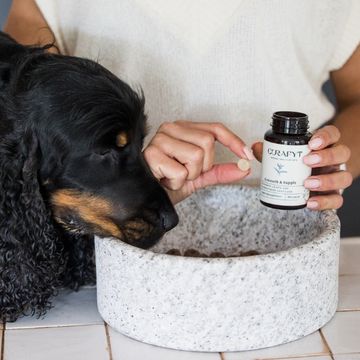
IMBY Probiotics Supplement
Vet-formulated gut support for dogs with sensitive digestion. Worth a look if your dog's stomach reacts to dairy, new treats, or diet changes in general.
Conclusion
Dogs can eat cheese, but in moderation, and not every type is suitable. Lactose intolerance, fat, salt, and added ingredients all play into how safe it is for your dog. Cottage cheese, mozzarella, and young cheddar are reasonable choices; blue cheese, salty cheeses, and seasoned varieties are not. Keep it a small treat, never a meal, and watch how your dog reacts the first few times.
Not sure if cheese fits your dog's diet? Your veterinarian can give you advice specific to your dog's health and history.
FAQs
Does cheese have health benefits for dogs?
Cheese carries some risk, but it isn't all downside. It's a solid source of protein, which supports muscle development and recovery. It's rich in calcium for strong bones and teeth, and it often contains vitamin A, B-complex vitamins, and zinc, all of which support skin, coat, and immune health. For picky eaters, or dogs that need medication, cheese helps too: hiding a pill in a small piece is an old trick that still works. It can also give active dogs a quick energy boost, thanks to its fat and calorie content. None of that changes the core advice, though. Keep portions small and stick to low-fat, unsalted cheeses, since the same fat and lactose that make cheese appealing can just as easily cause stomach trouble or weight gain.
Why do dogs love cheese?
A few reasons. Cheese has a strong smell, and dogs' noses are built to notice it: the stronger the aroma, the more interesting the cheese. Texture plays a part too. It's soft and creamy, easier to chew than kibble or a hard treat. And cheese delivers both fat and protein, two of the nutrients dogs are naturally drawn to for energy. Put all three together and it's no surprise cheese disappears fast.
References
[1] Khan, et al. Decline of Lactase Enzyme and Lactose Intolerance in Adult Dogs. International Journal of Veterinary Science, 2025, 10(6b). DOI: 10.22271/veterinary.2025.v10.i6b.2318
[2] Xenoulis PG, Steiner JM. Canine hyperlipidaemia. Journal of Small Animal Practice, 2015, 56(10):595-605. DOI: 10.1111/jsap.12396
[3] Jandel AN, Heilmann RM, Sander H, Steiner JM, Grützner N, Xenoulis PG. Serum α-Proteinase Inhibitor, Calprotectin, and S100A12 Concentrations in the Characterization of Pancreatitis in Dogs. Veterinary Sciences, 2023, 10(7):428. DOI: 10.3390/vetsci10070428
Support your dog's digestion every day
If cheese, or any rich treat, tends to upset your dog's stomach, a daily probiotic can help keep things steady between meals.
Shop IMBY Probiotics SupplementShare