


































Can dogs get depressed?
 by Nicolas Bartholomeeusen on Jun 14 2026· 6 min read
Key takeaways
- Dogs can show depression-like behaviour tied to imbalances in dopamine and serotonin, though researchers are still cautious about the label. Some of what looks like depression may actually be boredom from too little stimulation.
- Common triggers include a house move, a new pet or family member, loss of a companion, too little social contact, or a disrupted daily routine, since dogs rely heavily on predictability.
- Watch for reduced interest in walks or play, appetite changes, faster breathing, reluctance to be touched, tense body language and unusual sleepiness, and rule out illness with a vet first.
- Recovery usually comes from routine, exercise, attention and a comfortable environment. Vets sometimes add prescription medication like fluoxetine or a vet-approved calming supplement for cases that don't improve with care alone.
Unfortunately, dogs can become depressed. Just like humans, they can experience emotional problems. Various factors can cause your dog to become depressed.
What happens in the brain of a depressed dog?
In dogs, just as in humans, dopamine and serotonin play a major role in mood. If a dog experiences sadness or stress for a long time, these brain chemicals can become unbalanced, and that imbalance shows up as the withdrawn, low-energy behaviour owners describe as "depression." It's worth saying upfront that vets are still cautious with that word: a 2019 study of shelter dogs found that greater time spent lying inactive and unresponsive didn't clearly match a depression-like syndrome the way researchers expected. It lined up more closely with a "boredom-like" state driven by understimulation [1]. In practice, that means the behaviours below are real and worth taking seriously, even if the underlying cause is sometimes low stimulation rather than depression in the clinical sense. Chronic stress can also throw off a dog's stress hormones more broadly, which can weaken the immune system and eventually cause physical symptoms, such as digestive problems or a dull coat.
Causes of depression in dogs
There are various causes that can lead to your dog becoming depressed. Changes in their environment can cause your dog stress and sadness, such as moving house, a new pet, a new family member, or the loss of a loved one or pet. Sometimes dogs have an illness or are in pain, and these symptoms can resemble those of depression. Another cause is a lack of social contact. Dogs are very social animals; they need attention, activities and interaction to be happy. Think of walks and playtime. If a dog is often left home alone for long periods, this can also lead to depression. There is also a risk of depression if your dog is not properly cared for. Dogs are very fond of predictability. When their daily routine is changed or disrupted, this can lead to stress.
Symptoms of depression in dogs
There are various symptoms that may indicate your dog is suffering from depression:
- No interest in walks or playtime
- Loss of appetite
- Breathing faster and more deeply than usual
- Doesn’t want to be touched
- Tense body language
- Sleeping a lot
- Lethargic
How long does depression last in dogs?
Of course, every dog is different. Some dogs experience a brief low, lasting just a few days. Others suffer from a very long bout of depression. It varies from dog to dog.
Risks associated with depression in dogs?
Depression in dogs also carries certain risks. Some dogs eat much more than usual during a bout of depression, whilst others eat almost nothing, which can lead to fluctuations in weight.
Breed susceptibility to depression in dogs
Some dog breeds are more prone to depression than others. Breeds that are at higher risk of depressive symptoms when they do not receive enough stimulation include:
Does age play a role in dogs becoming depressed?
Age is certainly a factor in depression in dogs; they can become depressed as they develop age-related ailments. Think of osteoarthritis or cognitive decline.
A dog’s history and depression
Dogs that have spent a long time in a shelter in the past or have been victims of abuse may find it very difficult to feel safe and happy again.
What should you do if your dog is depressed?
If you think your dog is depressed, it’s a good idea to consult a veterinarian to rule out any health issues. The veterinarian will advise you on how to help your dog. If you’d rather wait a while before seeing the veterinarian, there are a few things you can do yourself to help your dog.
- Provide your dog with routine and structure
- Physical exercise and mental stimulation (such as walks and sniffing around)
- Provide plenty of attention and companionship
- Create a comfortable environment
- Give your dog some time
- Provide social interaction
Treatment of depression in dogs
Treatment for a depressed dog mainly involves giving them plenty of attention, plenty of exercise and, in some cases, medication prescribed by a veterinarian. You might consider taking up a dog sport. Give your four-legged friend lots of cuddles. Dogs are not just creatures of habit; they are still descended from wolves, which means they are also pack animals. They derive happiness from contact with other dogs, so bringing a companion home for your dog is not a bad option either.
Medication for depression in dogs?
It’s certainly advisable to try love and plenty of attention first. For most dogs, this will already make a big difference. If that doesn’t work, medication is something to discuss with your vet, never something to start on your own or borrow from a human prescription. For anxiety-related and compulsive behaviours in dogs, several veterinary trials have found fluoxetine (the same active ingredient as human Prozac) effective when combined with a structured behaviour modification plan, including in dogs with anxiety and aggression and in cases of compulsive licking [2][3]. Dosing, duration and whether it's the right fit at all is a veterinary decision, since it depends on the dog's full health picture.
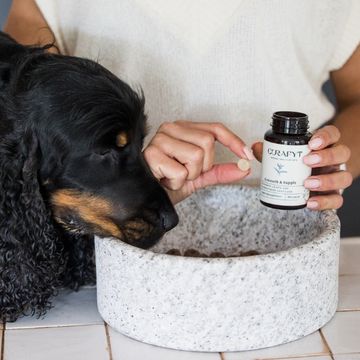
There are also non-prescription calming supplements on the market, often built around amino acids like L-tryptophan that the body can convert into serotonin. These are generally aimed at a dog that's a bit low or anxious rather than one showing the fuller picture of depression described above. Ask your vet which product, if any, makes sense for your dog before trying one.
Conclusion: Can dogs become depressed?
Depression in dogs is a serious issue that can have various causes, such as changes in their environment, a lack of social interaction or health problems. By being alert to symptoms and providing your dog with the right care, structure and attention, you can often see a significant improvement. In some cases, a veterinarian may recommend additional treatments or medication. The most important thing is to support your dog and provide a safe, loving environment so that they feel happy and relaxed again.
Keep your dog engaged, body and mind
Explore Curafyt and Imby's dog care range for tools and support that make daily routine, exercise and enrichment easier.
Shop dog careReferences
[1] Harvey ND, Moesta A, Kappel S, Wongsaengchan C, Harris H, Craigon PJ, Fureix C. Could Greater Time Spent Displaying Waking Inactivity in the Home Environment Be a Marker for a Depression-Like State in the Domestic Dog? Animals (Basel). 2019;9(7):420. https://doi.org/10.3390/ani9070420
[2] Pineda S, Anzola B, Olivares A, Ibáñez M. Fluoxetine combined with clorazepate dipotassium and behaviour modification for treatment of anxiety-related disorders in dogs. Vet J. 2013;199(3):387-391. https://doi.org/10.1016/j.tvjl.2013.11.021
[3] Wynchank D, Berk M. Fluoxetine treatment of acral lick dermatitis in dogs: a placebo-controlled randomized double blind trial. Depress Anxiety. 1998;8(1):21-23.
Share