
























Salmon oil Dog: Discover the Benefits for Your Dog's Health
 by Nicolas Bartholomeeusen on Jun 14 2026· 8 min read
Key takeaways
- Salmon oil supplies EPA and DHA, omega-3 fatty acids dogs cannot produce on their own, which support skin, coat, joints and immune health.
- Regular use can calm itching and irritated skin, since the omega-3s reduce inflammation and help with conditions like eczema or hotspots.
- Older dogs with stiff or painful joints may move more easily, and puppies benefit too because DHA supports brain development while helping seniors retain mental sharpness.
- Dosage should match your dog's weight, starting at half the recommended amount and building up gradually to avoid digestive upset such as loose stools.
Would you like to support your dog's health with a natural supplement? Salmon oil contains omega-3 fatty acids such as EPA (eicosapentaenoic acid) and DHA (docosahexaenoic acid), which contribute to healthy skin, a shiny coat, supple joints and a strong immune system. It's one of the few supplements with real veterinary research behind it, not just marketing claims. In this article, you'll learn about the effects, benefits, dosage and possible side effects of salmon oil for dogs.
What is salmon oil and why is it good for dogs?
Salmon oil is a natural oil derived from salmon and rich in essential fatty acids, including omega-3 and omega-6. Dogs cannot produce these fatty acids on their own, so they have to come from food or a supplement. The main benefits of salmon oil are:
- Supporting skin and coat health
- Promotes healthy joints and mobility
- Improved cognitive function and brain development
- Strengthening the immune system
- Support for the heart and blood vessels
What health benefits does salmon oil offer dogs?
Salmon oil offers several health benefits for dogs thanks to its high concentration of omega-3 fatty acids (EPA and DHA).
How does salmon oil improve your dog's skin and coat health?
The omega-3 fatty acids reduce skin irritations, alleviate itching and support a shiny, healthy coat. This makes salmon oil particularly suitable for dogs with allergies, dry skin or excessive hair loss.
Can salmon oil help with itching and allergies?
Yes. Salmon oil reduces inflammation and aids the healing of irritated skin, so dogs with eczema, atopic dermatitis or hotspots often benefit from its anti-inflammatory properties. In a controlled trial, dogs with atopic dermatitis given a fish oil and flax oil combination for 10 weeks showed measurable improvement in their skin scores, while the placebo group did not change at all [1].
Does salmon oil promote hair growth in dogs?
Yes, improved blood circulation to the skin and extra nutrients strengthen hair follicles, leading to a thicker and healthier-looking coat.
How does salmon oil support joint health in dogs?
Omega-3 fatty acids help reduce inflammation in the joints, meaning dogs with osteoarthritis or joint problems experience less pain and stiffness.
Can salmon oil alleviate joint problems in older dogs?
Yes. In a 90-day clinical trial, dogs with osteoarthritis fed a fish-oil-supplemented diet showed a 5.6% improvement in weight bearing on their affected limb, measured on a force plate, compared to almost no change in the control group [2]. That's a modest but real gain, and it took the full 90 days to show up, so patience matters here.
Is salmon oil suitable for young dogs and large breeds?
Yes, large dog breeds that are prone to hip dysplasia and joint problems can benefit from early supplementation with salmon oil to support joint health.
How does salmon oil contribute to brain development and cognitive function in dogs?
The DHA in salmon oil supports brain development in puppies and helps older dogs maintain their mental sharpness and memory function.
Is salmon oil beneficial for older dogs with cognitive decline?
Yes. In a six-month study of aged Beagles, dogs given a DHA-containing supplement held steady on working-memory tests, while the untreated group's performance declined significantly over the same period [3]. It's not a cure for cognitive decline, but it does seem to slow it down.
Can salmon oil strengthen a dog's immune system?
Yes, salmon oil contains antioxidants and can support the immune system, which may help a dog stay more resistant to illness and recover a little faster from infections or injuries.
Does salmon oil help dogs with a weak immune system?
Yes, dogs that regularly fall ill or are recovering from surgery can benefit from the extra support provided by omega-3 fatty acids.
Does salmon oil support dogs' hearts and blood vessels?
There's specific evidence for this in dogs with certain heart conditions. In Boxers with an inherited arrhythmia disorder, six weeks of fish oil supplementation cut the number of abnormal heartbeats roughly in half (from a median of 397 to 162 per 24 hours), while flaxseed oil and a placebo made no difference [4]. For healthy dogs the case is less proven, but supporting a normal inflammatory response is generally good for the whole cardiovascular system.
Can salmon oil prevent heart problems in dogs?
It isn't a guarantee, but omega-3s appear to help regulate the heart's electrical activity and reduce inflammation, both of which matter for long-term cardiac health.
What side effects can salmon oil have in dogs?
Although salmon oil is safe for most dogs, an overdose can lead to side effects such as:
- Diarrhoea or loose stools
- Greasy, dull coat
- Slightly increased risk of weight gain (with excessive use)
- Blood thinning, which may cause wounds to take slightly longer to heal in the event of an overdose
How much salmon oil does a dog need?
The correct dose of salmon oil depends on your dog's weight. Here is a guideline:
| Dog's weight | Daily Dosage |
| 0 – 10 kg | 2.5 ml |
| 10 – 25 kg | 5 ml |
| 25–50 kg | 10 ml |
| >50 kg | 15 ml |
Good to know
Don't start at the full dose in the table. Build up over one to two weeks instead, half the amount for the first few days, then the rest. A sudden jump in fat intake is what usually causes the loose stools owners complain about, not the oil itself.
What should you look out for when buying salmon oil?
Not all salmon oil products are of the same quality. When buying, look for:
- 100% pure salmon oil, with no added preservatives
- Cold-pressed oil, as this retains the most nutrients
- Sustainable fishing certifications such as MSC or Friend of the Sea
Can I combine salmon oil with other supplements?
Yes, salmon oil can usually be combined with other supplements such as glucosamine for joints or probiotics for digestion. Always ask your veterinarian before stacking supplements, especially if your dog is already on medication.
Is salmon oil better than plant-based oils for dogs?
Yes, salmon oil contains more bioavailable omega-3 fatty acids in the form of EPA and DHA, whereas plant-based oils such as linseed oil mainly contain ALA (alpha-linolenic acid). Dogs convert ALA to EPA and DHA very inefficiently, so it's not a like-for-like swap.
Is algae oil a good alternative to salmon oil?
Yes, and it's a different trade-off than swapping in flaxseed. Fish don't make EPA and DHA themselves either: they accumulate these fatty acids by eating algae, so an algae-oil supplement supplies the same molecules as salmon oil, just harvested closer to the original source [5]. That's not the same as a plant oil like flaxseed, which only supplies ALA, the short-chain fat dogs convert into EPA and DHA very poorly. In one study, dogs given a marine-type long-chain source held onto a healthy omega-3 index after six weeks, while a flaxseed-only group actually saw theirs drop over the same period [6].
Where algae oil pulls ahead of salmon oil is sustainability. Fish oil production relies on forage fish such as anchovies and sardines, caught specifically to be reduced into oil and meal, and aquaculture's demand for that oil is on a trajectory to outpace what wild stocks can keep supplying [7]. Algae oil sidesteps that supply chain entirely: it's cultivated rather than caught, so it doesn't compete with the forage-fish stocks that seabirds, whales and other fish depend on. It's also a straightforward option for dogs who don't tolerate fish-based oils well.
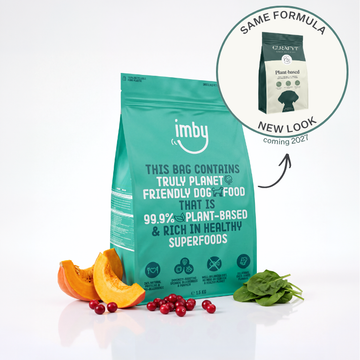
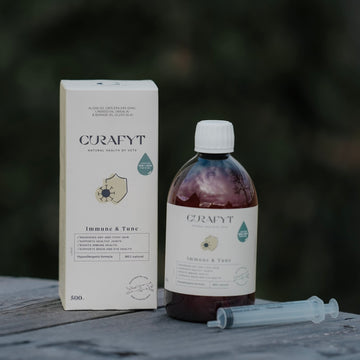
IMBY Immune & Tune Supplement
An algae-oil-based omega-3 (36% EPA, 24% DHA), formulated as a hypoallergenic, more sustainable alternative to salmon oil for skin, joints and immune support.
Conclusion: Why is salmon oil a good choice for your dog?
Salmon oil offers real, researched benefits: healthier skin and coat, more comfortable joints, better brain function and an improved immune system. None of it works overnight, and it won't fix a poor diet on its own. But choose the correct dosage and a good-quality oil, whether it comes from salmon or algae, and it's one of the more evidence-backed supplements you can add to your dog's routine.
References
[1] Mueller RS, Fieseler KV, Fettman MJ, et al. Effect of omega-3 fatty acids on canine atopic dermatitis. Journal of Small Animal Practice. 2004;45(6):293-297. doi:10.1111/j.1748-5827.2004.tb00238.x
[2] Roush JK, Cross AR, Renberg WC, et al. Evaluation of the effects of dietary supplementation with fish oil omega-3 fatty acids on weight bearing in dogs with osteoarthritis. Journal of the American Veterinary Medical Association. 2010;236(1):67-73. doi:10.2460/javma.236.1.67
[3] Araujo JA, Segarra S, Mendes J, et al. Sphingolipids and DHA improve cognitive deficits in aged Beagle dogs. Frontiers in Veterinary Science. 2022;9:646451. doi:10.3389/fvets.2022.646451
[4] Smith CE, Freeman LM, Rush JE, Cunningham SM, Biourge V. Omega-3 fatty acids in Boxer dogs with arrhythmogenic right ventricular cardiomyopathy. Journal of Veterinary Internal Medicine. 2007;21(2):265-273. doi:10.1892/0891-6640(2007)21[265:ofaibd]2.0.co;2
[5] Lenihan-Geels G, Bishop KS, Ferguson LR. Alternative sources of omega-3 fats: can we find a sustainable substitute for fish? Nutrients. 2013;5(4):1301-1315. doi:10.3390/nu5041301. PMID: 23598439
[6] Dominguez TE, Kaur K, Burri L. Enhanced omega-3 index after long- versus short-chain omega-3 fatty acid supplementation in dogs. Veterinary Medicine and Science. 2021;7(2):370-377. doi:10.1002/vms3.369. PMID: 33022896
[7] Froehlich HE, Jacobsen NS, Essington TE, Clavelle T, Halpern BS. Avoiding the ecological limits of forage fish for fed aquaculture. Nature Sustainability. 2018;1(6):298-303. doi:10.1038/s41893-018-0077-1
Give your dog's skin, joints and coat a daily boost
Curafyt's dog supplements are vet-formulated to support the systems omega-3s work on most, from itchy skin to stiff joints.
Shop dog supplementsShare